Teaching Young Children
Start where the child is → Build the bridge → Connect it to a gospel truth.
Young children are only beginning to understand many gospel principles. These lesson helps begin with what a little child can already understand and experience, then build a simple bridge to the doctrine being taught.
Each lesson includes:
- .TEACHING CRAFT & CARD – A hands-on activity used during the lesson to help children see, touch, or participate in the gospel truth being taught = TEACH IT
- SIMPLE TAKE-HOME CRAFT – An easy craft which children make in Nursery to take home as a reminder of the lesson. Minimal preparation, cutting and supplies = REINFORCE IT
- GAME – repetition and movement reinforcing gospel truth = EXPERIENCE IT
- PARENT & CHILD ACTIVITY – A simple activity for parent and child to do together at home, helping the chid experience and remember the gospel truth beyond Nursery = REMEMBER IT
- PARENT CARD – carries ice tube experience home = LIVE IT
- GOSPEL FOR THE GLOVEBOX A quick conversation on the way home, helping families talk about the lesson using familiar examples. Four lessons per double-sided page or the bare bones version which includes all the “questions for the ride home” for the year = TALK ABOUT IT
- GOAL – a simple gospel principle
- WHAT LITTLE CHILDREN CAN UNDERSTAND – the toddler-sized truth.
- HOW CHILDREN CAN EXPERIENCE IT – ways to make that truth something they can see, say, touch, practice, or do.
- HELPING FAMILIES CONTINUE THE LESSON – a simple way to carry the teaching into the child’s everyday life at home.
- TEACH IT → EXPERIENCE IT → REMEMBER IT → TALK ABOUT IT → REINFORCE IT→ LIVE IT
Nursery introduces. Parents reinforce. Children experience. Understanding grows.
General Conference Activity – especially for young children
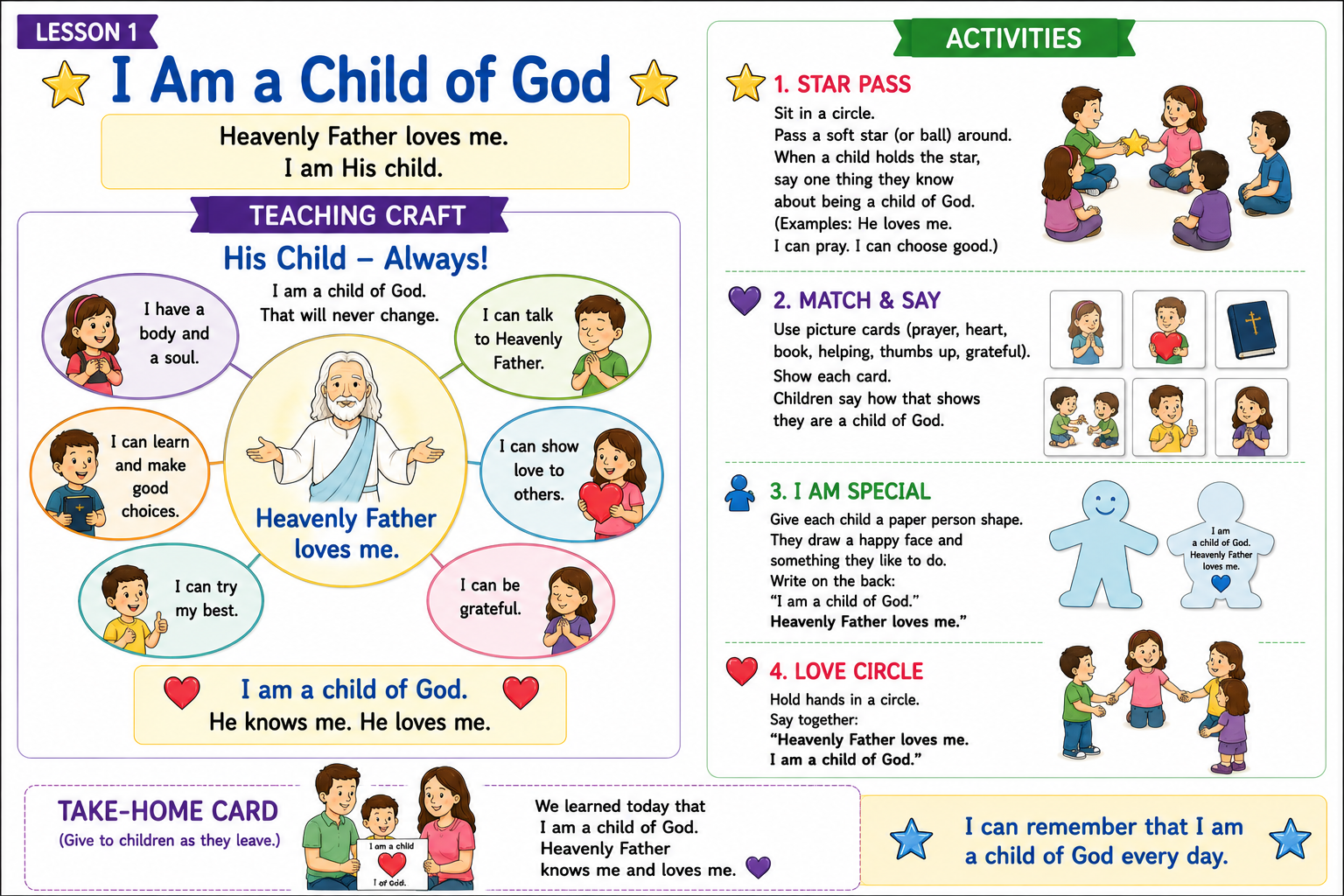
- Lesson 1 – I Am A Child of God
- Teaching Craft & Card
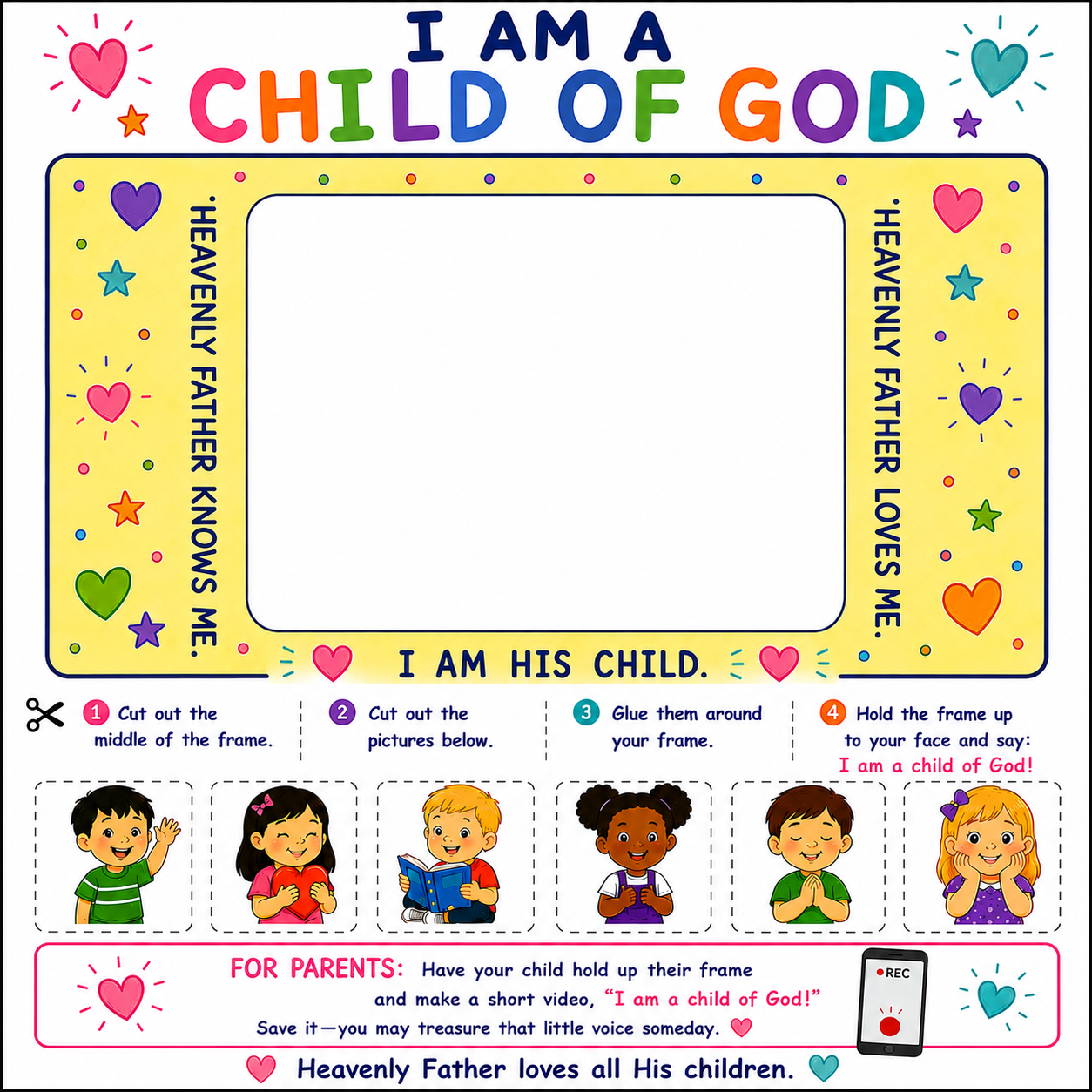
- Simple Take-Home Craft
- Game
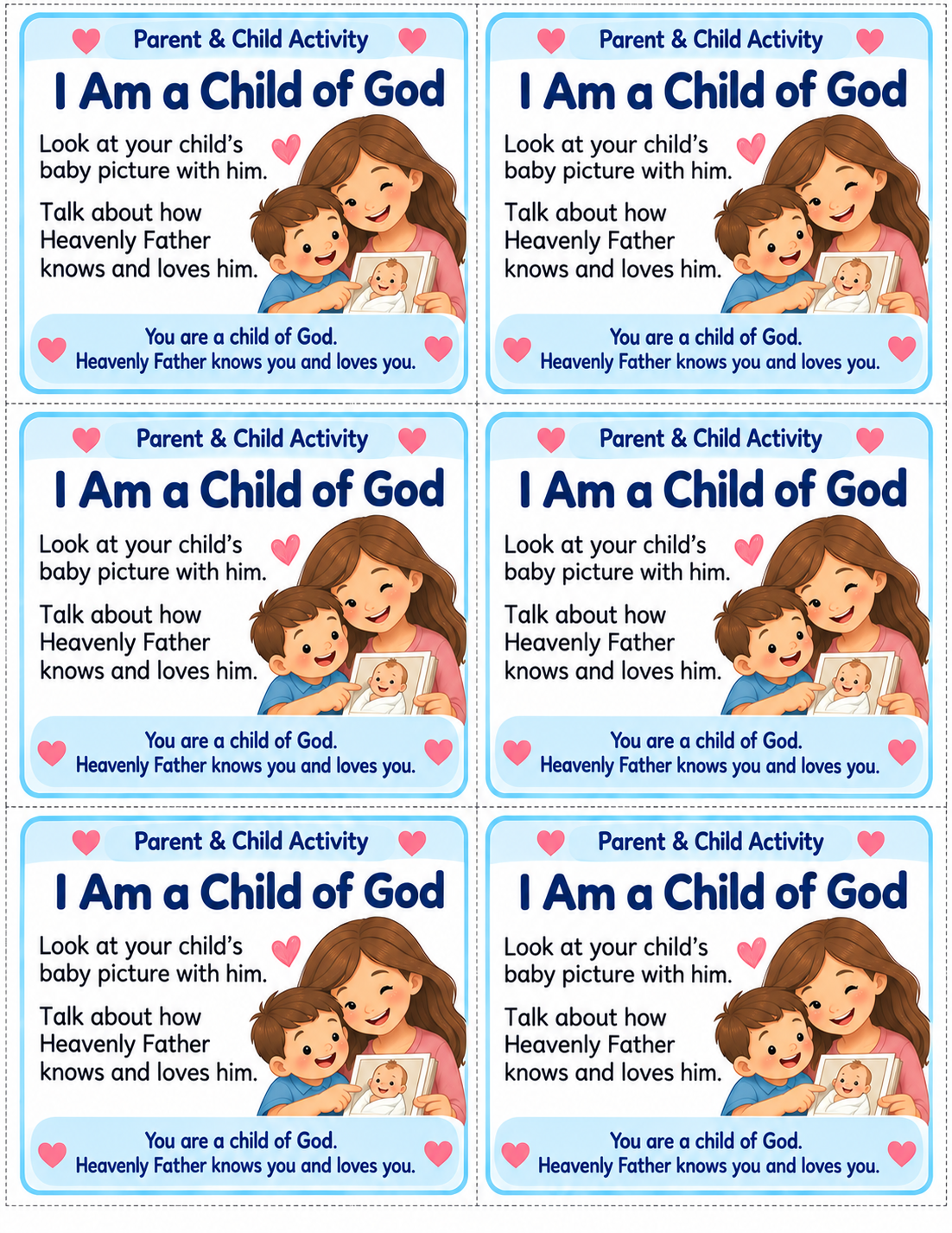
- Parent & Child Activity: I Am a Child of God
- Parent Card
- Gospel for the Glovebox: Lessons 1-4 (side one)
- Teaching Young Children
- GOAL
- Help children begin to understand their divine identity that they are children of Heavenly Father, who knows and loves them.
- WHAT LITTLE CHILDREN CAN UNDERSTAND
- I am a child of God. Heavenly Father knows me and loves me.
- HOW CHILDREN CAN EXPERIENCE IT
- Let each child see their own face in the picture frame and say, “I am a child of God!” Using their own picture helps make an abstract truth personal: This means me.
- HELPING FAMILIES CONTINUE THE LESSON
- Send the picture frame home. Invite parents to let their child hold it while they take a picture or short video of the child saying, “I am a child of God!” Encourage parents to repeat the message naturally during the week: “You are Heavenly Father’s child. He knows you and loves you.”Download the picture frame. Allow the child to customize it. The children glue their little people around the frame. Then they hold it up. Their own face becomes the picture. And they say: “I AM A CHILD OF GOD!” Then Mom or Dad videos that little voice and darling face.That’s not a worksheet anymore. It’s a keepsake.
- I am loved → Heavenly Father loves me → I am His child.
- Lesson 2 – Heavenly Father Has a Plan For Me
- Teaching Craft & Card
- Simple Take-Home: finished handou
- Game
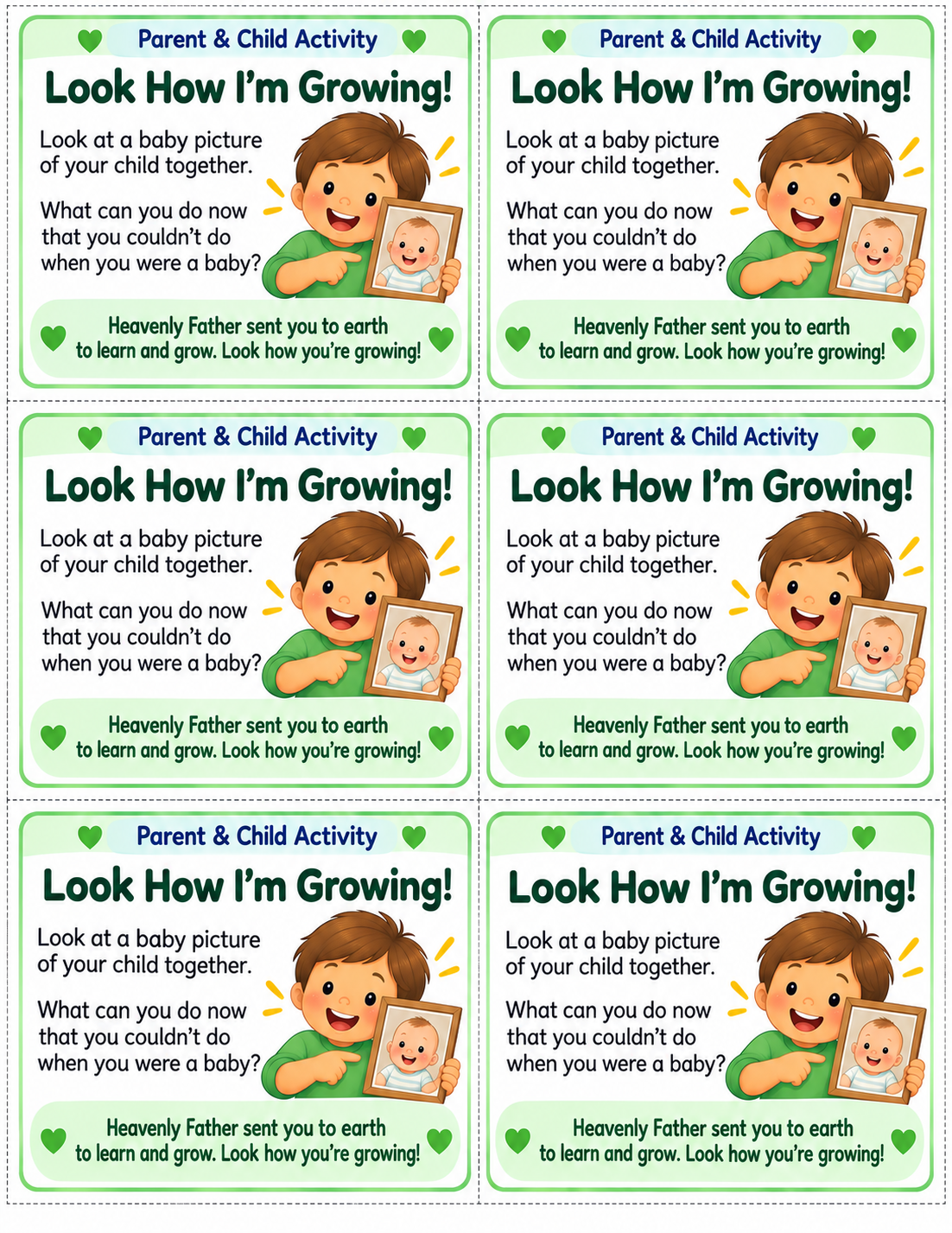
- Parent & Child Activity: Look How I’m Growing
- Parent Card
- Gospel for the Glovebox: Lessons 1-4 (side one)
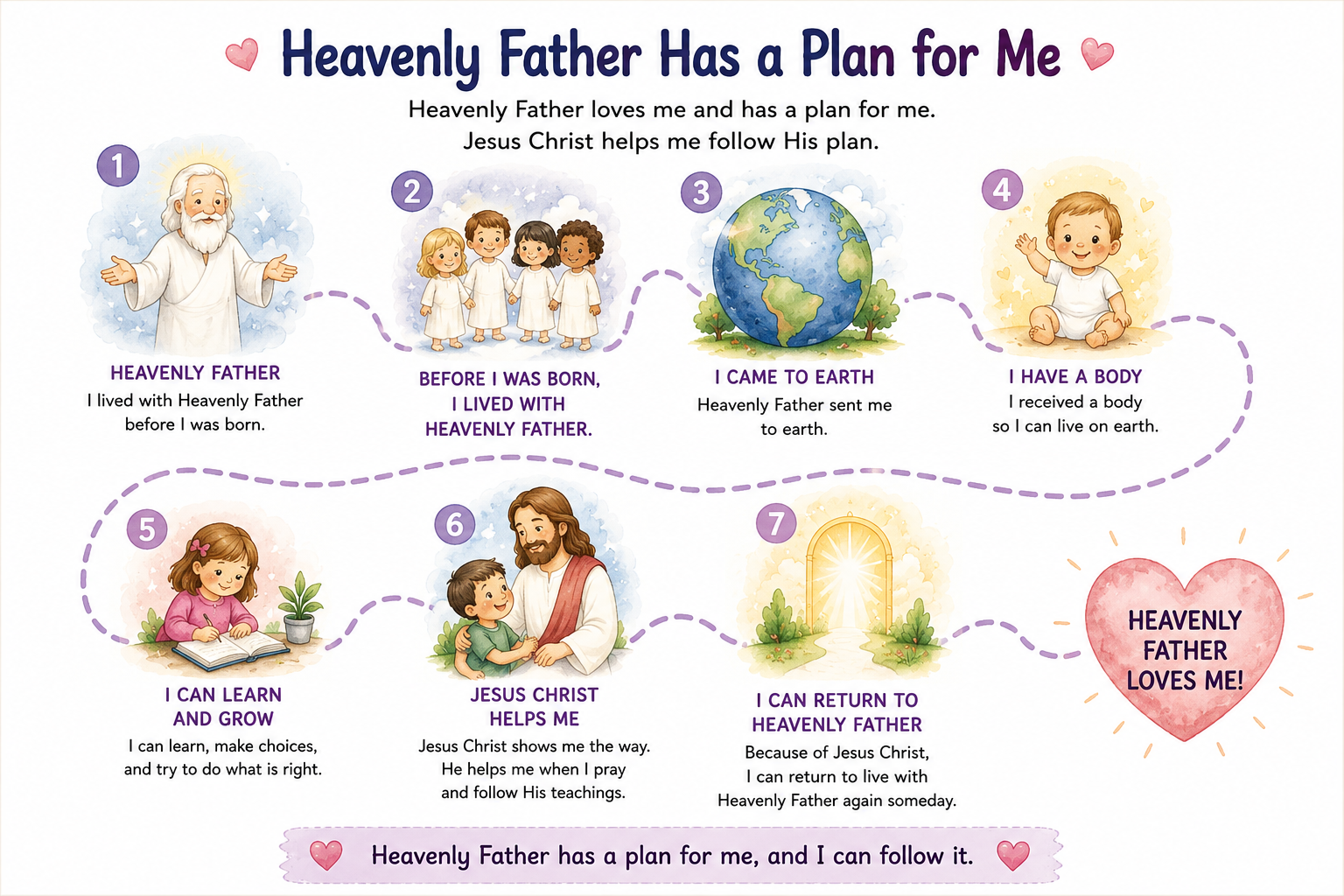
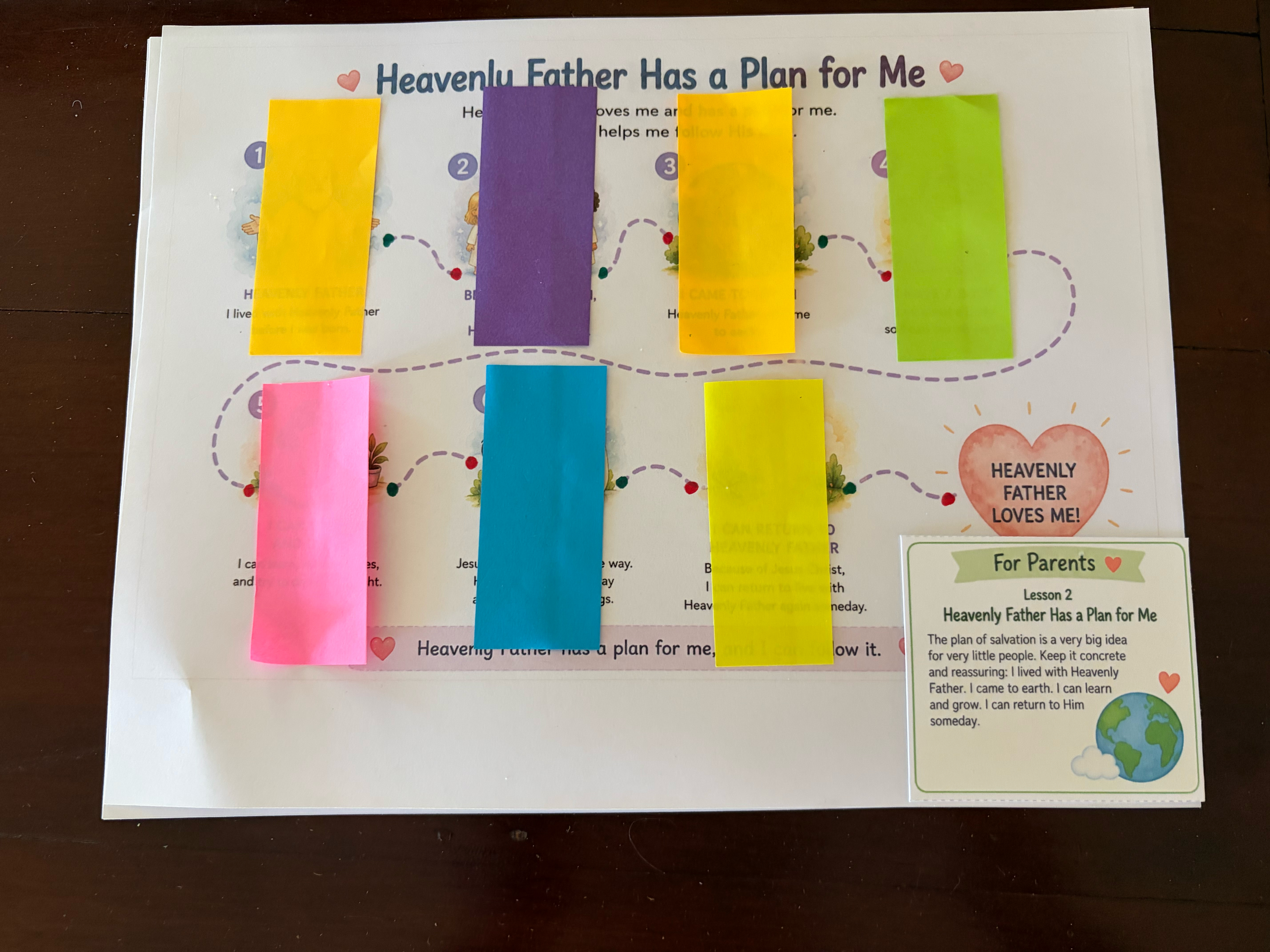
- Teaching Young Children: Download the Plan of Salvation Handout. Before nursery, put a green dot where the child should place his pencil and a red dot where the path segment ends and he should stop. Cover each little picture along the path with a small Post-it note. As the child reaches each picture along the path, let him remove the Post-it and pause to talk about what the picture represents. Continue until the Plan has fully been explained Completed Handout
- GOAL
- Help children begin to understand that Heavenly Father has a loving plan for His children to come to earth, learn and grow, and return to live with Him.
- WHAT LITTLE CHILDREN CAN UNDERSTAND
- Heavenly Father has a plan for me. I am here to learn and grow.
- HOW CHILDREN CAN EXPERIENCE IT
- Let children physically move along the Plan of Salvation path, uncovering each picture as they go. Keep the explanation simple and help them experience the central idea: Heavenly Father has a plan, and they are part of it.
- HELPING FAMILIES CONTINUE THE LESSON
- Send home the “Look How I’m Growing!” Parent & Child Activity. It invites families to notice things the child can do now that they could not do as a baby. Encourage parents to celebrate that growth with the simple message: “Heavenly Father sent you to earth to learn and grow. You’re doing it!”
- I came to earth → I am learning and growing → I am part of Heavenly Father’s plan.
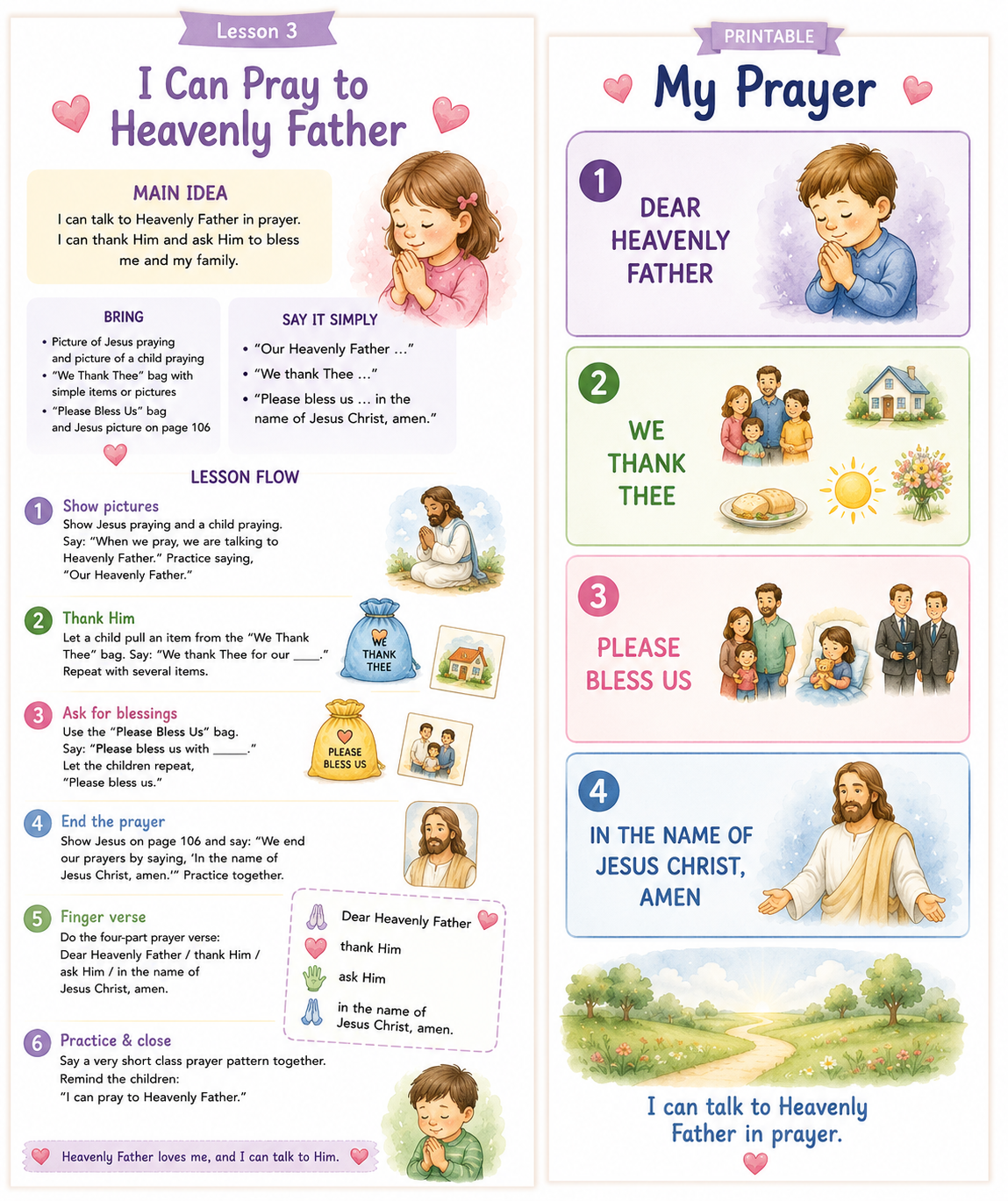
- Lesson 3 – I Can Pray to Heavenly Father
- Teaching Craft & Card
- Simple Take-Home Craft (print landscape)
- Game
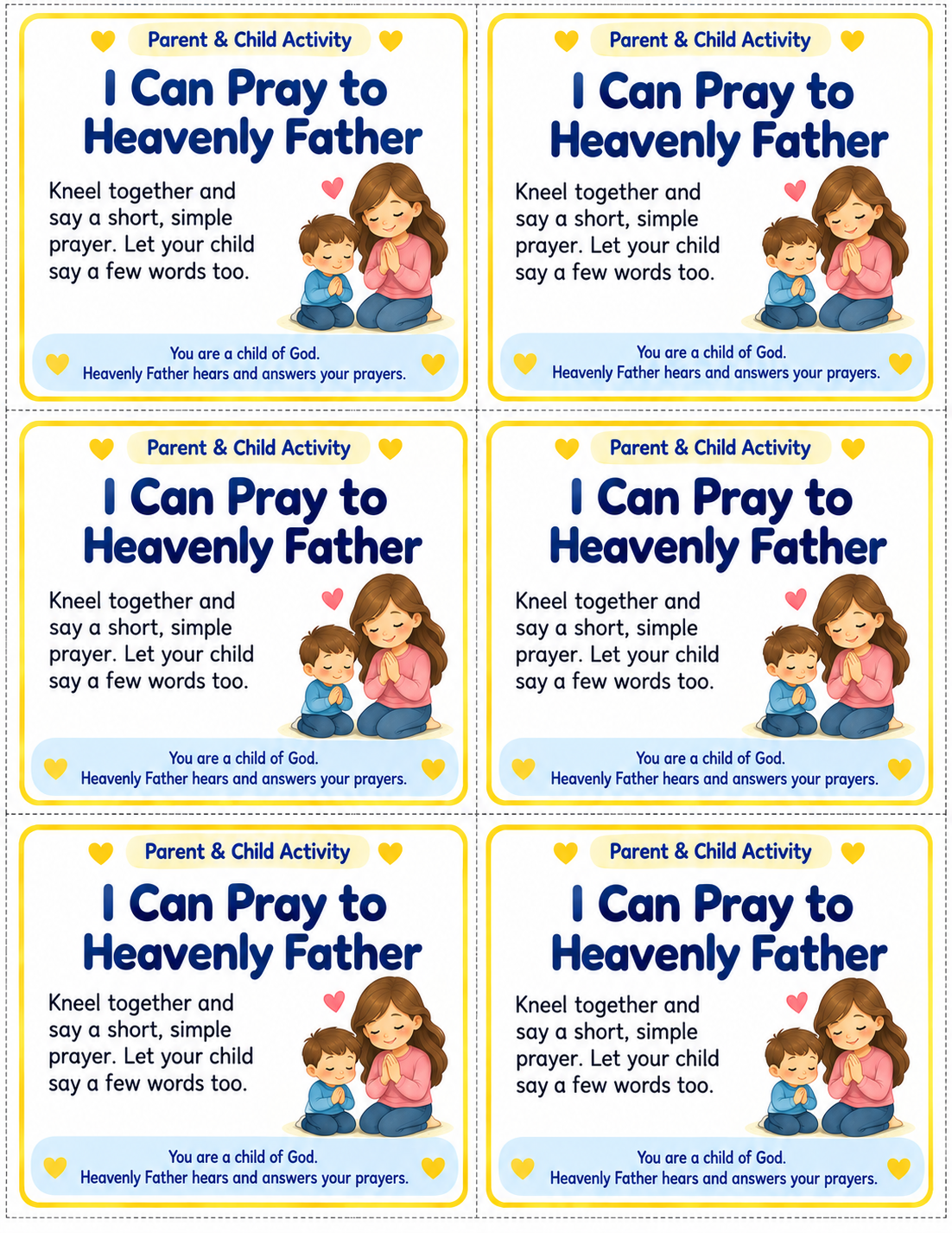
- Parent & Child Activity: I Can Pray to Heavenly Father
- Parent Card
- Gospel for the Glovebox: Lessons 1-4 (second side)
- Teaching Young Children
- GOAL
- Help children begin to understand that prayer is a way to communicate with Heavenly Father and begin building a relationship with Him.
- WHAT LITTLE CHILDREN CAN UNDERSTAND
- I can talk to Heavenly Father. He hears me.
- HOW CHILDREN CAN EXPERIENCE IT
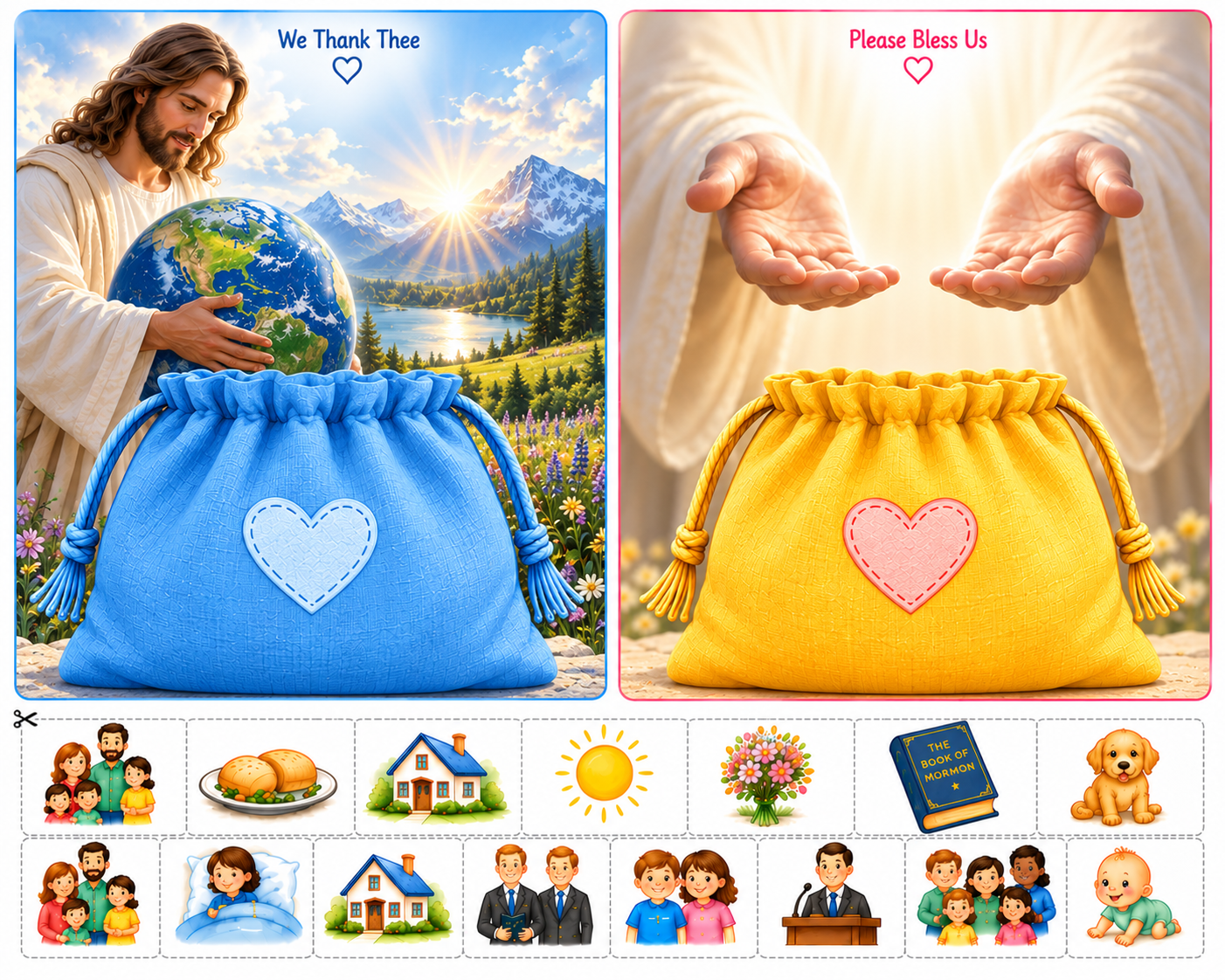
- Use the Prayer Bag to help children think of real people and things they can talk to Heavenly Father about. Let each child choose a picture and practice a simple prayer thought such as, “Thank Thee for my family” or Bless=Take care of or help.
- HELPING FAMILIES CONTINUE THE LESSON
- Send the Prayer Bag home with the Parent & Child Activity card. It Invites parents to let their child choose one picture during family or bedtime prayer and help them include it in the prayer. Families can add their own pictures of people, pets, places, or other things that are meaningful to their child.
- I have something to say → I can talk to Heavenly Father → He hears me.
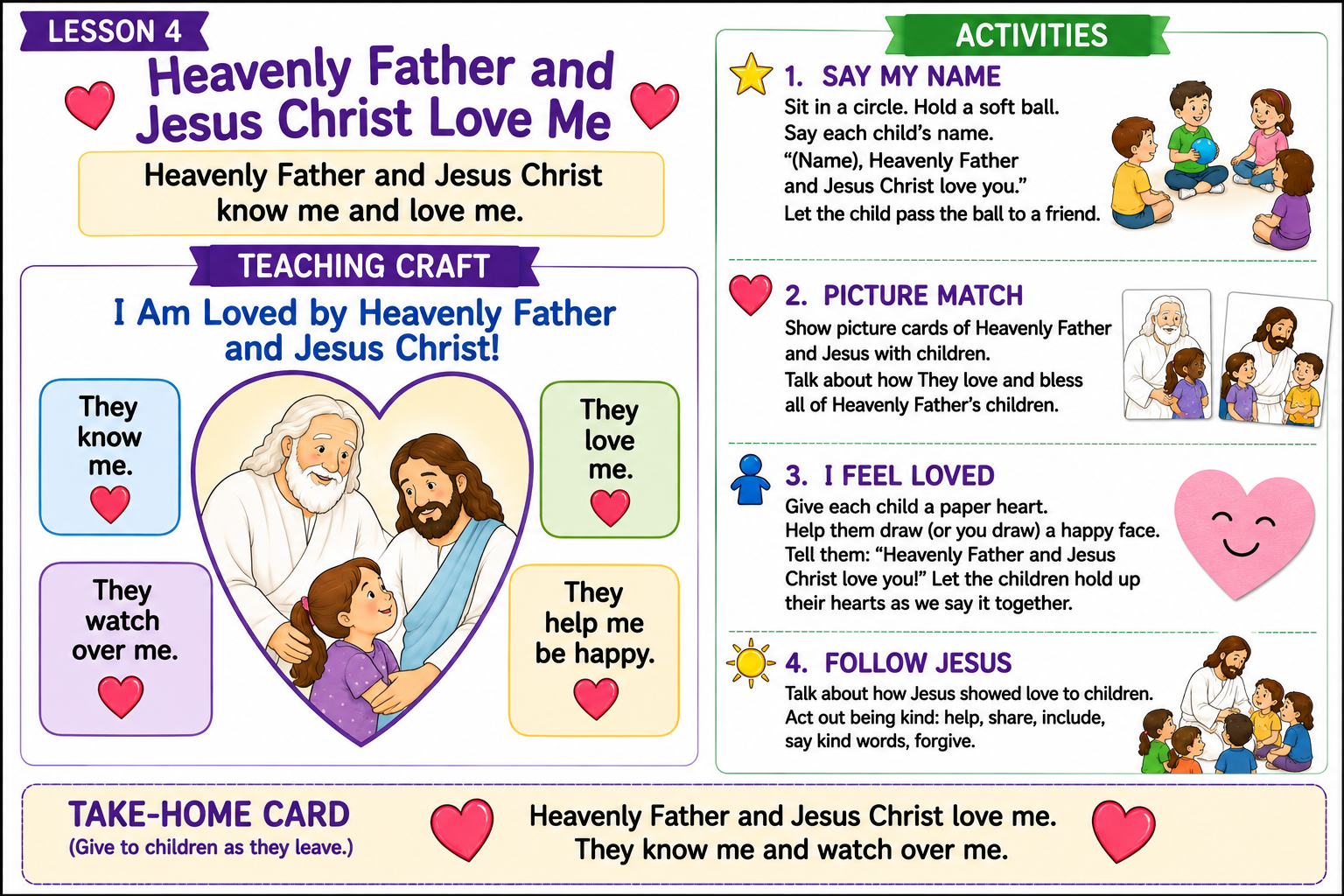
- Lesson 4 – Heavenly Father and Jesus Christ Love Me
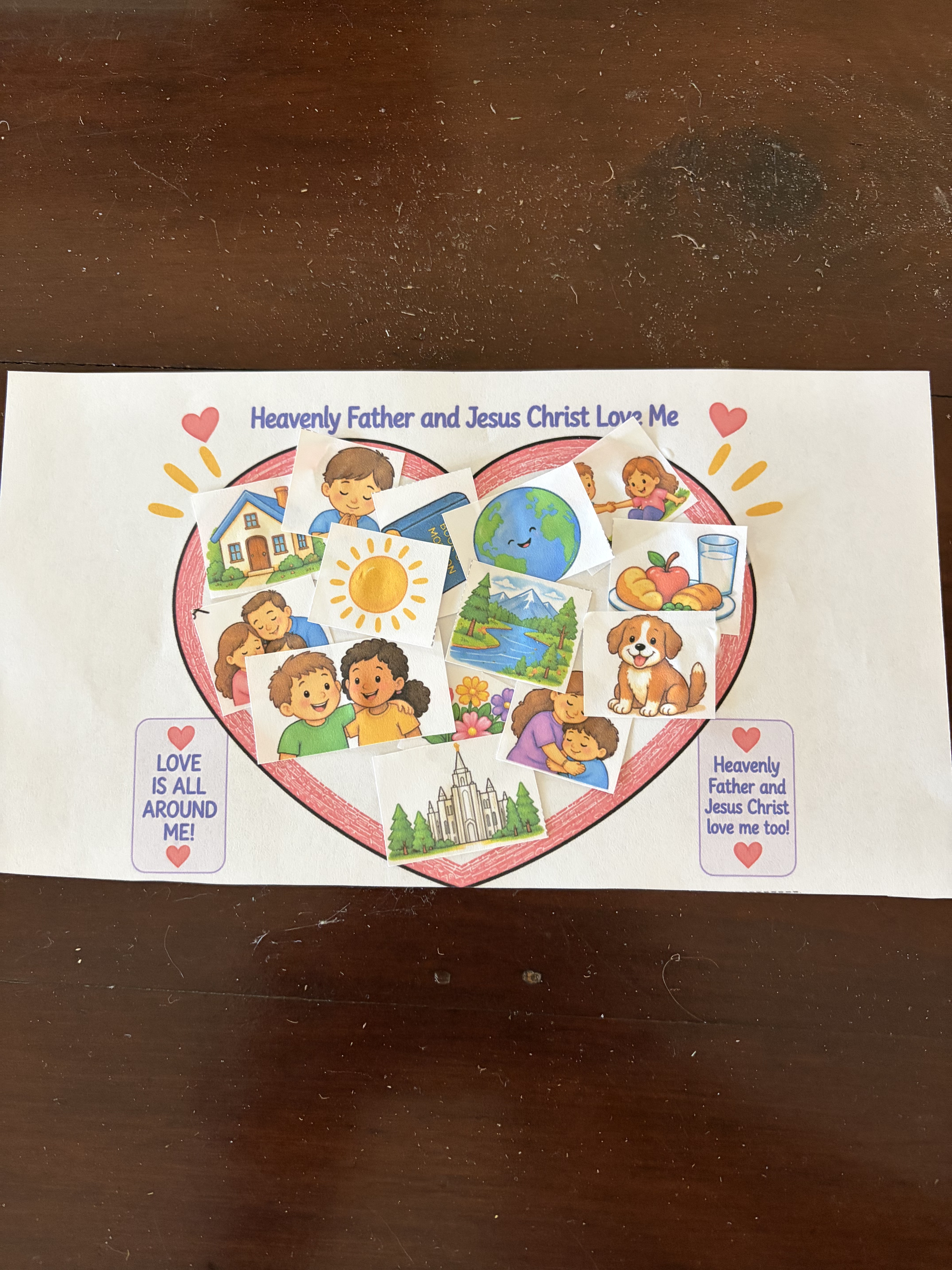
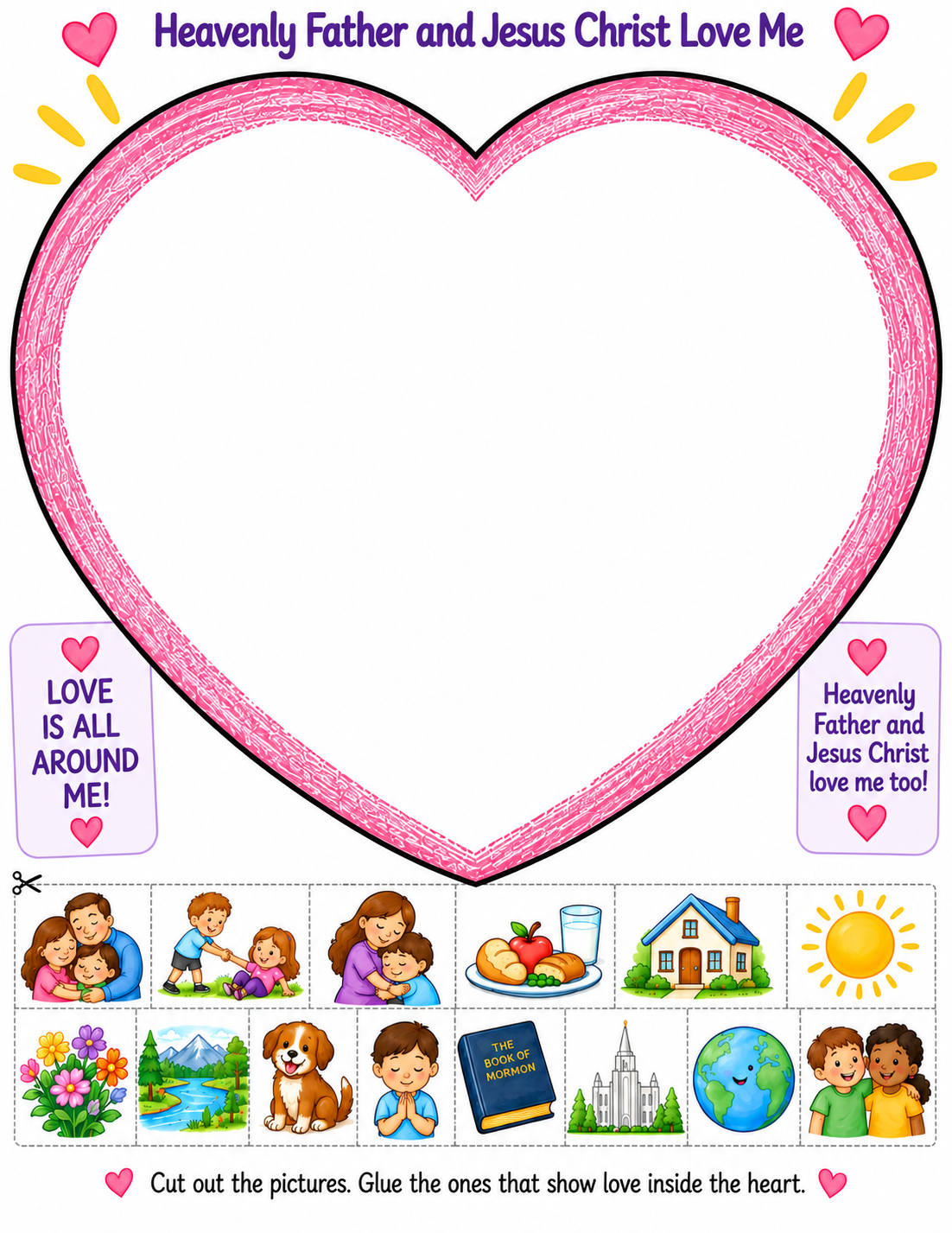
- Teaching Craft & Card
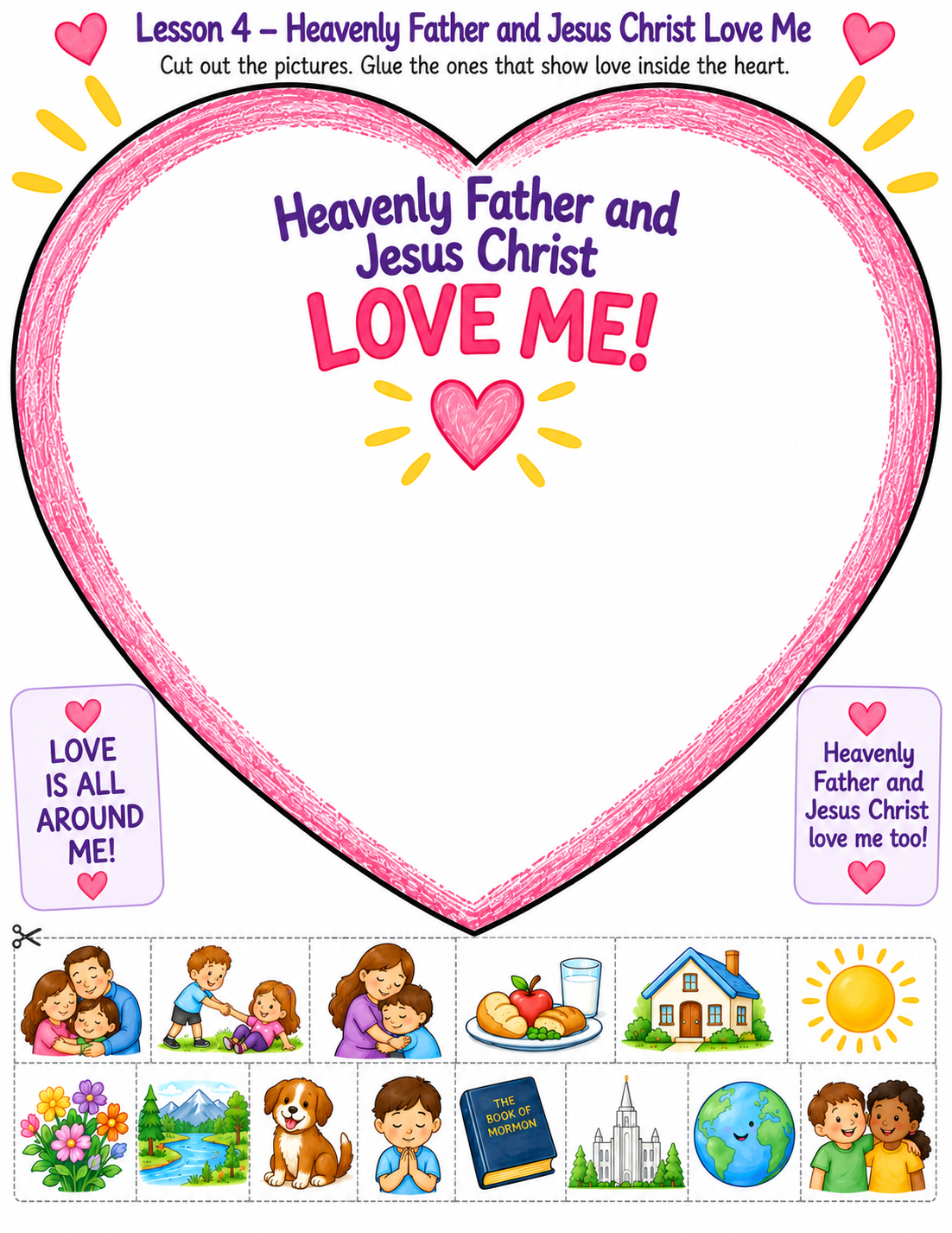
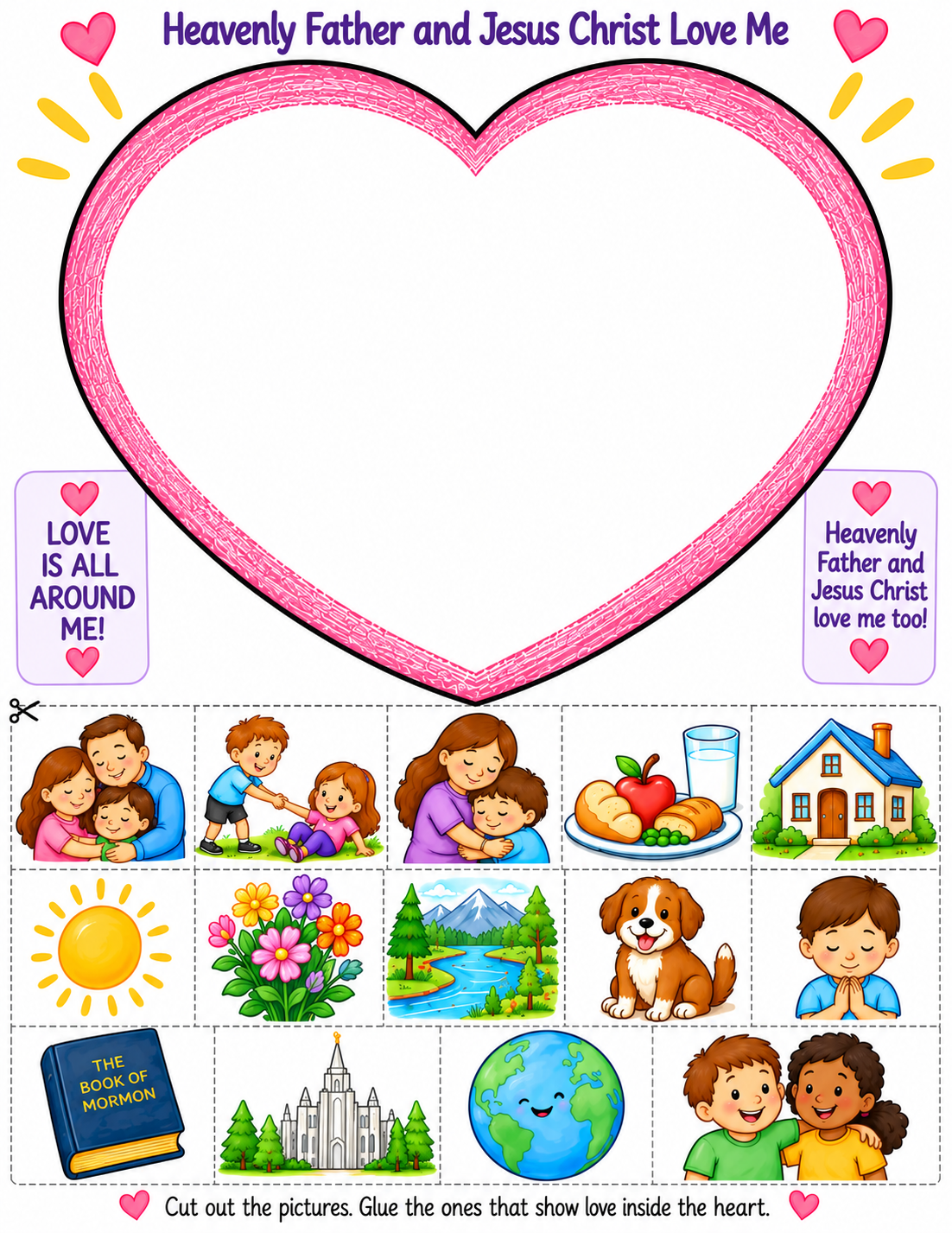
- Simple Take-Home Craft: finished handout
- Game
- Parent & Child Activity: Heavenly Father and Jesus Love Me
- Parent Card
- Gospel for the Glovebox: Lessons 1-4 (second side)
- Teaching Young Children
- GOAL
- Help children begin to understand that Heavenly Father and Jesus Christ know them personally, love them, and care for them.
- WHAT LITTLE CHILDREN CAN UNDERSTAND
- Heavenly Father and Jesus love me. They know me and care about me.
- HOW CHILDREN CAN EXPERIENCE IT
- Help children connect the word love with things they already understand. Talk about what love looks and feels like in their lives: someone listens to them, comforts them, helps them, takes care of them, is happy to see them, or gives them good things. Then gently connect those familiar experiences to the lesson: “You know what love feels like. Heavenly Father and Jesus love you too.”
- HELPING FAMILIES CONTINUE THE LESSON
- The Parent & Child Activity handout Invites parents to help their child notice love during the week. When the child is hugged, comforted, helped, cared for, or experiences something beautiful or good, parents can occasionally name it, “That is one way you know you are loved.”Then remind the child, “Heavenly Father and Jesus love you too.” Over time, ordinary experiences of being loved can help an intangible gospel truth begin to feel real.
- I experience love and care → I learn what love feels like → Heavenly Father and Jesus love me too.
- Lesson 5 – Jesus Christ Showed Us How to Love Others
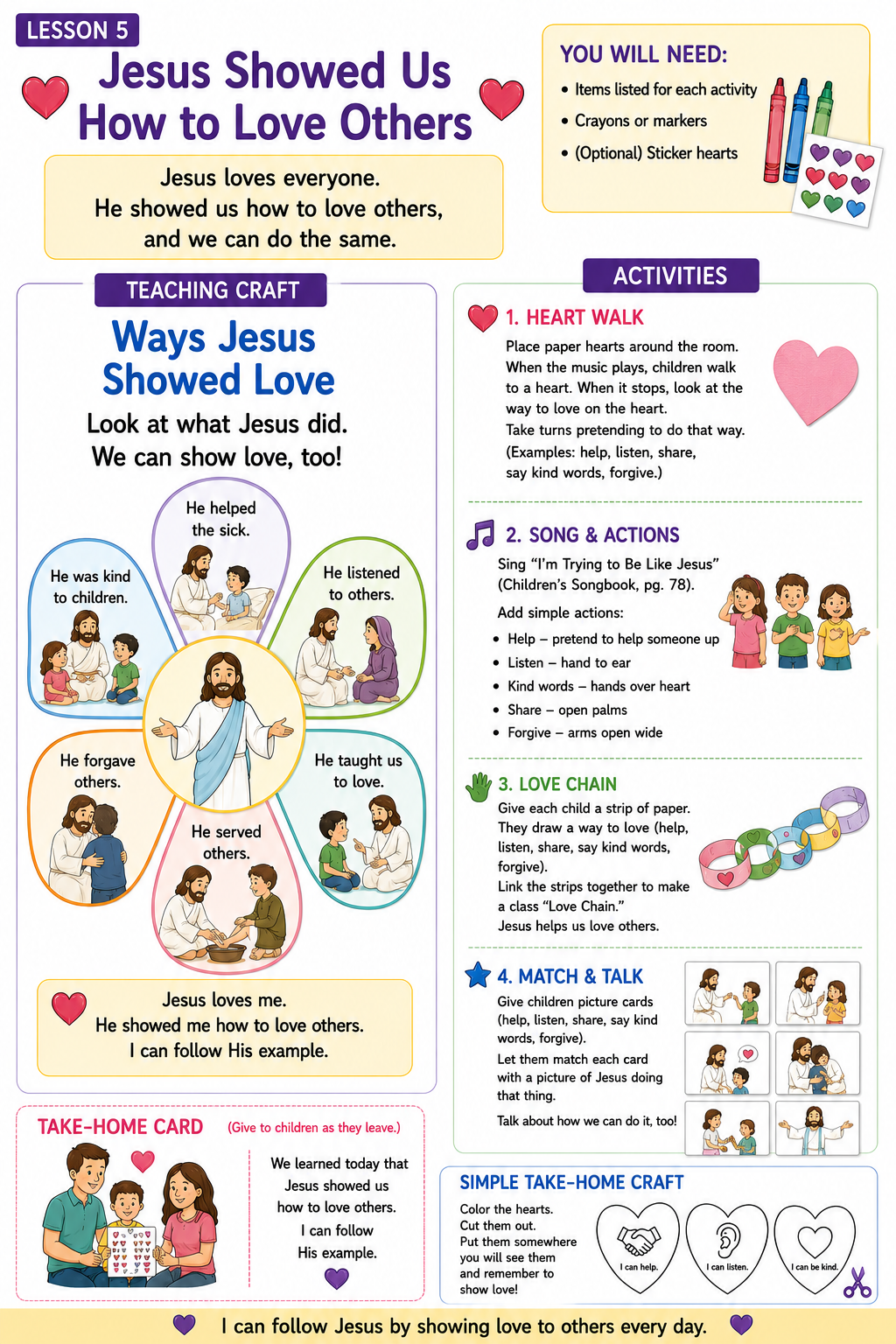
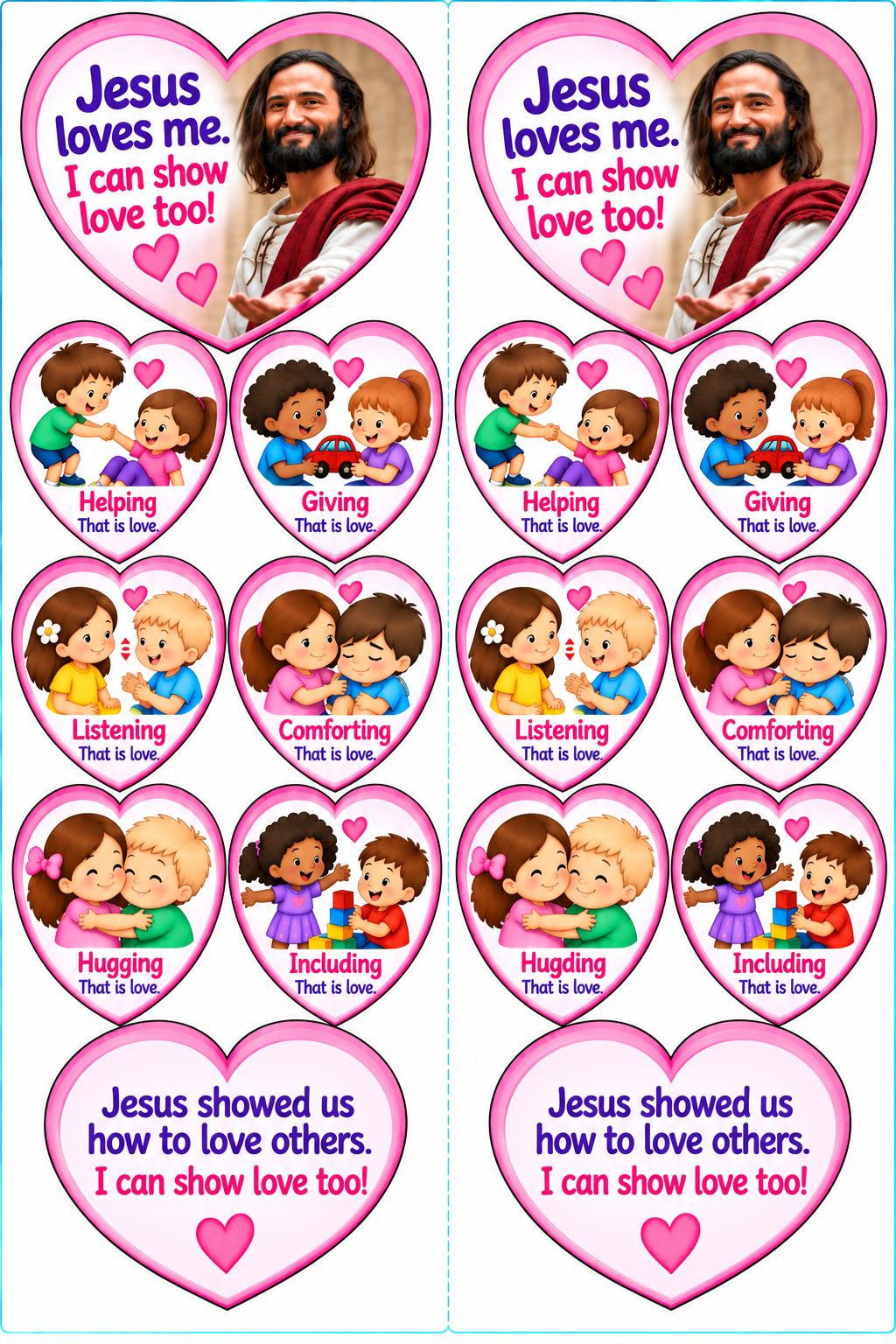
- Teaching Craft & Card
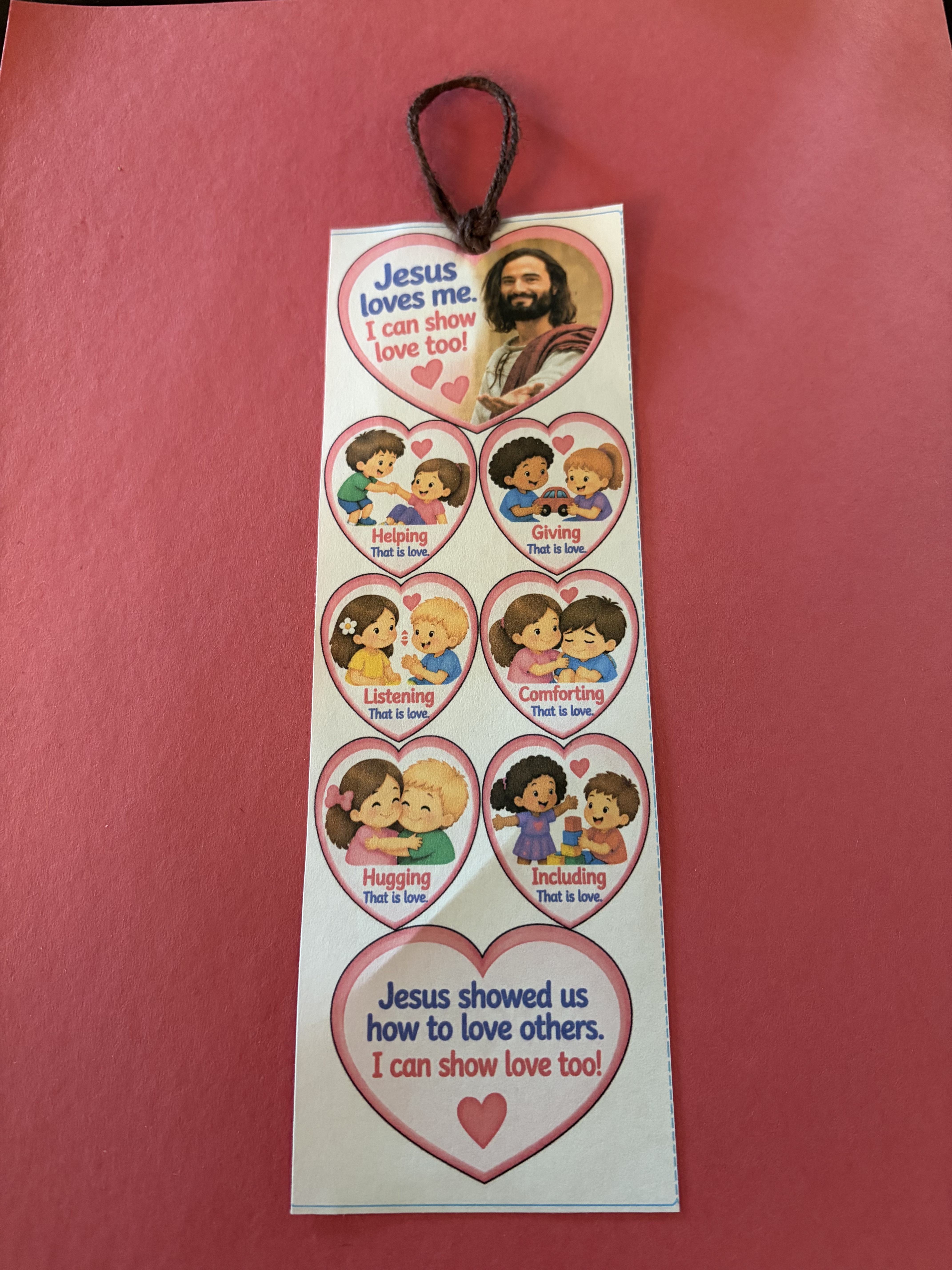
- Simple Take-Home Craft: (cardstock preferred finished wall hanging)
- Game
- Alternative Craft tracing the hearts door knob hanger (use painter’s tape top back for extra strength)
- Parent & Child Activity: Jesus Christ Showed Us How to Love Others
- Parent Card
- Gospel for the Glovebox: Lessons 5-8 (side one)
- Teaching Young Children
- GOAL
- Help children begin to understand that Jesus Christ showed us how to love other people through the way He treated them, and that we can follow His example.
- WHAT LITTLE CHILDREN CAN UNDERSTAND
- Jesus loved people. I can love people too.
- HOW CHILDREN CAN EXPERIENCE IT
- Make “love” something children can do. Use simple examples from the life of Jesus: He helped people, was kind to them, welcomed children, noticed people who were hurting, and cared for those who needed Him. Then let children practice familiar ways they can show love: helping someone, sharing, comforting someone who is sad, giving a hug, including someone, or saying something kind. The connection becomes “Jesus showed love. I can show love too.”
- HELPING FAMILIES CONTINUE THE LESSON
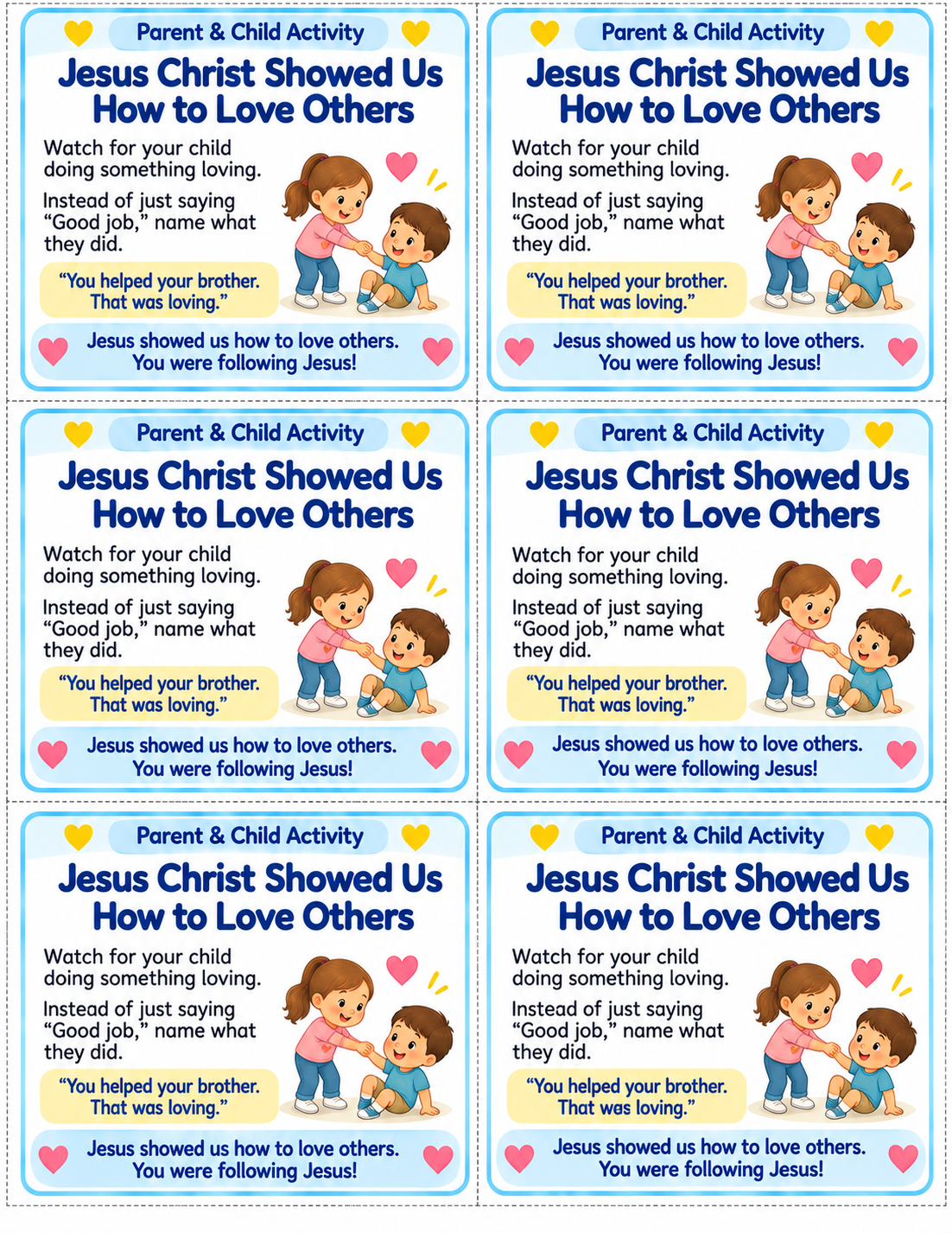
- TheParent & Child Activity card encourages parents to notice the child showing love during ordinary life. Instead of merely saying, “Good job,” help parents connect the behavior to Jesus:
- “You helped your brother. That was loving.”
- “You shared your toy. You showed love.”
- “Jesus taught us to love others. You were following Jesus.”
- Jesus showed love → I can notice what He did → I can show love too.
- Lesson 6 – The Holy Ghost Helps Me
- Teaching Craft & Card
- Simple Take-Home Craft
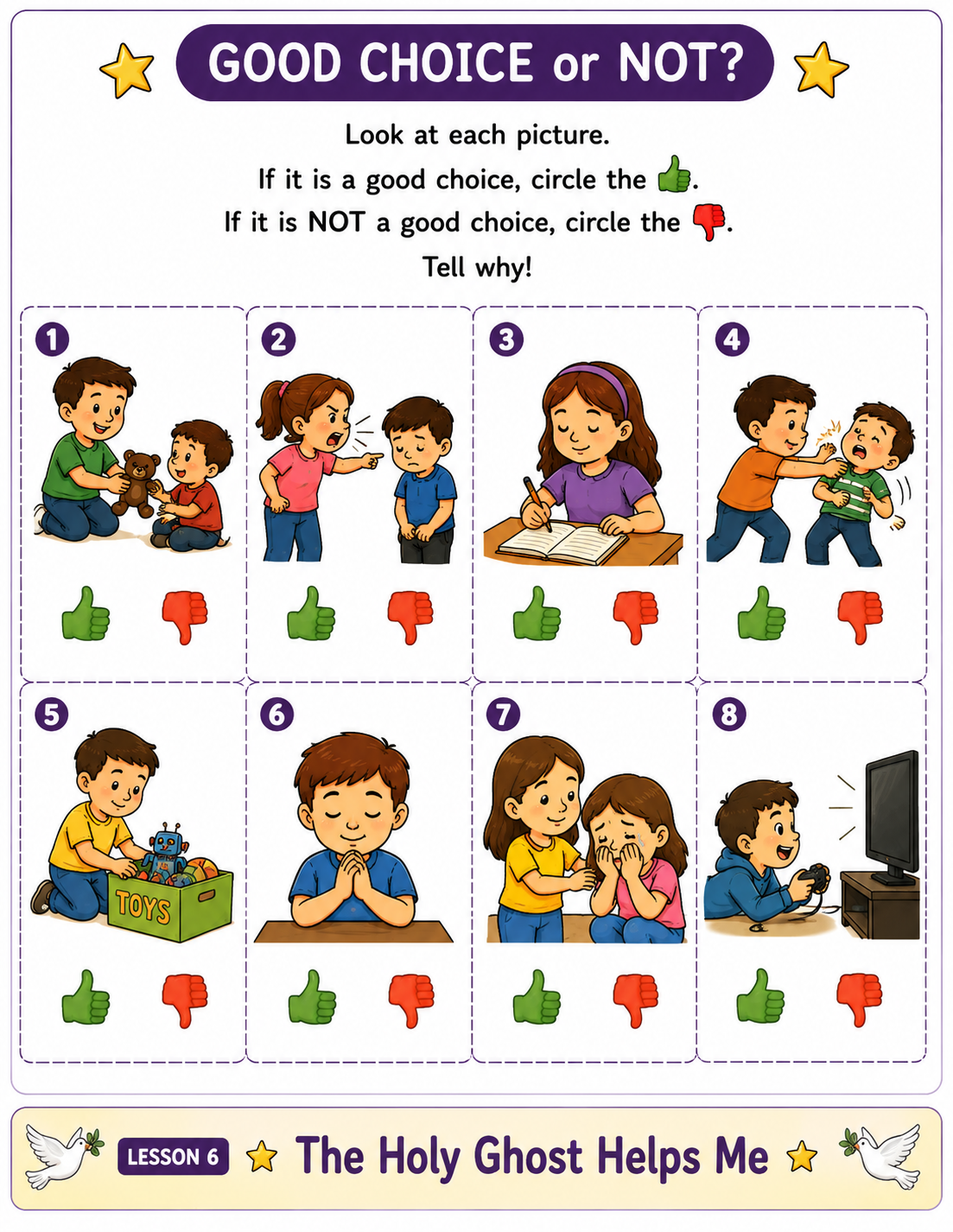
- Game
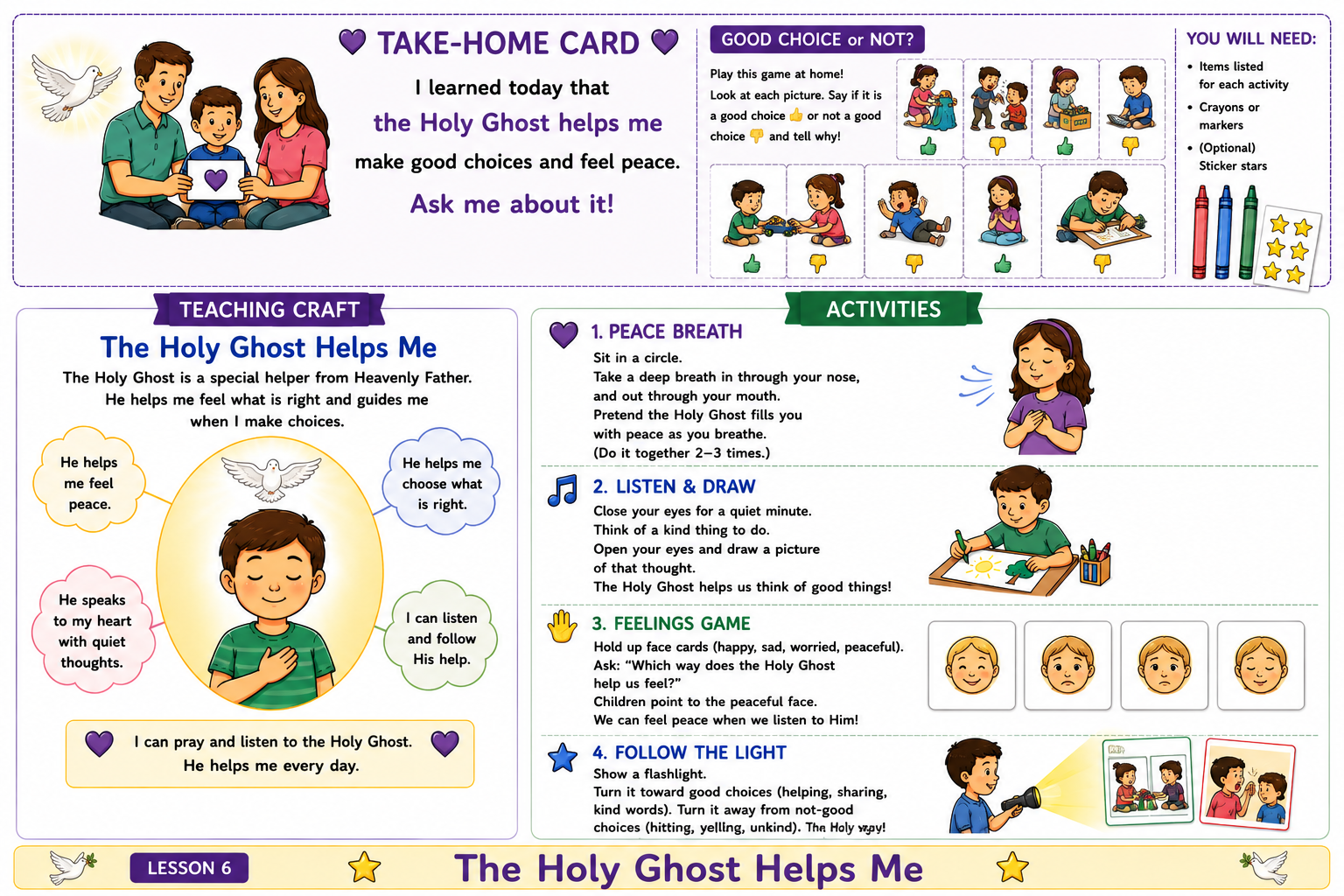
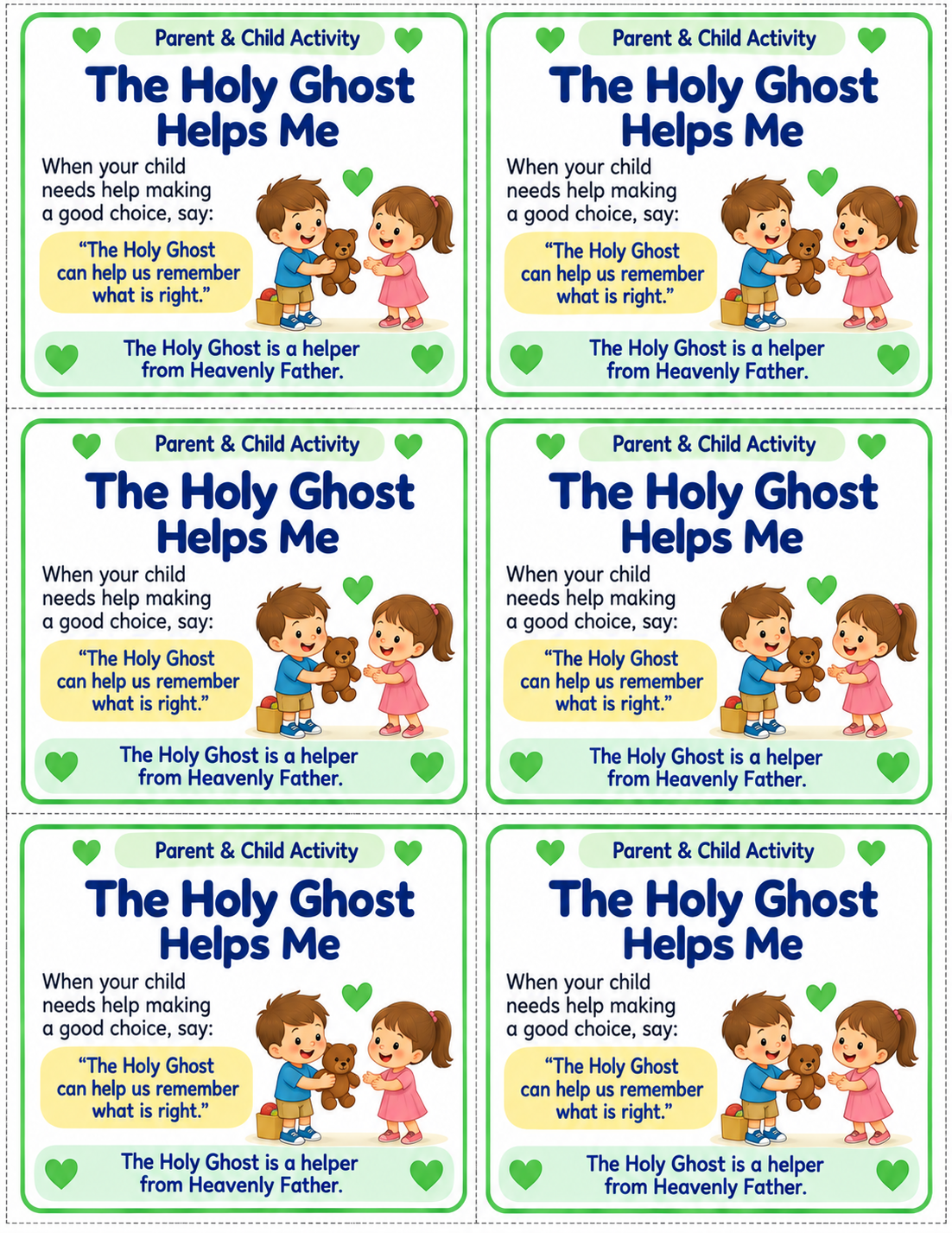
- Parent & Child Activity: The Holy Ghost Helps Me
- Parent Card
- Gospel for the Glovebox: Lessons 5-8 (side one)
- Teaching Young Children
- GOAL
- Help children begin to understand that Heavenly Father gives us the gift of the Holy Ghost to help, comfort, guide, and teach us.
- WHAT LITTLE CHILDREN CAN UNDERSTAND
- The Holy Ghost is a helper from Heavenly Father. He can help me know what is good and feel comforted.
- HOW CHILDREN CAN EXPERIENCE IT
- Begin with something children already understand, help. Talk about times they need help when they are scared, sad, unsure what to do, or trying to make a good choiceThen connect that familiar experience to the doctrine. “Heavenly Father knew we would need help. The Holy Ghost is one way He helps us.” I would be especially careful here not to teach toddlers that the Holy Ghost always feels like a warm, happy feeling.That’s such an easy shortcut, but feelings are complicated. A child can feel warm and happy because Grandma brought cookies. Instead, give them concrete examples:
- “Sometimes you remember something good you were taught.”
- “Sometimes you think of a kind thing you could do.”
- “Sometimes you feel comfort when you are afraid.”
- “Sometimes you know you should tell the truth.”
- And then: “The Holy Ghost can help us in those ways.”
- HELPING FAMILIES CONTINUE THE LESSON:
- Parents can do something a Nursery leader cannot. Refer to the Parent & Child Activity card.
- Sometimes I need help → Heavenly Father sends the Holy Ghost → The Holy Ghost can help me.
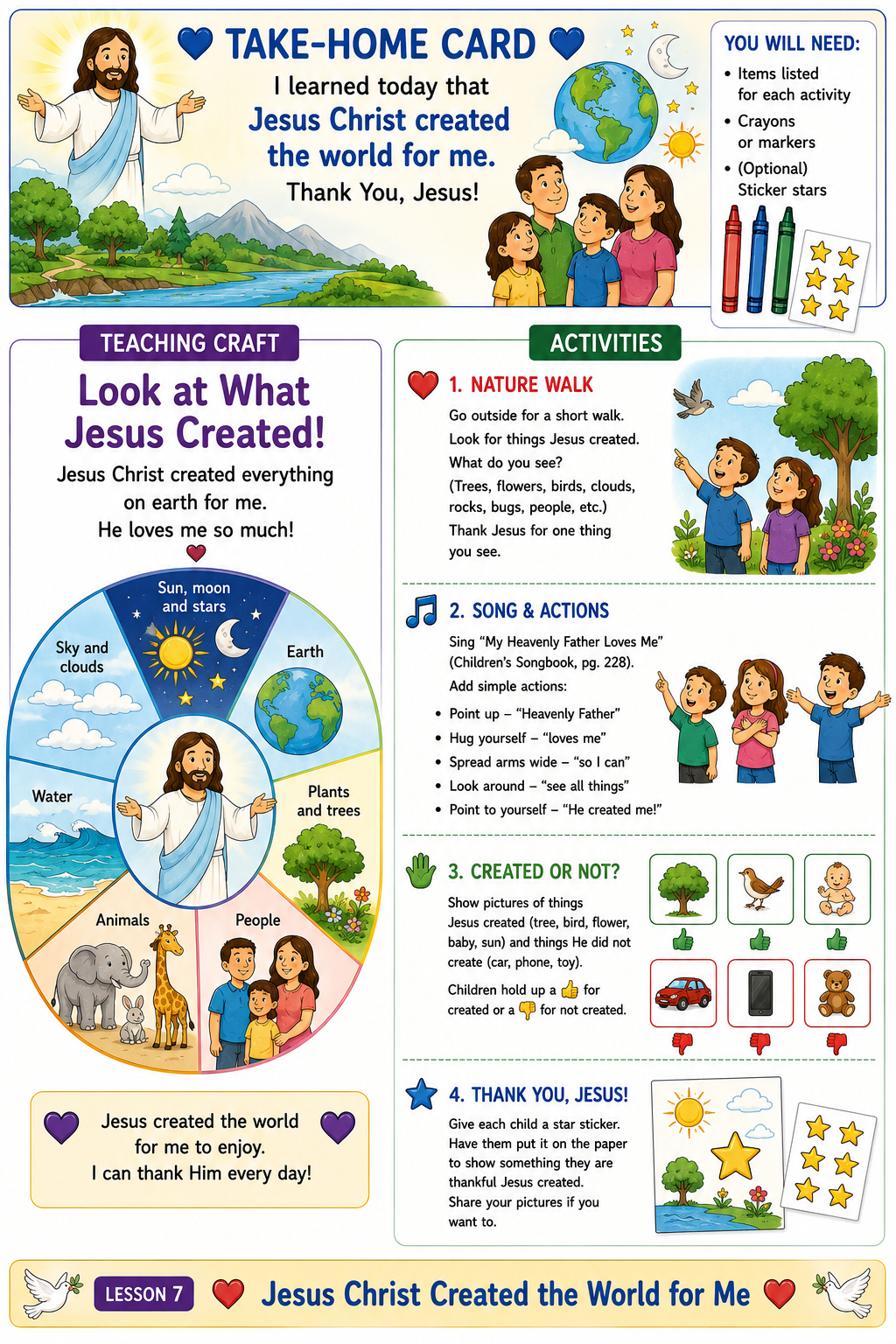
- Lesson 7 – Jesus Christ Created the World for Me
- Teaching Craft & Card
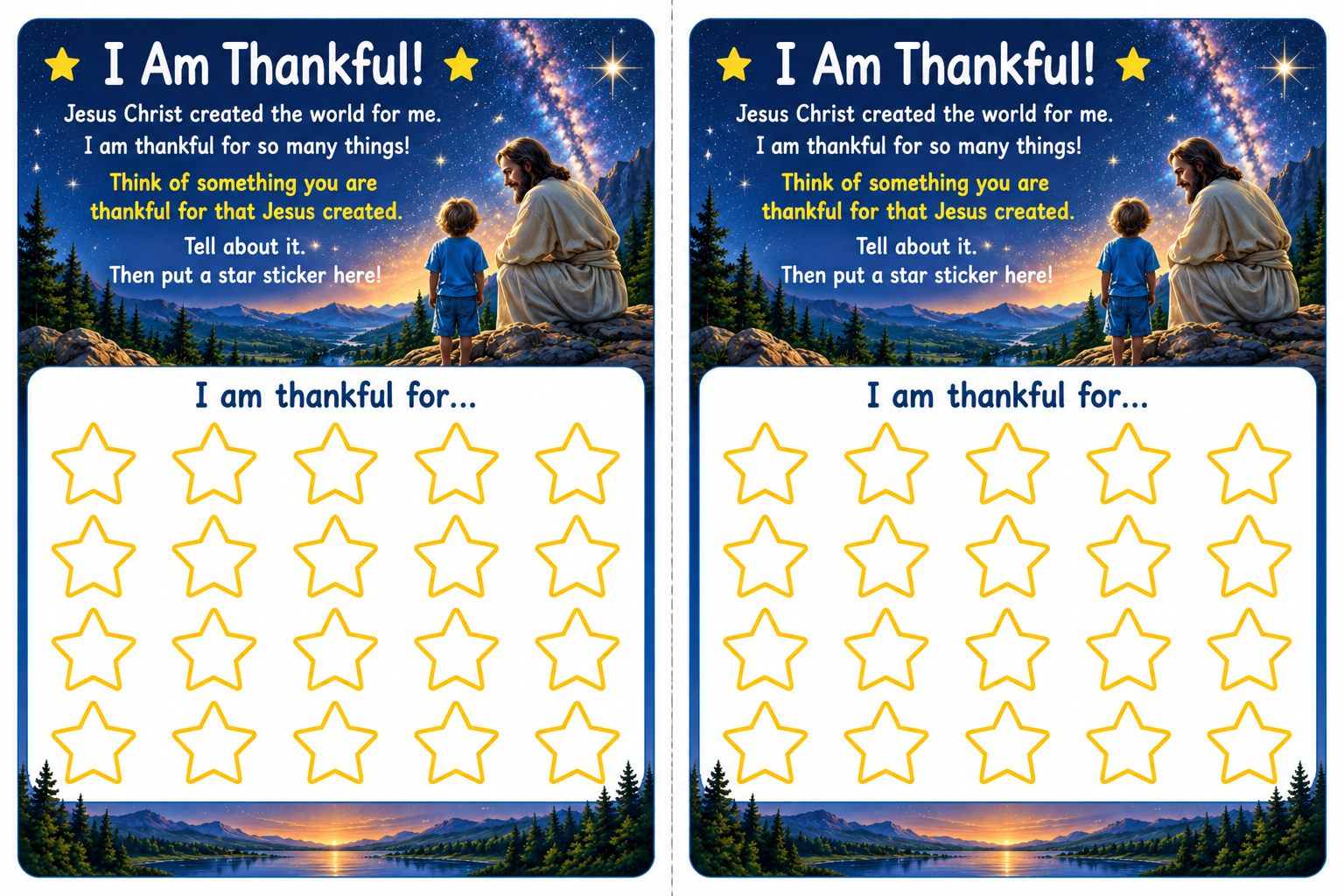
- Simple Take-Home Craft : (print landscape)
- Game
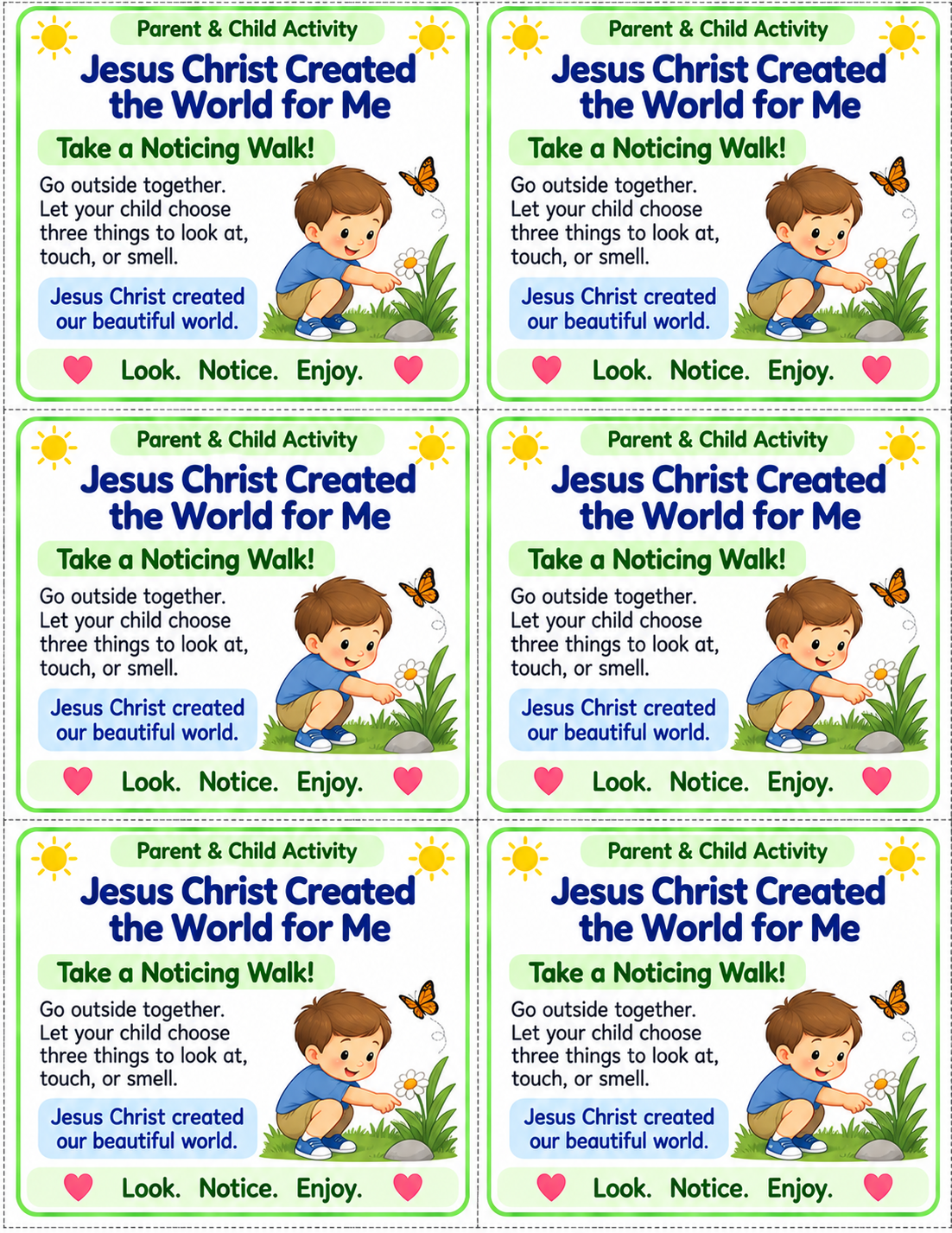
- Parent & Child Activity: Jesus Christ Created the World for Me
- Parent Card
- Gospel for the Glovebox: Lessons 5-8 (second side)
- Teaching Young Children
- GOAL
- Help children understand that under Heavenly Father’s direction, Jesus Christ created the earth and its many wonderful things for us.
- WHAT LITTLE CHILDREN CAN UNDERSTAND
- Jesus Christ created the earth. I can enjoy and care for His creations.
- HOW CHILDREN CAN EXPERIENCE IT
- This one practically teaches itself because children can see, hear, smell, touch, and experience creation. Let them notice real things whenever possible: a leaf, flower, rock, water, sunshine, an animal, clouds, grass, fruit. Ask simple questions:
- “What color is it?”
- “How does it feel?”
- “Can you smell it?”
- “What do you like about it?”
- Then make the connection: “Jesus Christ created our beautiful world.”
- No need to explain creation. Let them experience creation.
- HELPING FAMILIES CONTINUE THE LESSON
- The Parent & Child Activity handout is A Noticing Walk not a scavenger hunt. Just: Take your child outside for five minutes. Let the child choose three things they notice. “Jesus Christ created our beautiful world and How can we take care of it”
- I see the world around me → Jesus Christ created these wonderful things → His creations show His love for me.
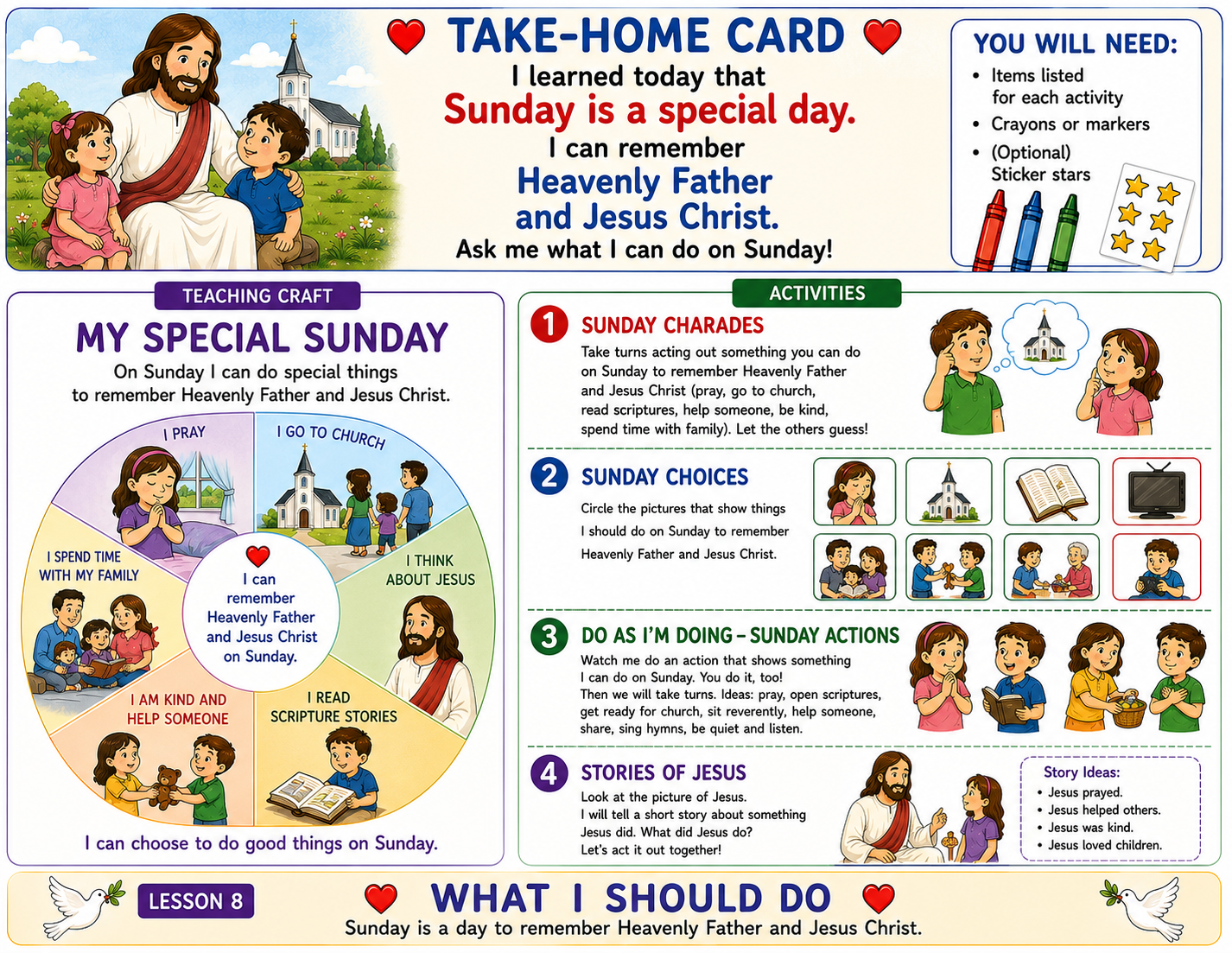
- Lesson 8 – Sunday is a Day to Remember Heavenly Father and Jesus Christ
- Teaching Craft & Card
- Simple Take-Home Craft (print landscape)
- Game
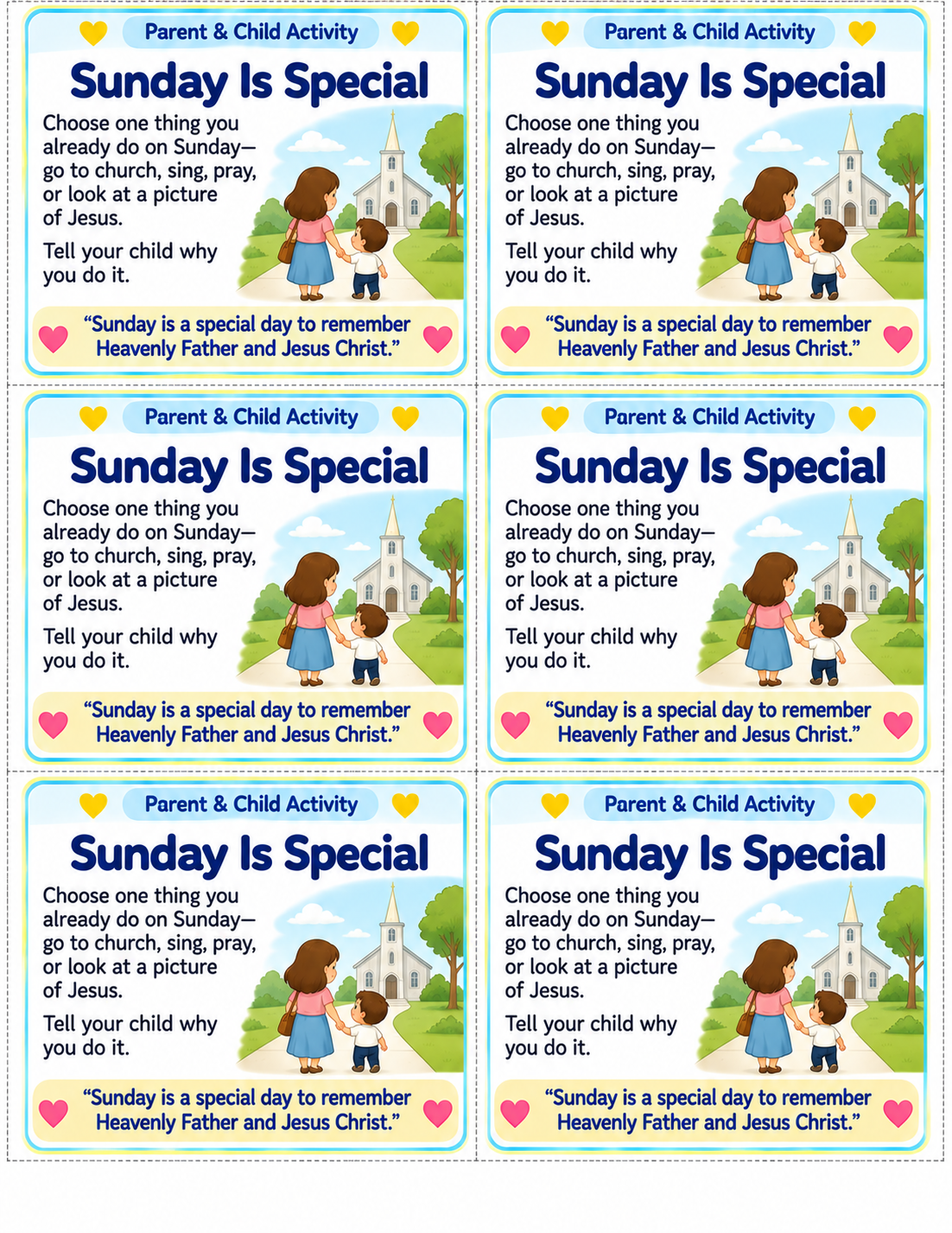
- Parent & Child Activity: Sunday is Special
- Parent Card
- Gospel for the Glovebox: Lessons 5-8 (second side)
- Teaching Young Children
- GOAL
- Help children begin to understand that Sunday is a special day set apart for worshipping Heavenly Father and Jesus Christ, remembering Them, and drawing closer to Them.
WHAT LITTLE CHILDREN CAN UNDERSTAND: - Sunday is a special day. On Sunday, I think about Heavenly Father and Jesus Christ. At this age, “remember” needs to be very simple. We aren’t asking them to contemplate or sustain attention. We’re helping them recognize that Sunday connects them to Heavenly Father and Jesus.
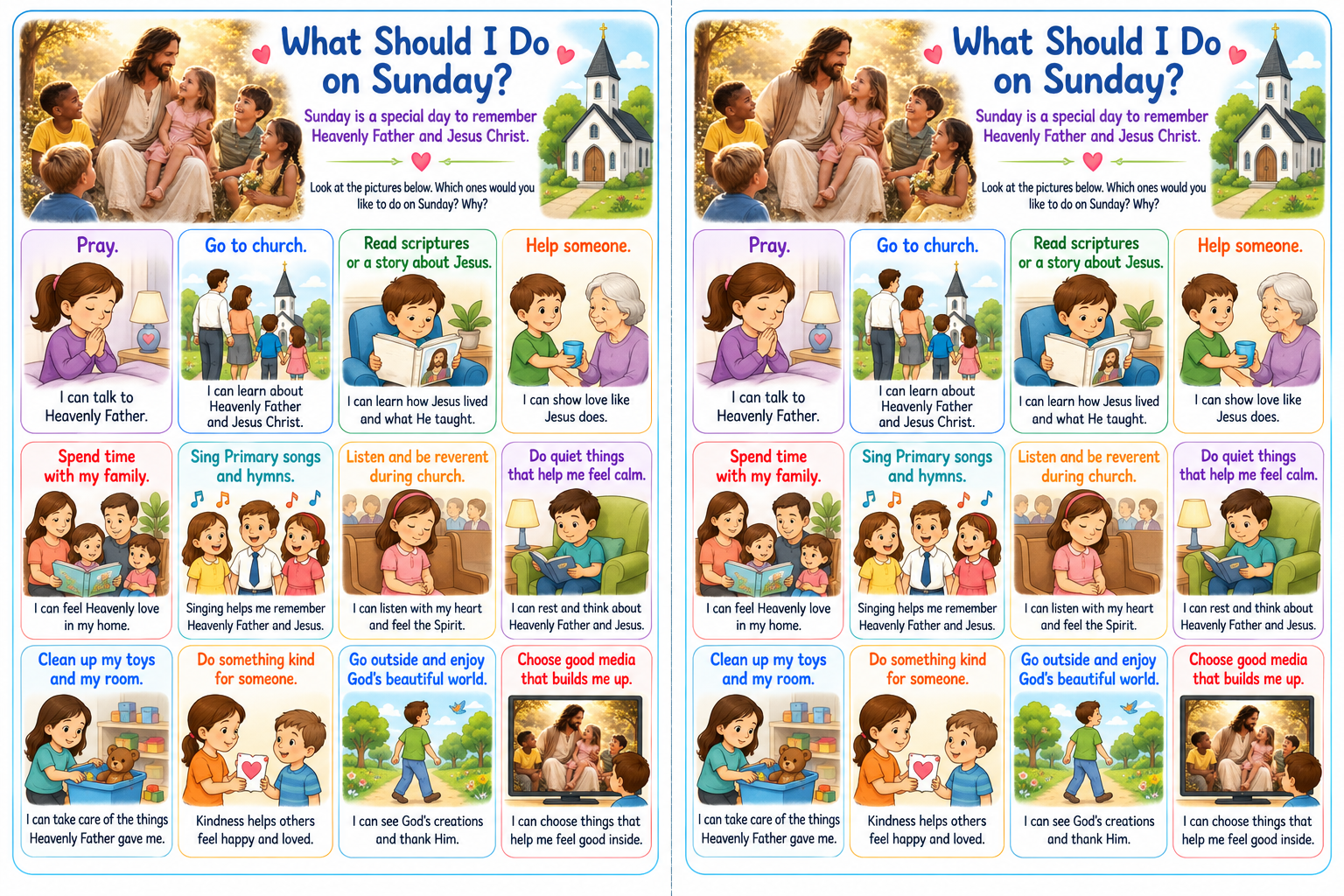
HOW CHILDREN CAN EXPERIENCE IT - Help children recognize the things they already see and do on Sunday that can remind them of Heavenly Father and Jesus Christ. They can: see a picture of Jesus, go to church, sing a song about Jesus, hear a scripture story, pray, take the sacrament, do something kind. As you practice some of these things in Nursery, name the connection: “We are singing about Jesus.” “We came to church today.” Sunday is a special day to remember Heavenly Father and Jesus.” The experience isn’t really learning a list of appropriate Sunday activities. It’s beginning to associate familiar Sunday experiences with Whom the day is about.
HELPING FAMILIES CONTINUE THE LESSON - The Parent & Child Activity handout invites parents to choose one ordinary thing their family already does on Sunday and deliberately make the connection for their child. Walking into church: “We’re going to church to learn about Heavenly Father and Jesus.” Looking at a picture of Jesus:“It’s Sunday. Let’s remember Jesus.” Singing together: We’re singing about Jesus.” At bedtime: “What did we do today that helped us remember Jesus?” No elaborate new Sunday routine is necessary. Parents simply name the meaning behind something they’re already doing.
- Sunday is different → We do things that remind us of Heavenly Father and Jesus → Sunday is a special day to remember Them.
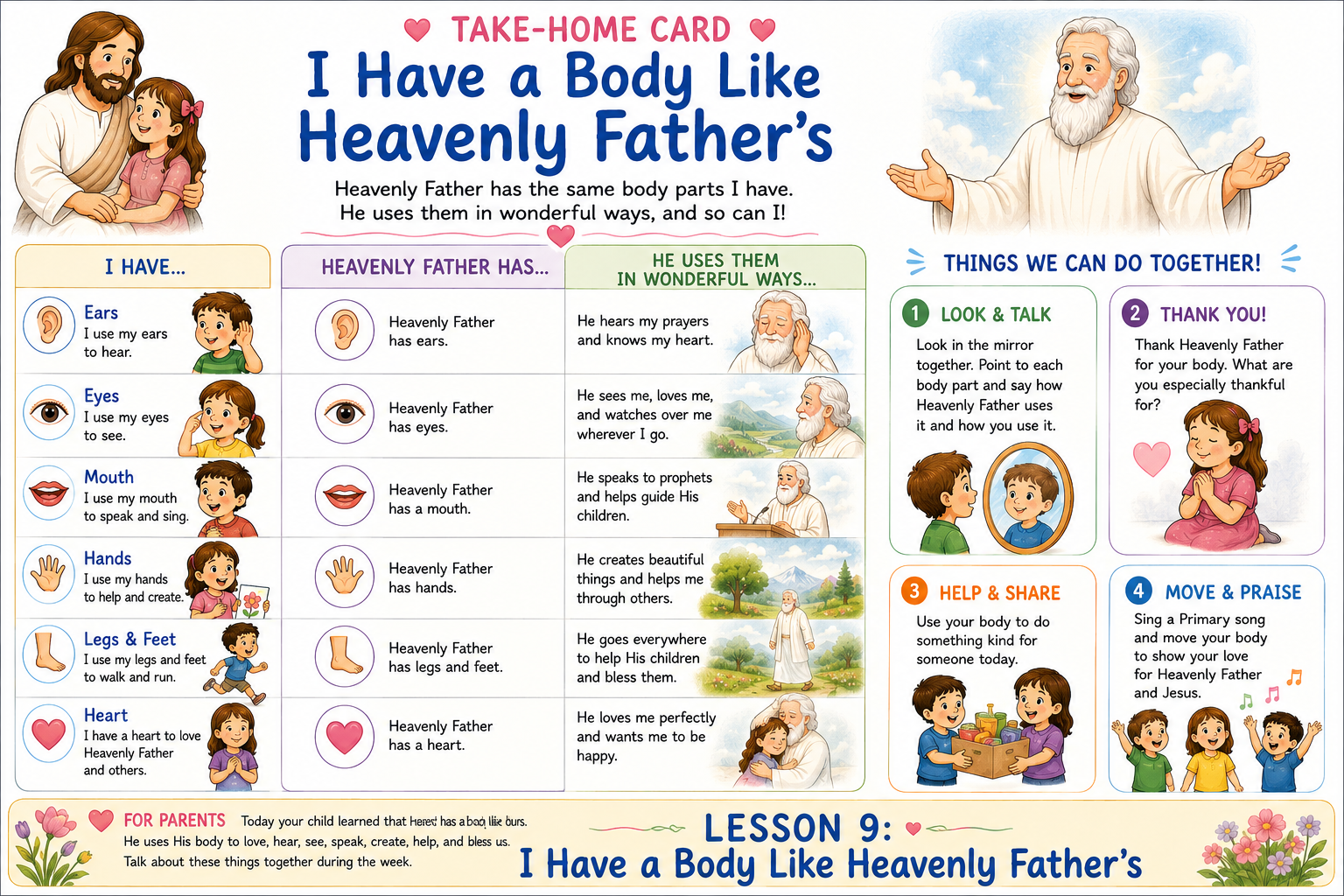
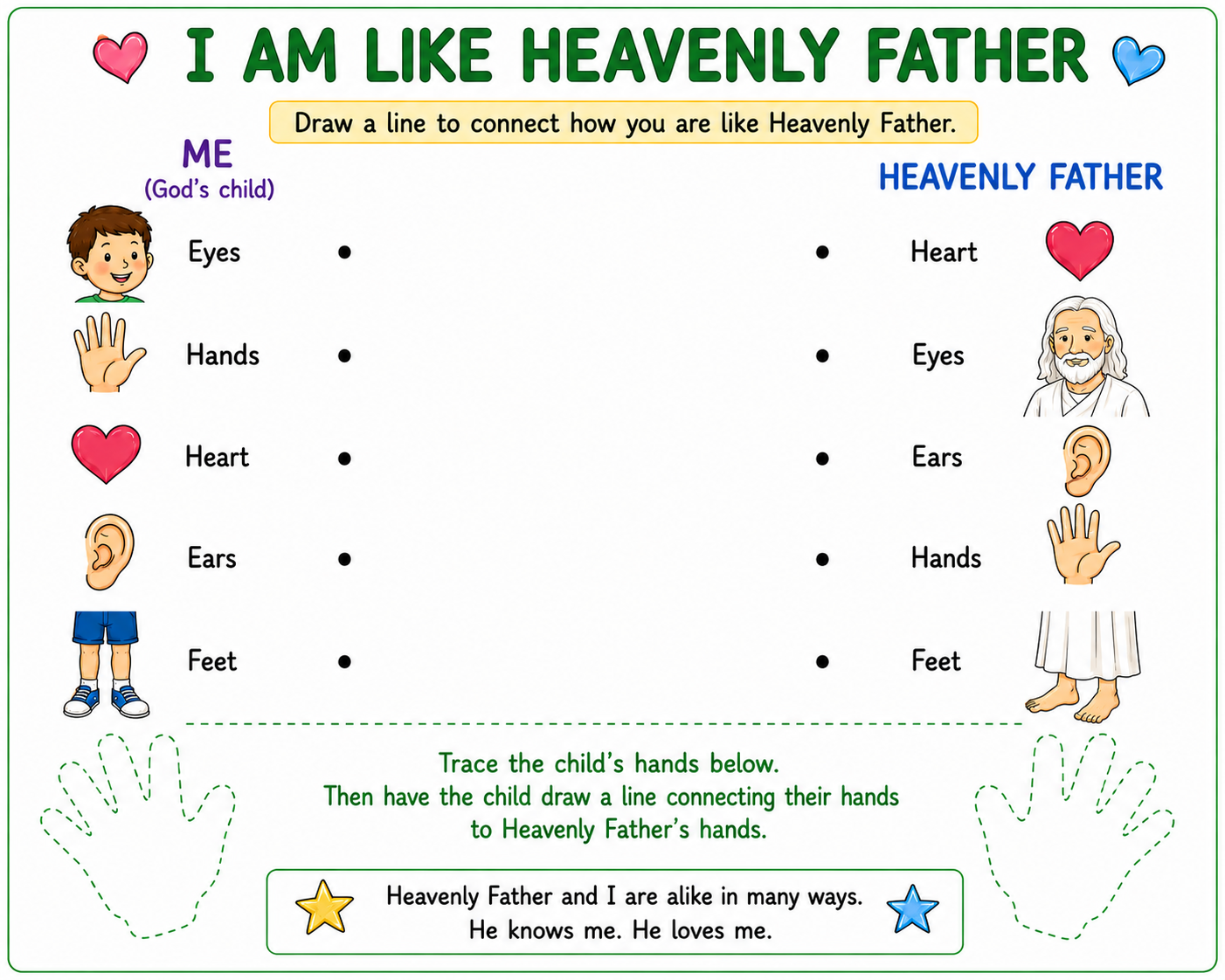
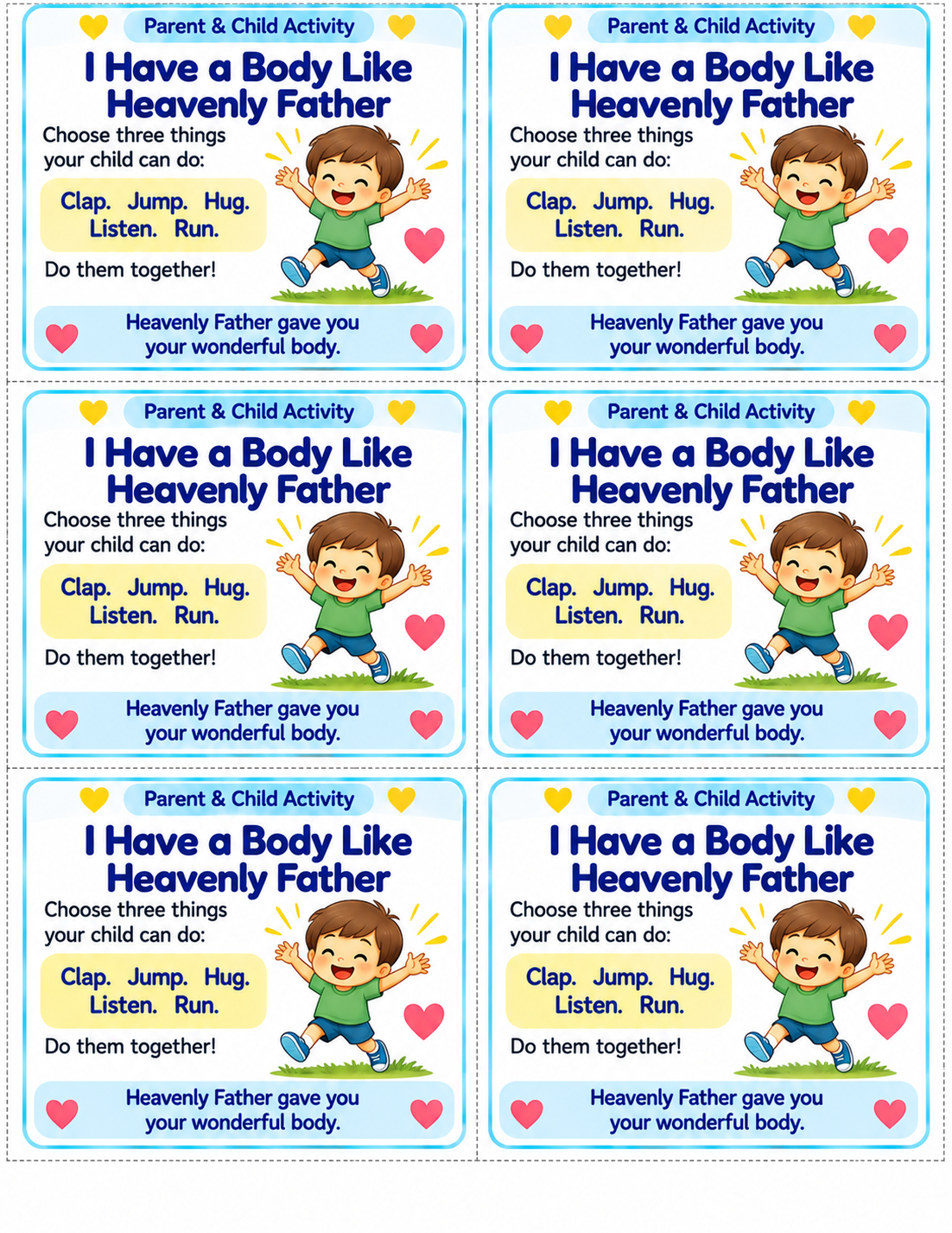
- Lesson 9 – I Have a Body like Heavenly Father’s
- Teaching Craft & Card
- Simple Take-Home Craft (trace child’s hand at the bottom)
- Game
- Parent & Chid Activity: I Have a Body like Heavenly Father’s
- Parent Card
- Gospel for the Glovebox: Lessons 9-12 (side one)
- Teaching Young Children
- GOAL
- Help children begin to understand that they were created in the image of God and that their physical bodies are precious gifts from Heavenly Father, designed to help them learn, grow, and experience mortality.
- WHAT LITTLE CHILDREN CAN UNDERSTAND:
- Young children are naturally aware of their bodies and what they can do with them. At this age, the doctrine of being created in God’s image can begin with a simpler truth that Heavenly Father gave me my body. My body is special.
- HOW CHILDREN CAN EXPERIENCE IT
- Give children opportunities to discover and celebrate what their bodies allow them to experience. Invite them to clap their hands, stomp their feet, listen for sounds, look for colors, smell something pleasant, stretch, move, and give a hug. As they participate, help them connect these familiar abilities with the gift of having a body. Gratitude for the body can begin long before children understand the larger doctrine of being created in God’s image.
- HELPING FAMILIES CONTINUE THE LESSON:
- The Parent & Child Activity handout invites parents to notice their child’s body in positive, purposeful ways during ordinary activities. Rather than focusing primarily on appearance, parents can draw attention to what the child’s body allows them to do, learn, feel, and experience “Your hands helped you build that,” or “Your legs carried you all the way up those stairs.” Occasionally connect these observations to the gospel truth that “Heavenly Father gave you a wonderful body.”
- I notice my body → I discover what it can do → My body is a wonderful gift from Heavenly Father.
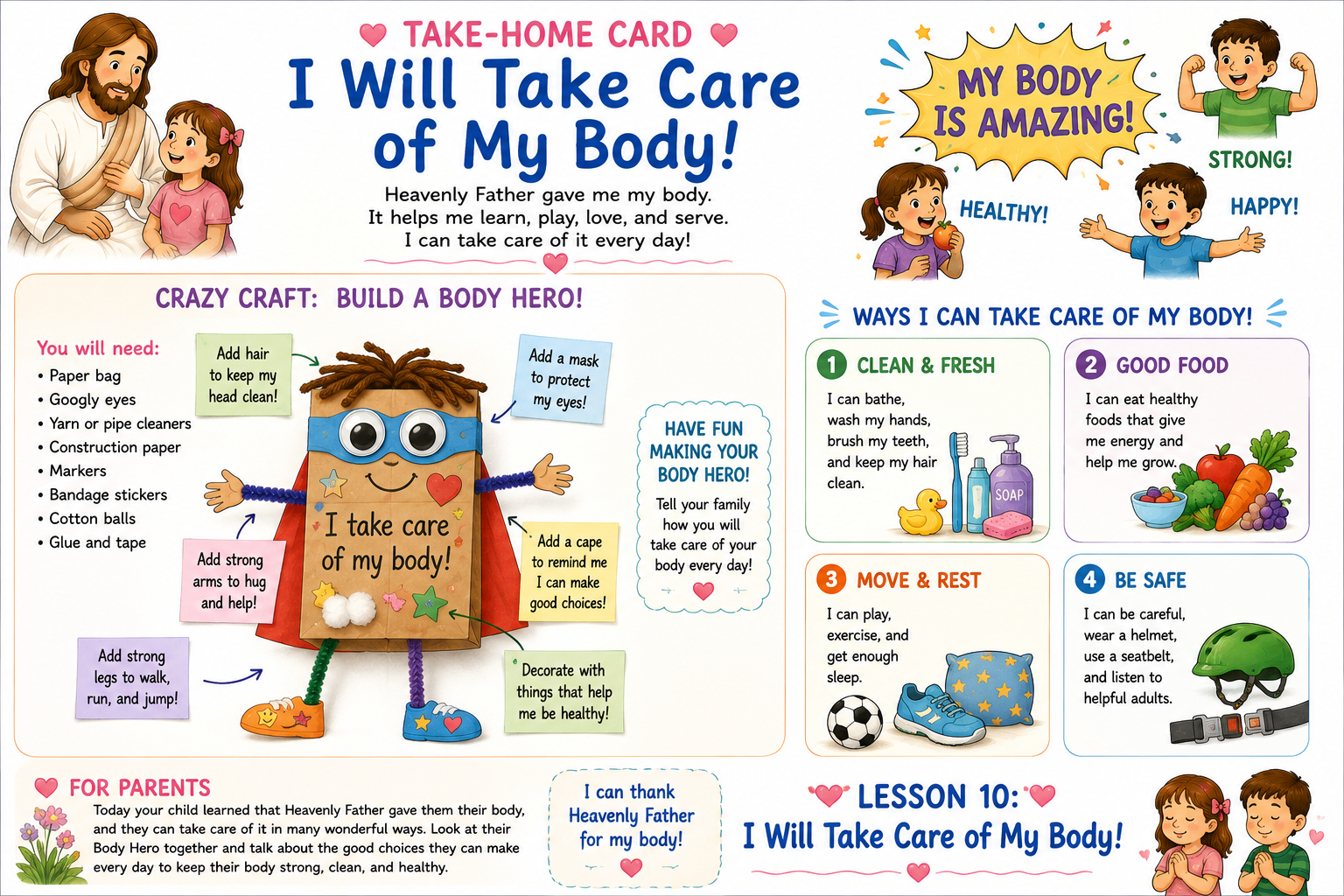
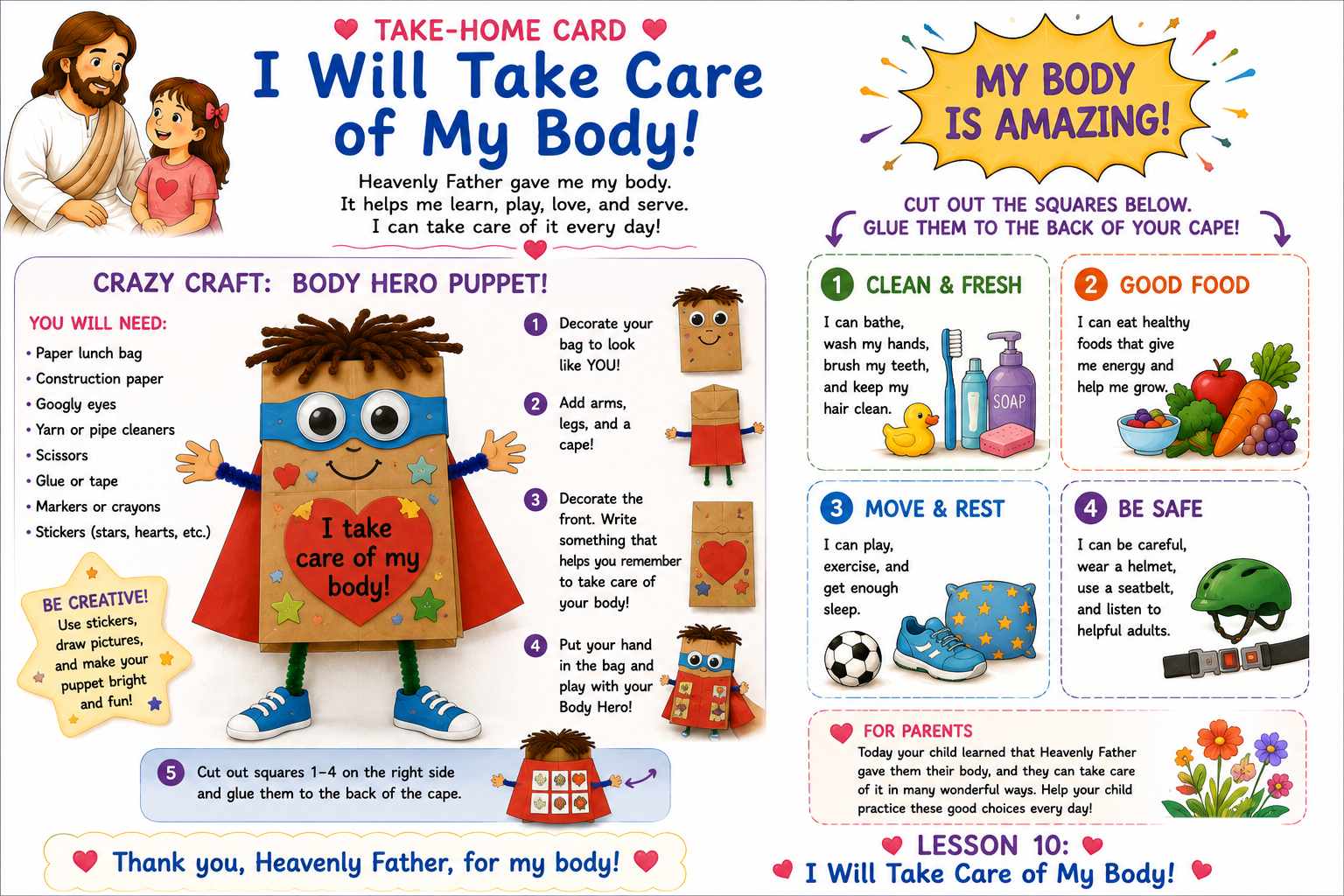
- Lesson 10 – I Will Take Care of My Body
- Teaching Craft & Card
- Simple Take-Home Craft
- Game
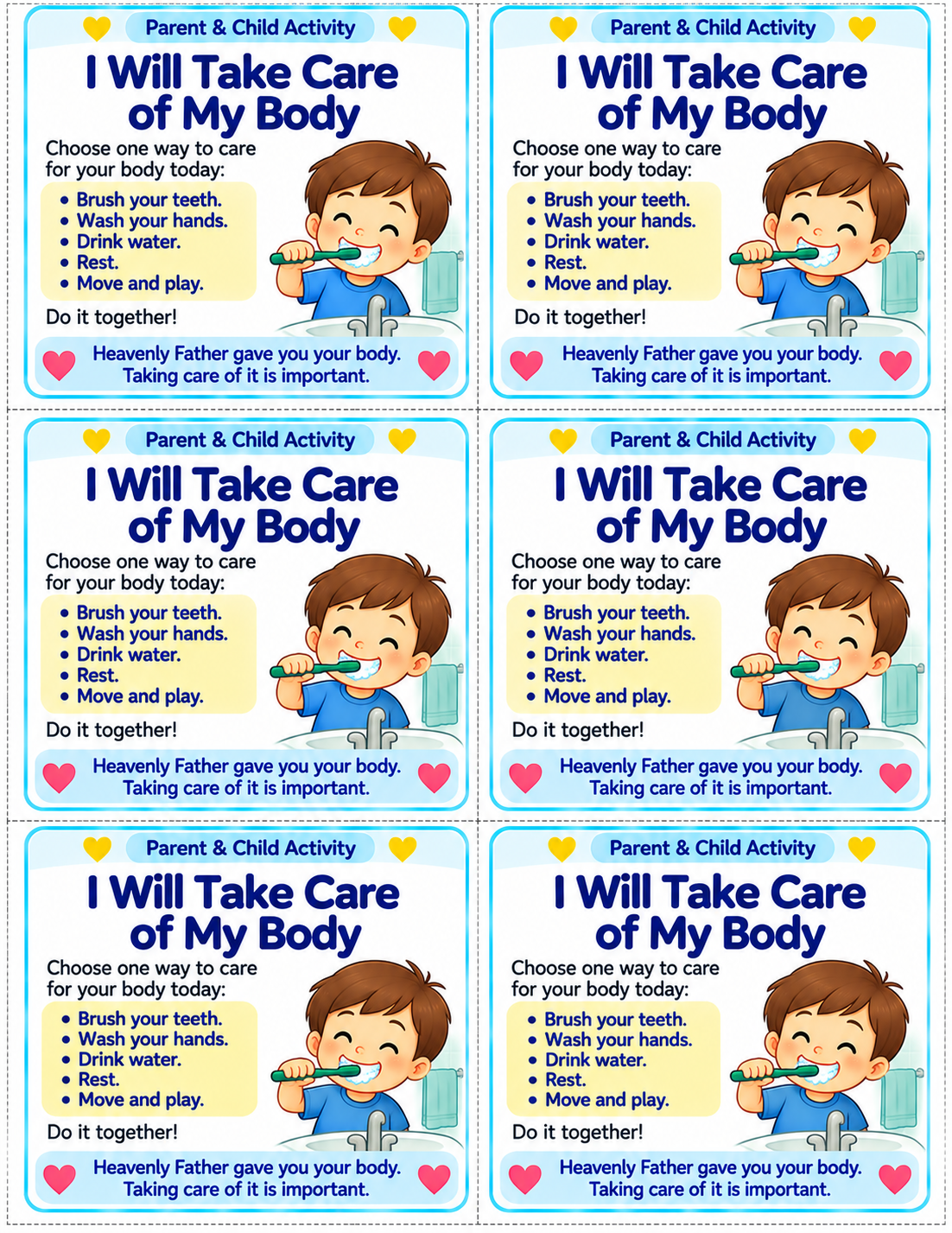
- Parent & Child Activity: I Will Take Care of My Body
- Parent Card
- Gospel for the Glovebox: Lessons 9-12 (side one)
- Teaching Young Children
- GOAL
- Help children understand that because their bodies are gifts from Heavenly Father, caring for their physical needs is one way they can show gratitude and respect for that gift.
- WHAT LITTLE CHILDREN CAN UNDERSTAND:
- Young children can understand caring for their bodies through familiar daily routines. The foundational truth is simple: My body is a gift from Heavenly Father. I can help take care of it.
- HOW CHILDREN CAN EXPERIENCE IT
- Allow children to practice or act out familiar ways of caring for their bodies: washing hands, brushing teeth, eating nourishing food, drinking water, resting, moving and playing, and staying clean and safe. Rather than presenting these behaviors simply as rules, help children recognize their purpose “That helps take care of your body.” Repeated experiences help children begin connecting everyday choices with caring for the body Heavenly Father has given them.
- HELPING FAMILIES CONTINUE THE LESSON:
- The Parent & Child Activity handout encourages parents to identify healthy behaviors as they naturally occur at home. Instead of relying only on general praise such as “Good job,” parents can name what the child is accomplishing: “You’re brushing your teeth. That helps take care of your body.” At appropriate moments, they can add the larger connection: “Heavenly Father gave you your wonderful body, and we are helping take care of it.” This helps everyday routines gradually acquire meaning rather than remaining simply things a child is told to do.
- My body is a gift → I learn simple ways to care for it → Caring for my body shows gratitude for Heavenly Father’s gift.
- Lesson 11 – I Love My Family
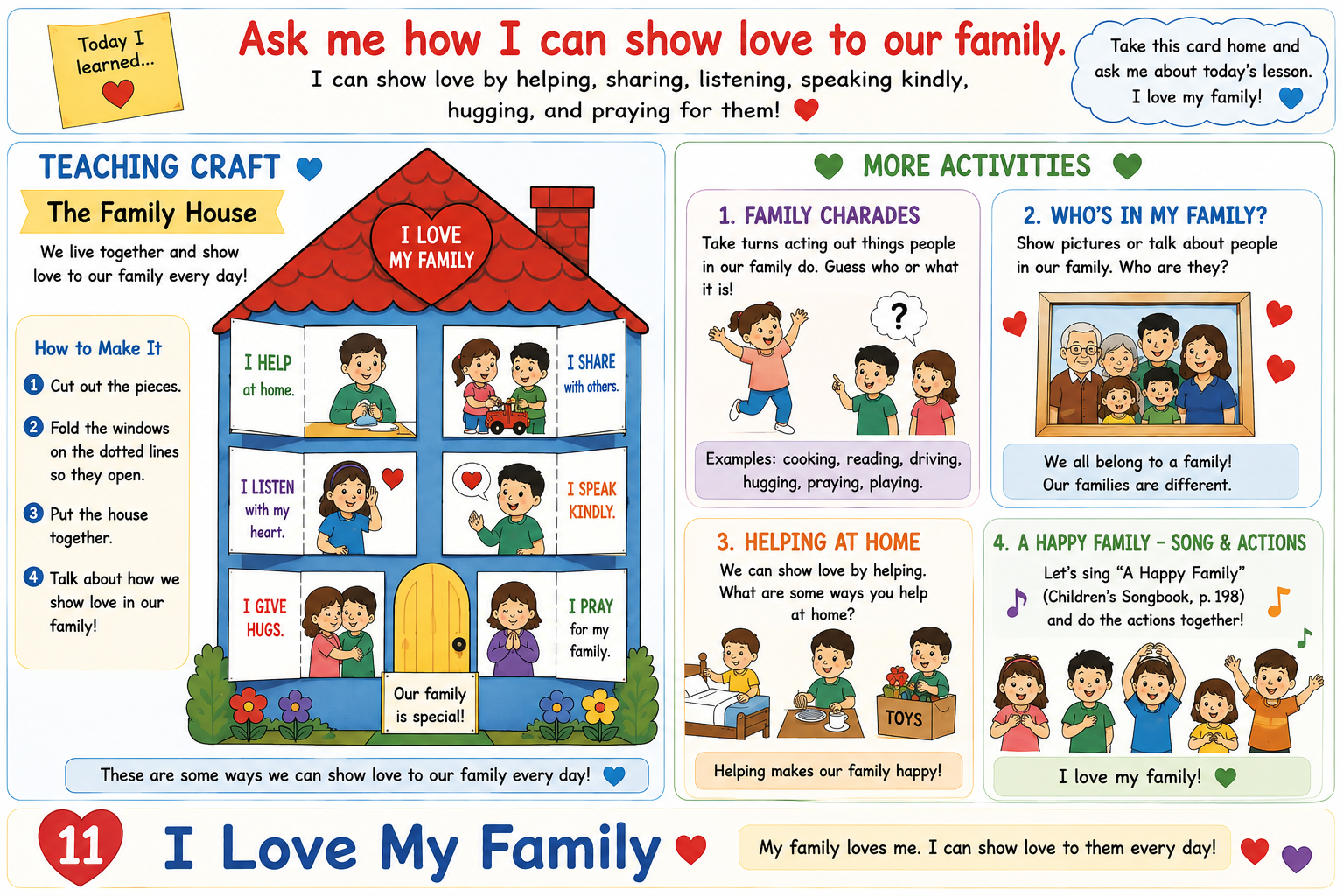
- Teaching Craft & Card
- Simple Take-Home Craft
- Game
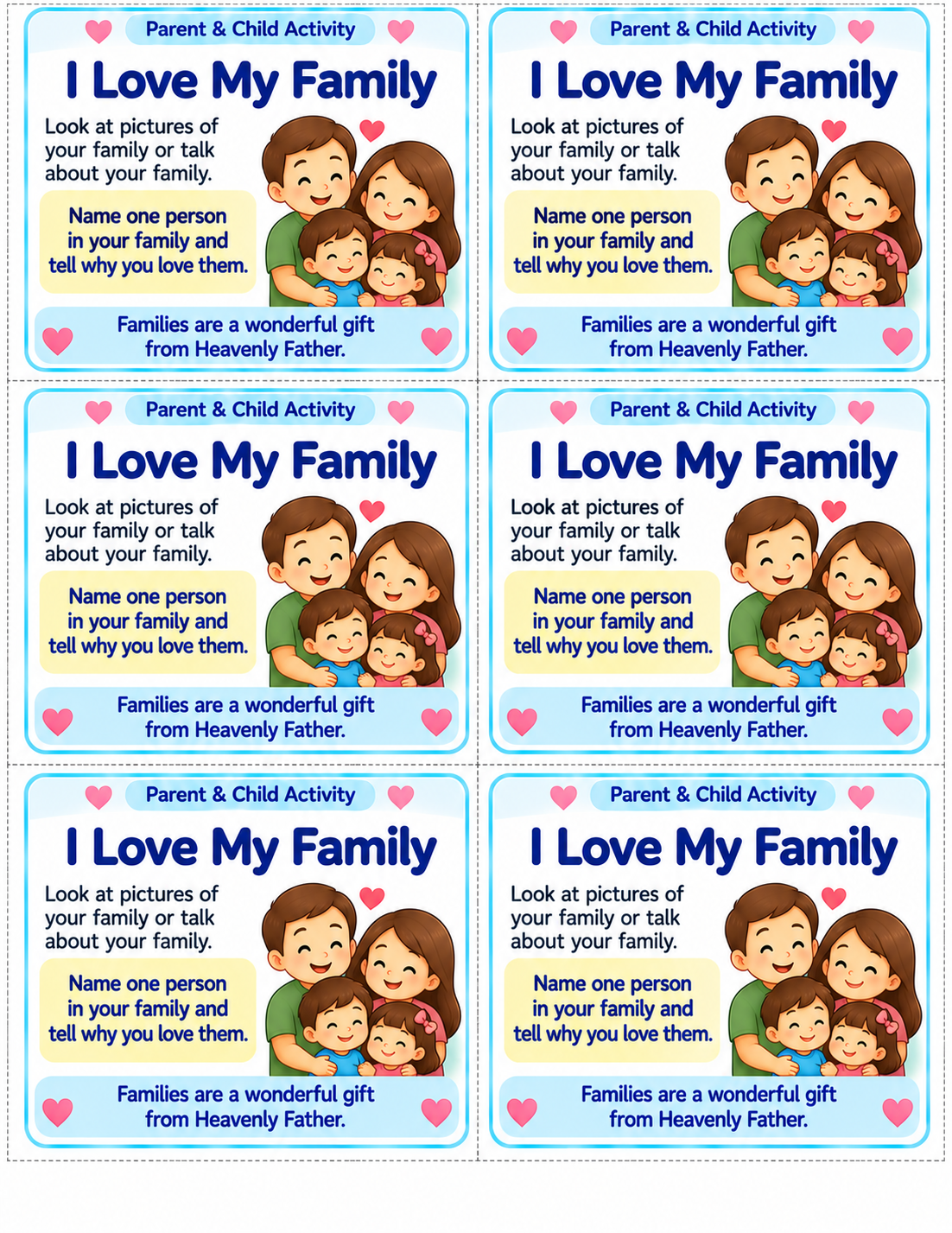
- Parent & Child Activity: I Love My Family
- Parent Card
- Gospel for the Glovebox: Lessons 9-12 (second side)
- Teaching Young Children
- GOAL
- Help children understand that families are part of Heavenly Father’s plan and encourage them to develop love, gratitude, and kindness within their families.
- WHAT LITTLE CHILDREN CAN UNDERSTAND
- My family loves me. I can show love to my family.
- HOW CHILDREN CAN EXPERIENCE IT
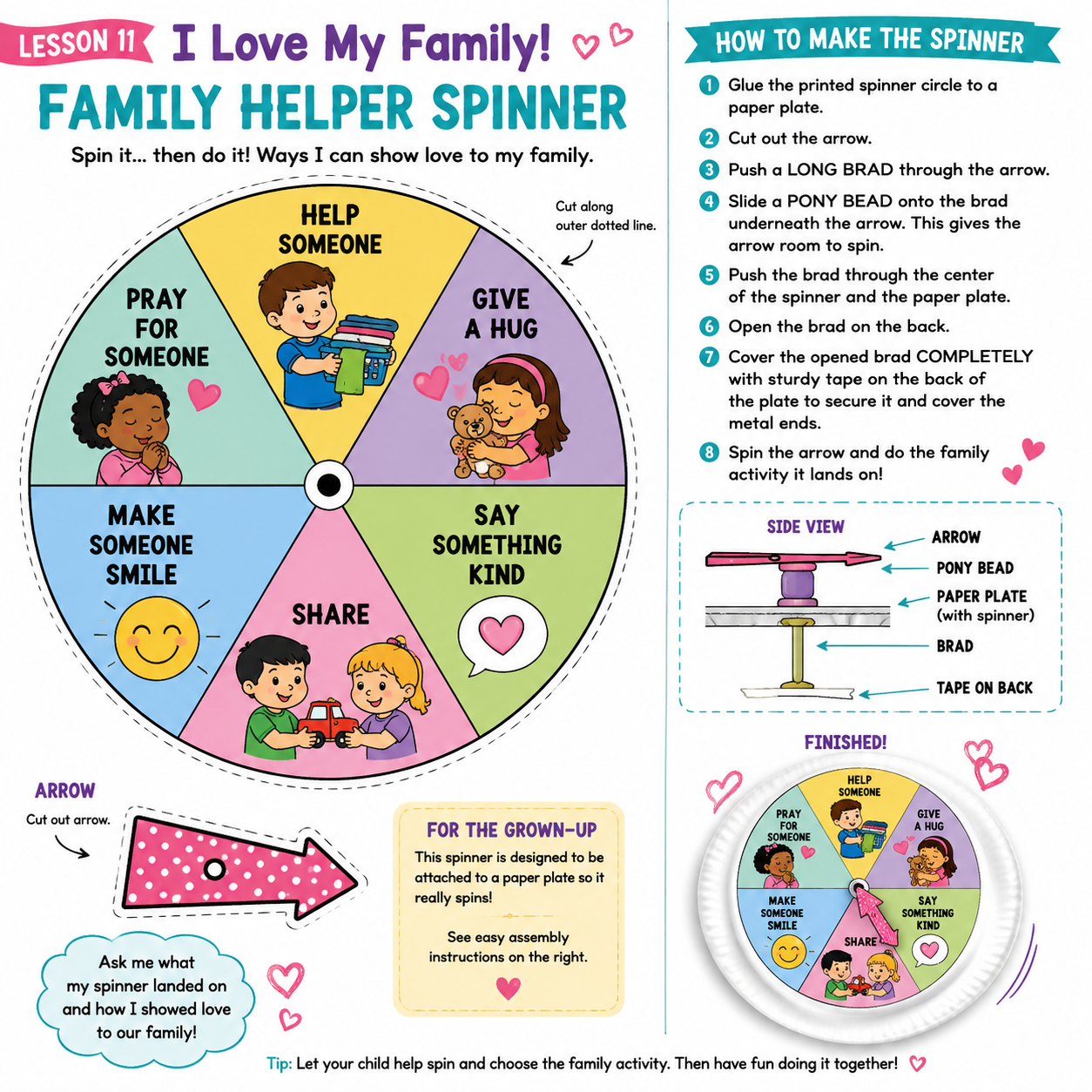
- Use the family spinner to help each child think about the people in their own family. As the child spins, talk about the family member pictured and ask one very simple question:
- How can you show love to Mom?”
- “What could you do for Dad?”
- “How can you be kind to your brother?”
- Let the child act out a simple loving action, a hug, helping pick something up, sharing, saying “I love you,” or drawing a picture.
- HELPING FAMILIES CONTINUE THE LESSON
- Send the family spinner home and invite parents to use it for a Family Love Challenge. Let the child spin once each day and choose one small way to show love to the family member the spinner lands on. Parents can help the child notice afterward “You showed love to your family!”
- I know my family → I experience their love → I can show love to them too.
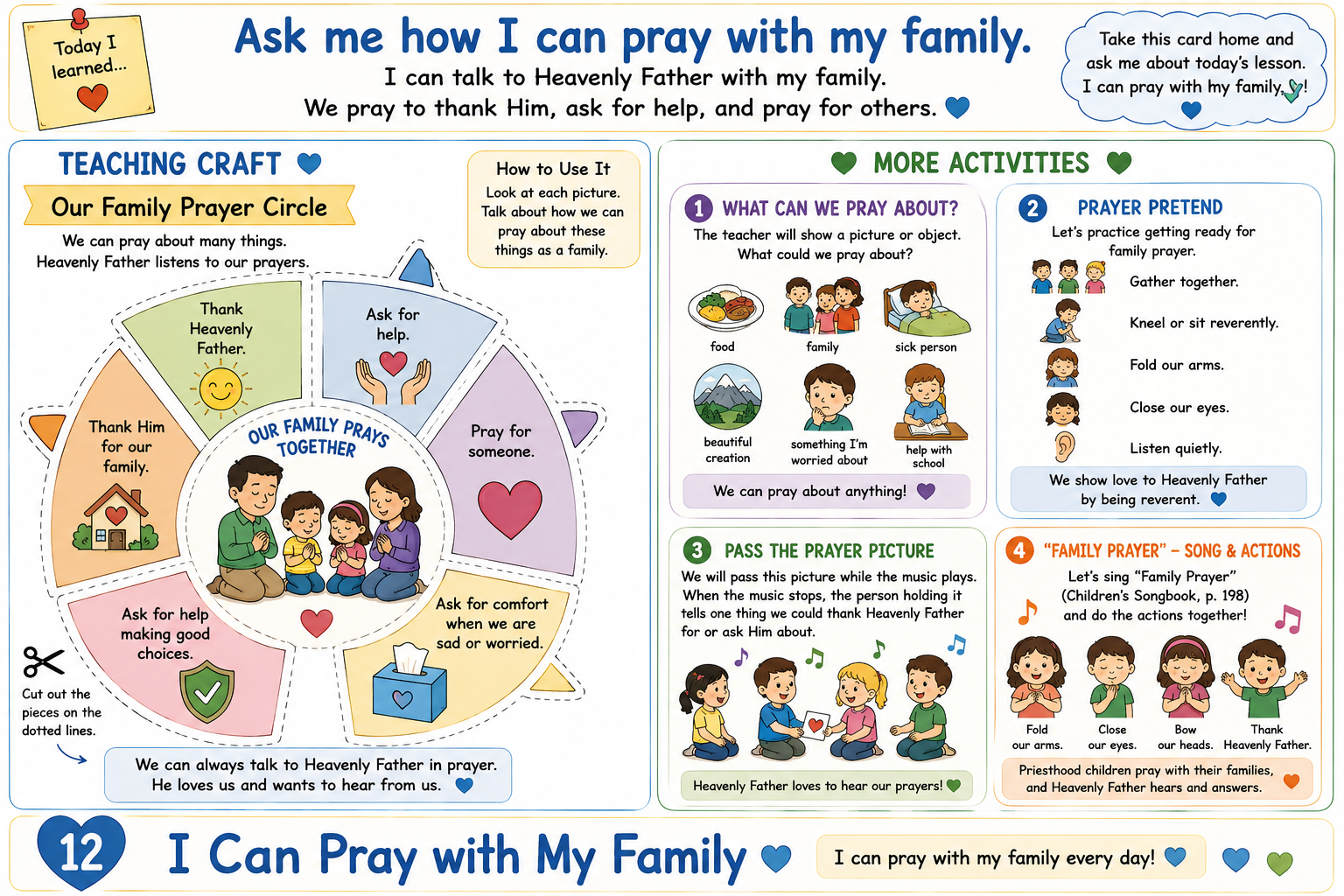
- Lesson 12 – I Can Pray with My Family
- Teaching Craft & Card
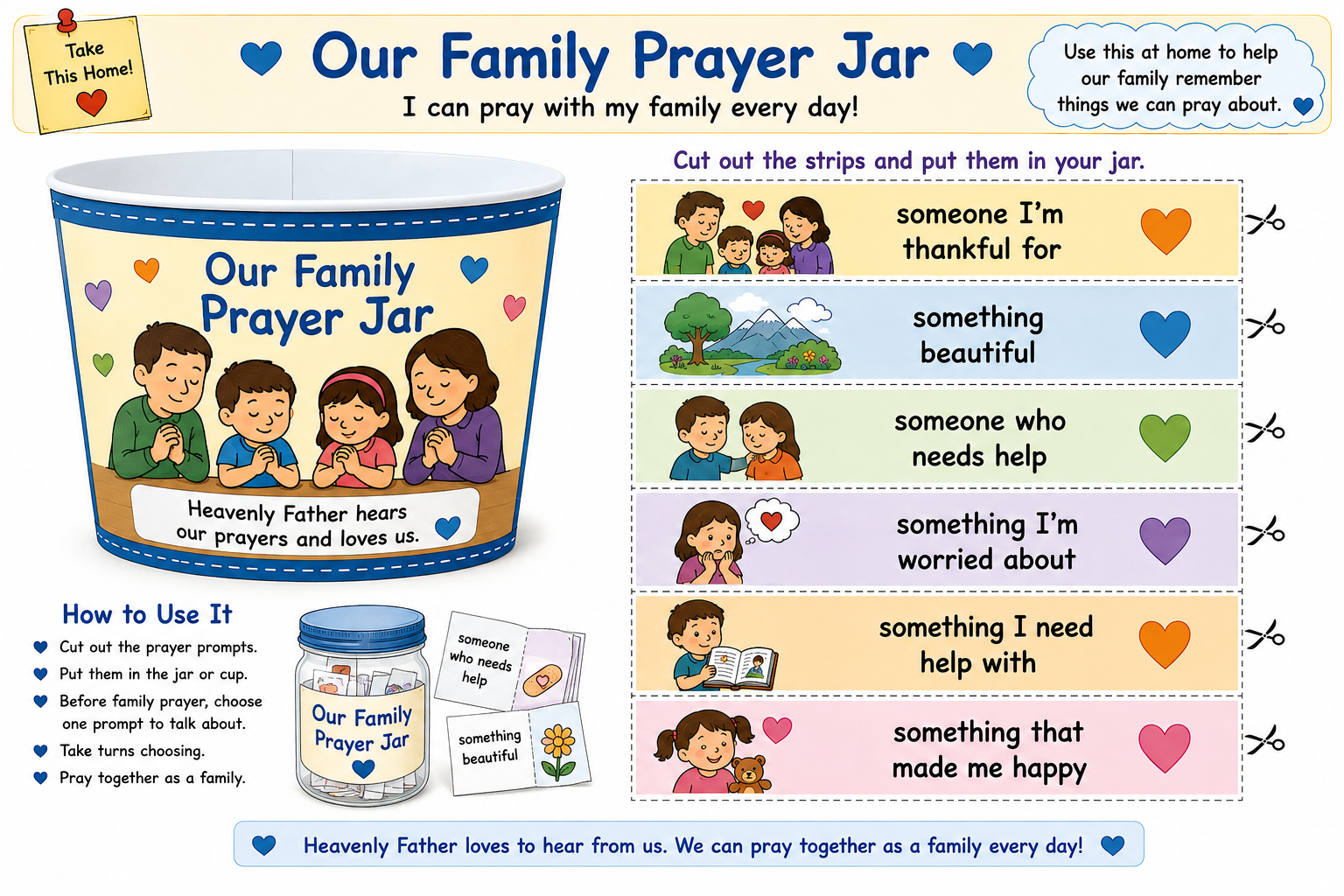
- Simple Take-Home Craft
- Game
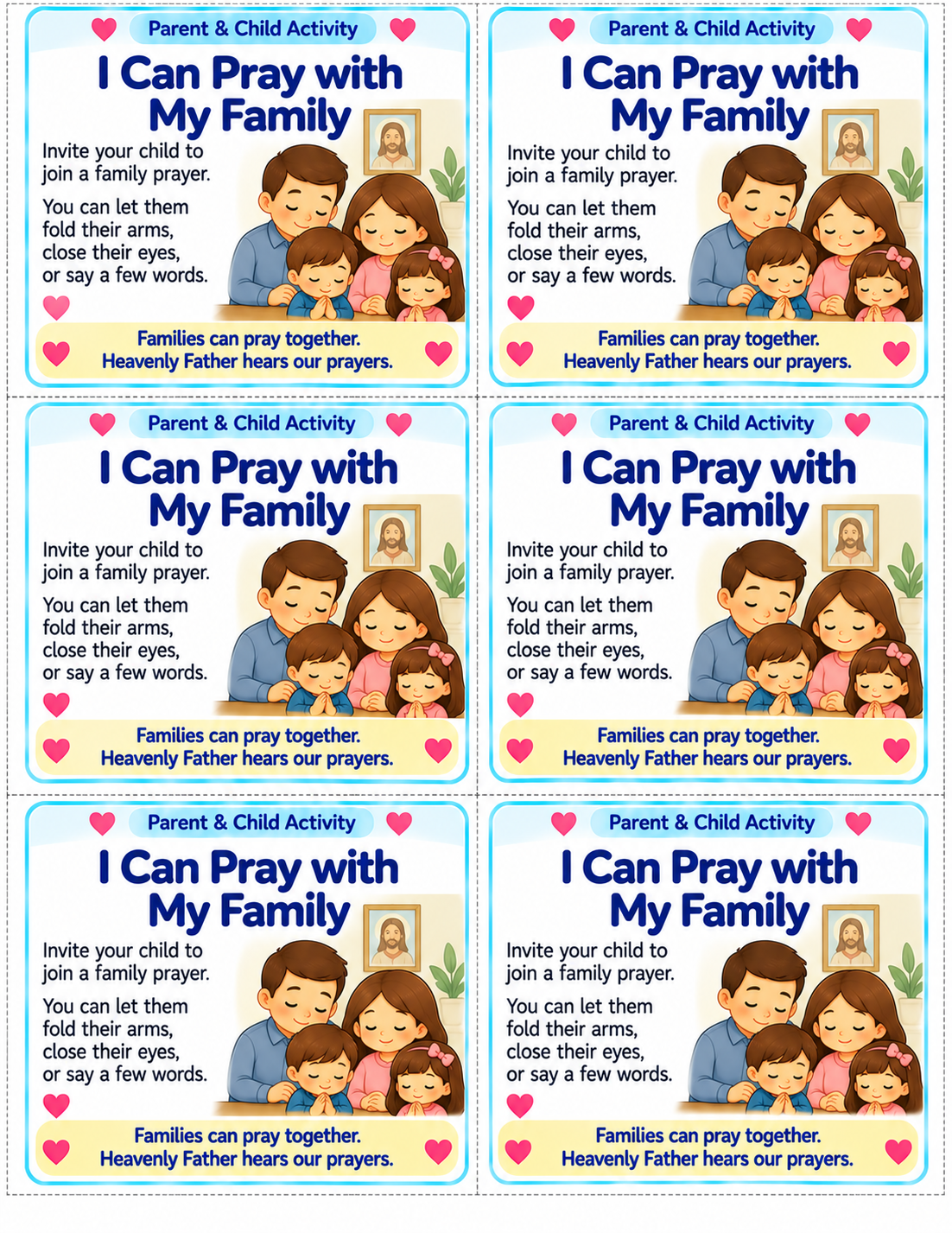
- Parent & Child Activity: I Can Pray With My Family
- Parent Card
- Gospel for the Glovebox: Lessons 9-12 (second side)
- Teaching Young Children
- GOAL
- Help children understand that families can pray together to Heavenly Father and that family prayer can strengthen family relationships, express gratitude, seek Heavenly Father’s help, and invite His influence into the home.
- WHAT LITTLE CHILDREN CAN UNDERSTAND
- Young children already understand the experience of doing things together as a family. Build on that familiar idea with a simple truth, My family can talk to Heavenly Father together. They do not need to understand all the purposes of family prayer. They can begin by recognizing that prayer is something their family can share.
- HOW CHILDREN CAN EXPERIENCE IT
- Let children practice participating in a family prayer rather than only talking about one. Arrange dolls, figures, or even the children themselves as a pretend family gathering for prayer. Let children practice folding their arms, closing their eyes if they choose, listening, and saying “Amen.”Most importantly, help them contribute something of their own:
- “What could our family thank Heavenly Father for?”
- “Is there someone our family could ask Heavenly Father to help?”
- This allows children to experience family prayer as something they participate in, not merely something adults do while they sit quietly.
- HELPING FAMILIES CONTINUE THE LESSON
- The Parent & Child Activity handout encourages parents to give their young child a small but meaningful role in family prayer. Before praying, ask the child to choose one thing the family can thank Heavenly Father for or one person they can pray for. If someone else offers the prayer, that child’s contribution can still be included: “You wanted us to thank Heavenly Father for Grandma. Let’s remember Grandma in our prayer.” That helps a little child discover that their thoughts matter.and they can participate when their family talks to Heavenly Father.
- My family gathers together → We talk to Heavenly Father together → I can be part of family prayer.
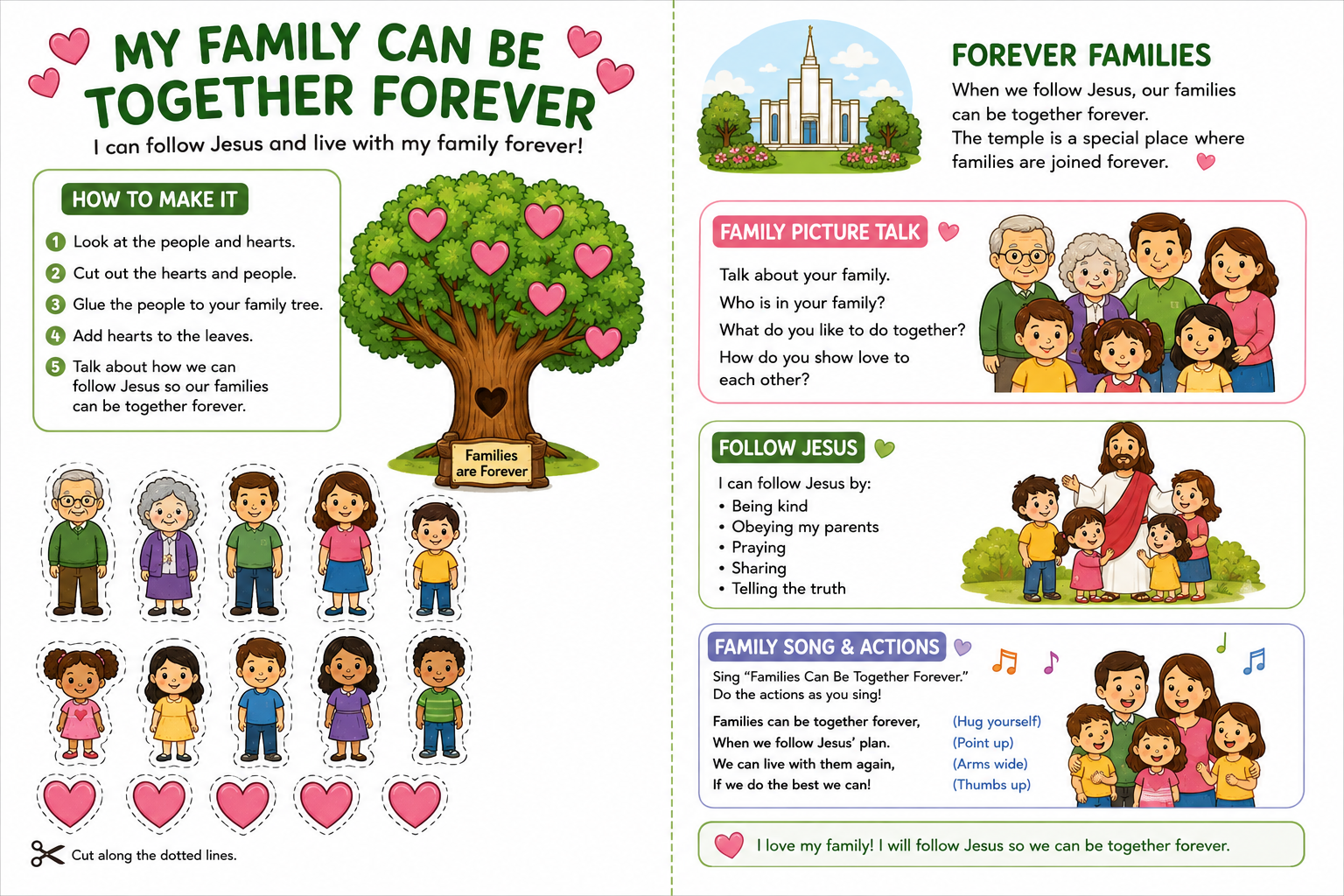
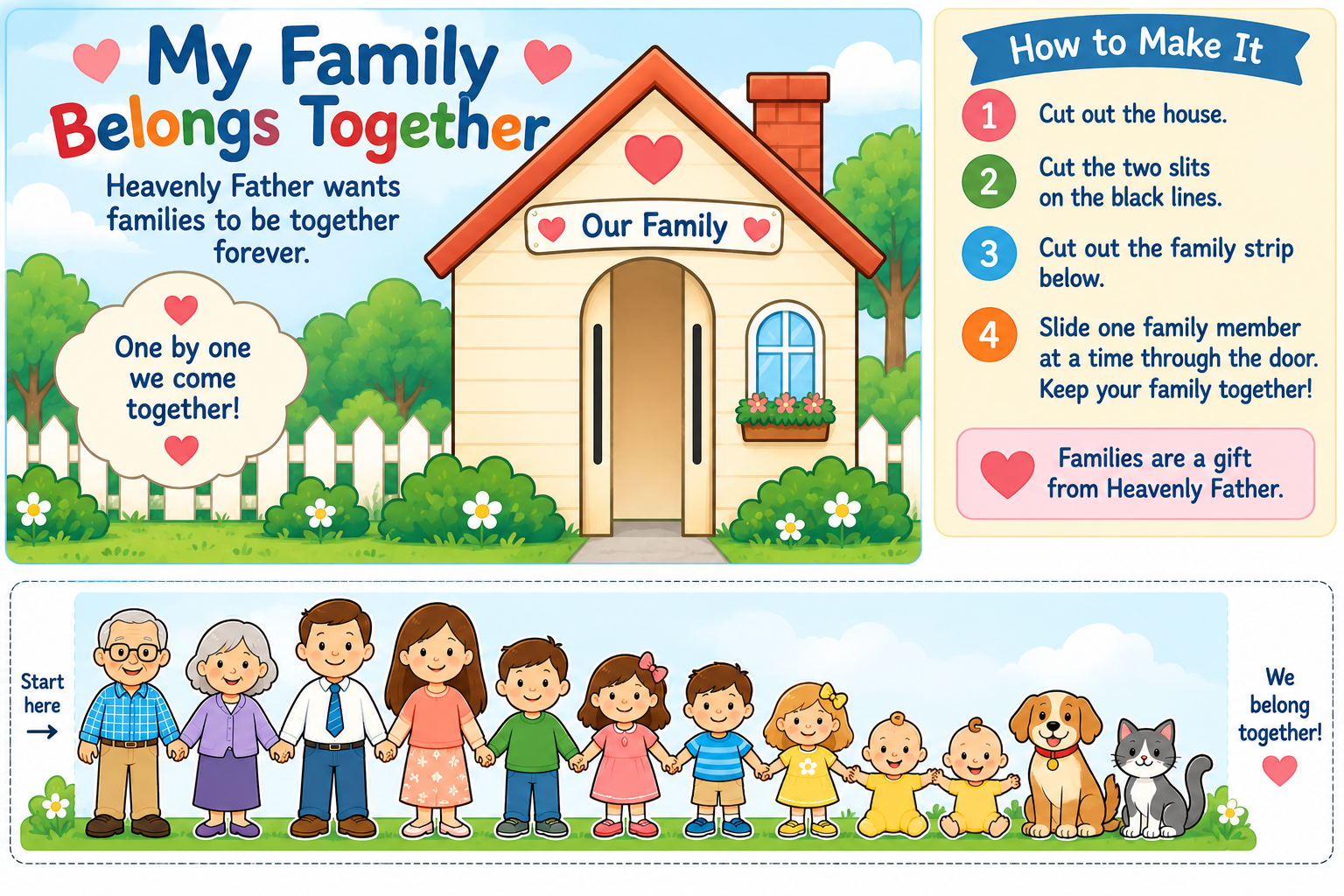
- Lesson 13 – My Family Can Be Together Forever
- Teaching Craft & Card
- Simple Take-Home Craft (print landscape, cardstock preferred)
- Game
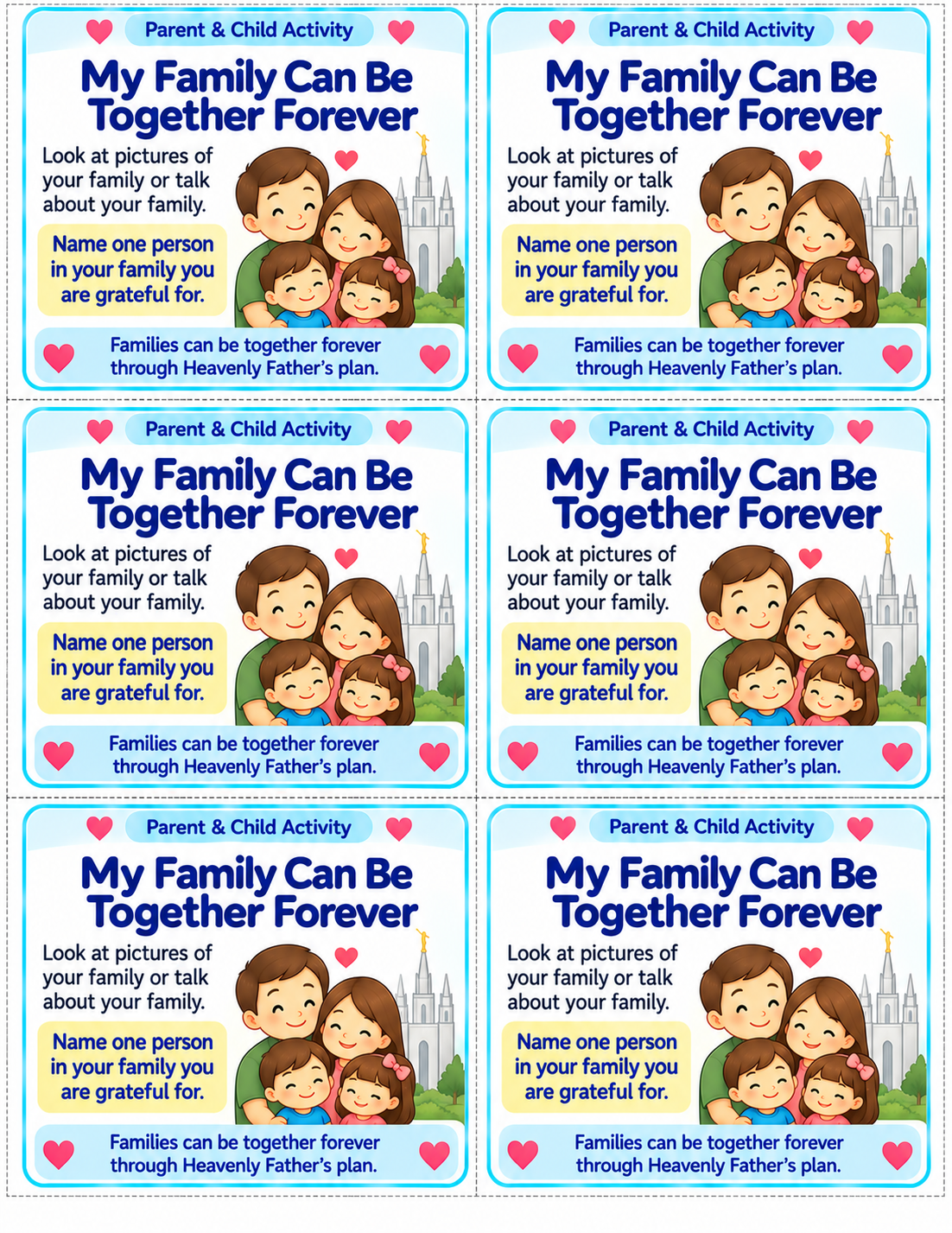
- Parent & Child Activity: My Family Can Be Together Forever
- Parent Card
- Gospel for the Glovebox: Lessons 13-16 (side one)
- Teaching Young Children
- GOAL
- Help children begin to understand Heavenly Father’s plan for families and the doctrine that through Jesus Christ and sacred temple covenants, family relationships can continue beyond this life.
- WHAT LITTLE CHILDREN CAN UNDERSTAND
- “Eternity,” “sealing,” and “life after death” are enormous concepts for a toddler. But belonging isn’t. Maybe you consider beginning here My family is part of Heavenly Father’s plan. Heavenly Father wants families to be together forever. We’re giving them the truth without expecting them to comprehend what forever means.
- HOW CHILDREN CAN EXPERIENCE IT
- Make the abstract idea of family belonging visible. Use pictures of families including different kinds of families and invite children to identify people they love, “Who is in your family?” Let them place family pictures together, hold hands in a circle, link paper figures, or gather figures into one family group. Then give them the doctrinal language:
- “Heavenly Father loves families.”
- “Families are part of Heavenly Father’s plan.”
- “Heavenly Father wants families to be together forever.”
- The child cannot experience eternity. But the child can experience belonging. That’s the bridge.
- HELPING FAMILIES CONTINUE THE LESSON
- The Parent & Child Activity handout invites parents to look at family photographs with their child. Include people the child sees every day and, when appropriate, family members from earlier generations. Rather than trying to explain eternity, simply name the relationships:
- “That’s your grandma.”
- “That’s Grandpa when he was young.”
- “You are part of this family.”
- Then connect it. “Families are very important to Heavenly Father. He wants families to be together forever.” Over time, the child begins attaching the enormous doctrine of eternal families to something already deeply meaningful. These are my people. I belong with them.
- These are my people → I belong to my family → Heavenly Father wants families to be together forever.
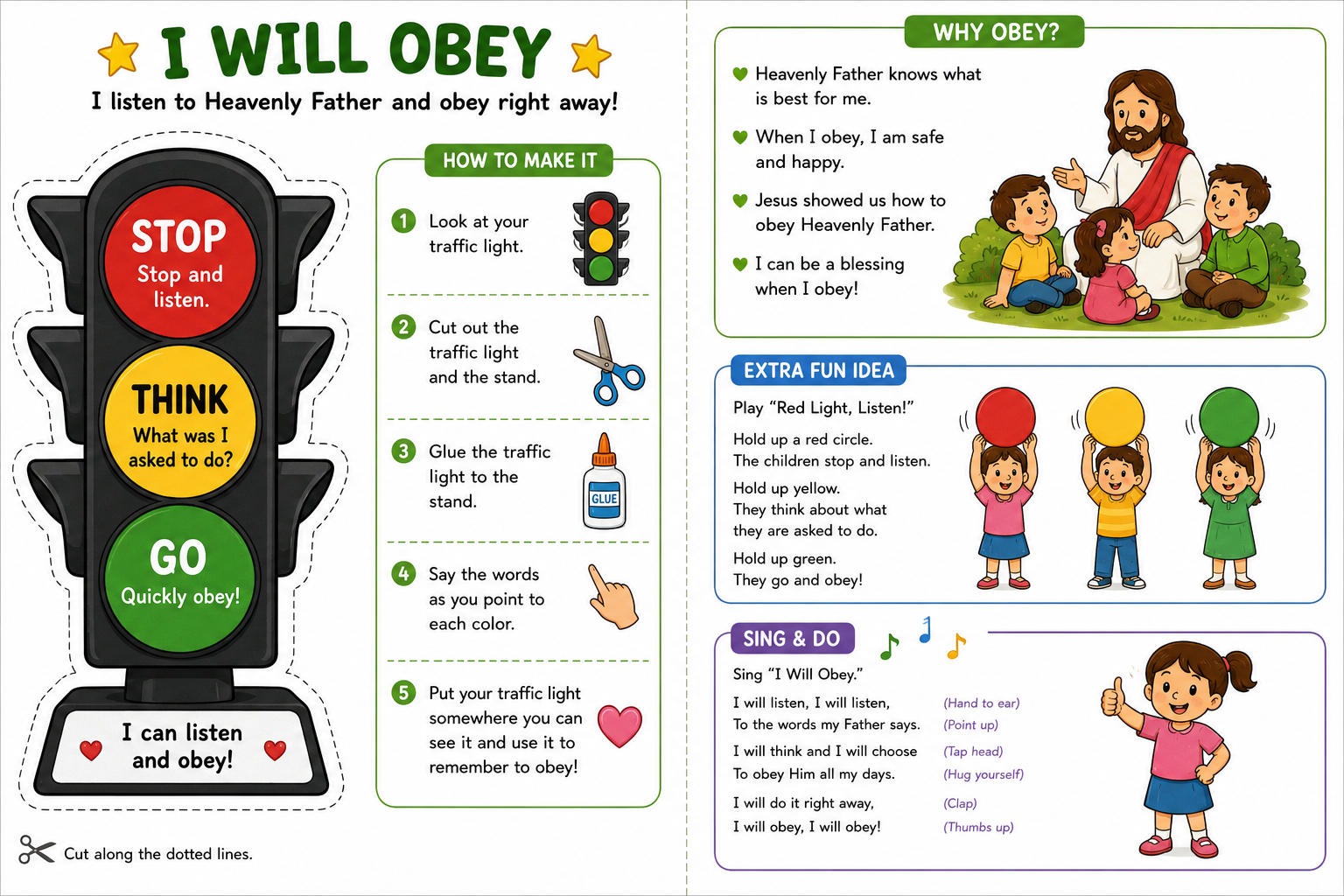
- Lesson 14 – I Will Obey
- Teaching Craft & Card
- Simple Take-Home Craft
- Game
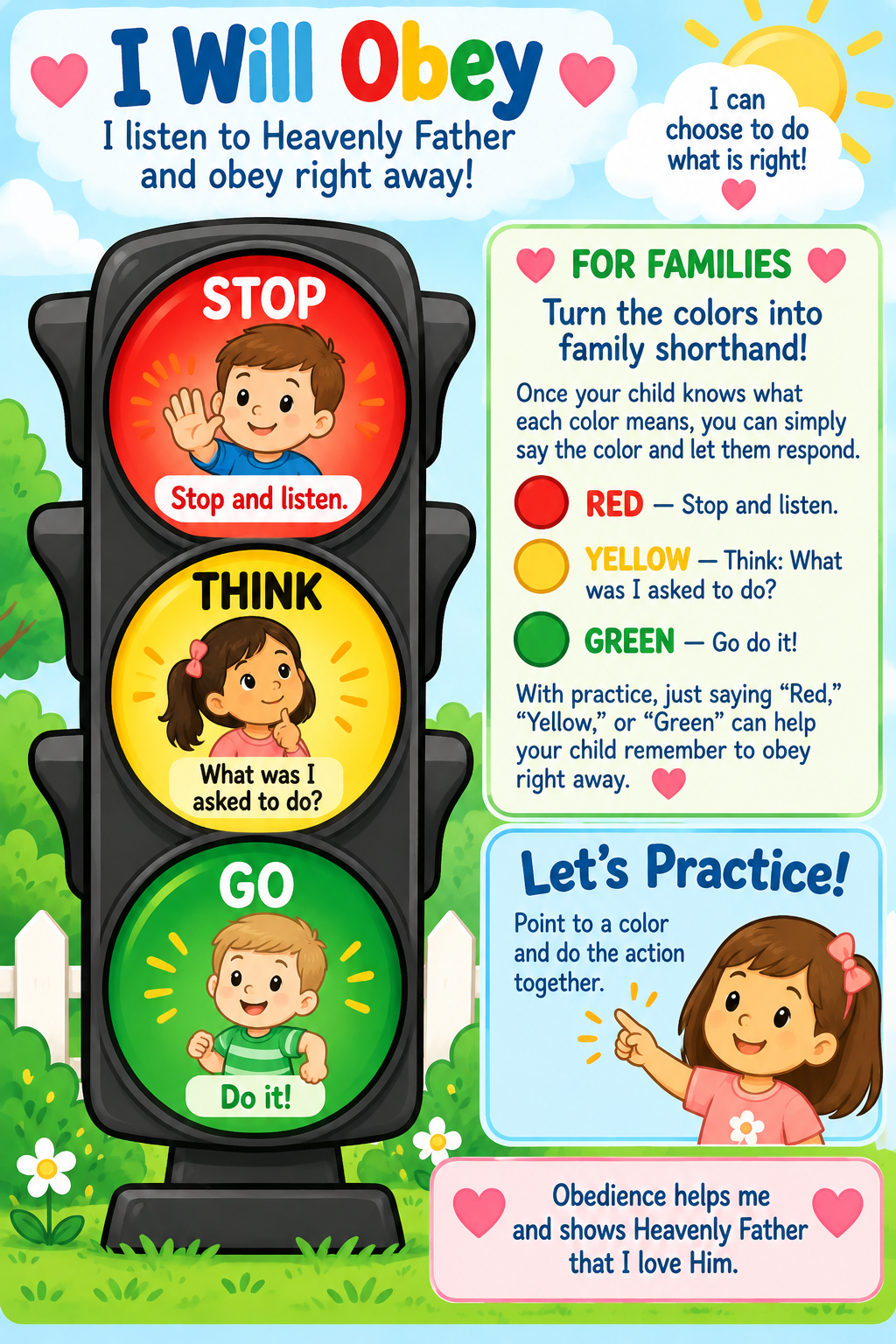
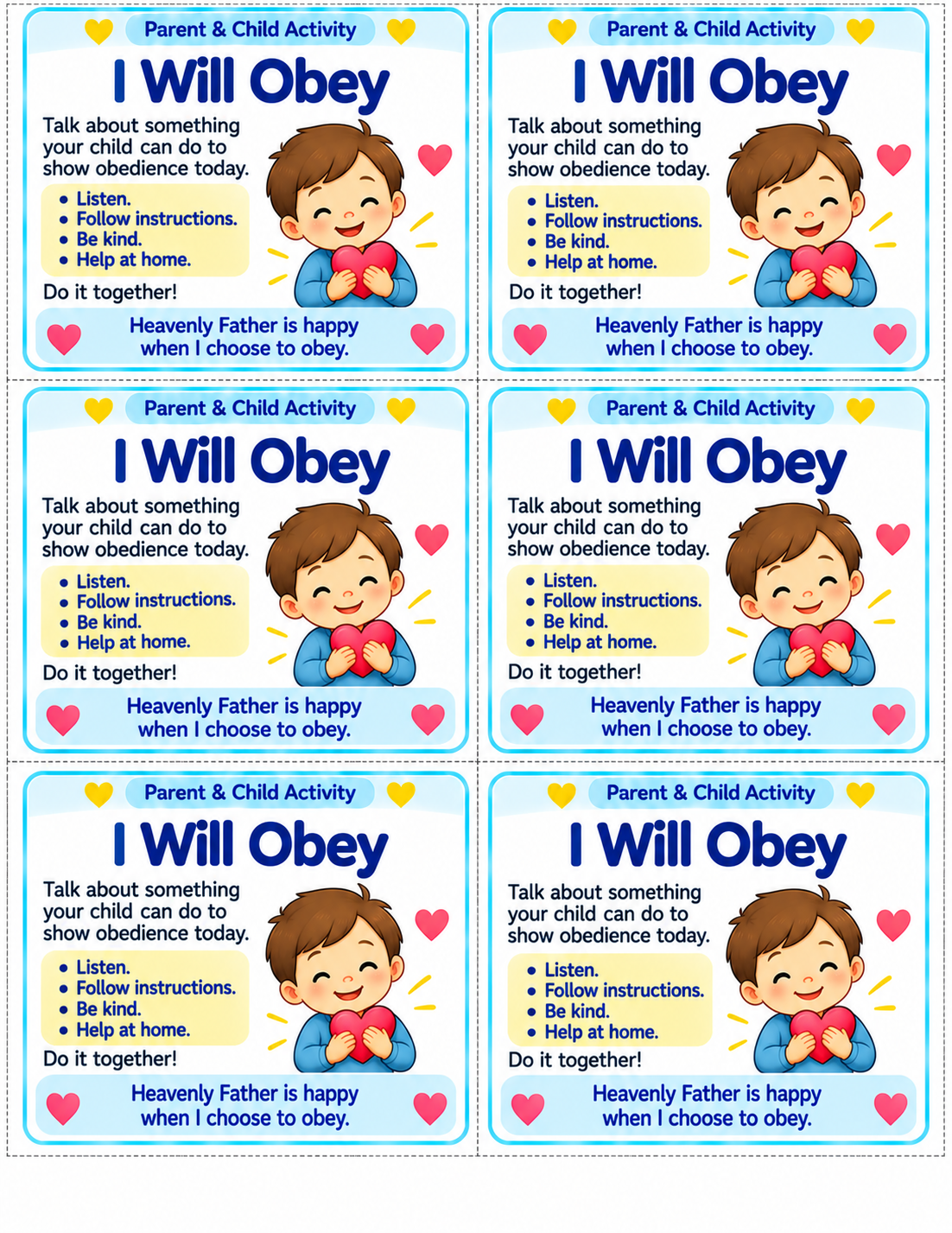
- Parent & Child Activity: I Will Obey
- Parent Card
- Gospel for the Glovebox: Lessons 13-16 (side one)
- Teaching Young Children
- GOAL
- Help children begin to understand that Heavenly Father gives us loving guidance and commandments to help us, and that choosing to obey is one way we show our love for Him and follow Jesus Christ.
- WHAT LITTLE CHILDREN CAN UNDERSTAND
- Young children understand simple directions and are beginning to learn that choices have consequences. The toddler-sized truth is Heavenly Father teaches me what is right. I can choose to obey.
- HOW CHILDREN CAN EXPERIENCE IT
- Give children opportunities to practice hearing a simple direction and choosing to follow it. Use familiar situations such as putting away a toy, coming when called, holding an adult’s hand for safety, or following a direction during an activity. Help children connect the action with its meaning: “You listened and chose to do what was right.” Keep the emphasis on learning to make good choices rather than simply rewarding compliance.
- HELPING FAMILIES CONTINUE THE LESSON
- The Parent & Child Activity handout encourages parents to notice moments when their child chooses to follow loving guidance. Instead of relying only on general praise such as “Good job,” name what happened: “You listened when I asked you to put your toys away. You chose to obey.” Occasionally connect these everyday experiences to the gospel principle: “Heavenly Father teaches us what is right, too. We can choose to obey Him.”
- I hear loving guidance → I choose what to do → I can choose to obey Heavenly Father.
- Lesson 15 – I Will Be Thankful
- Teaching Craft & Card
- Simple Take-Home Craft
- Game
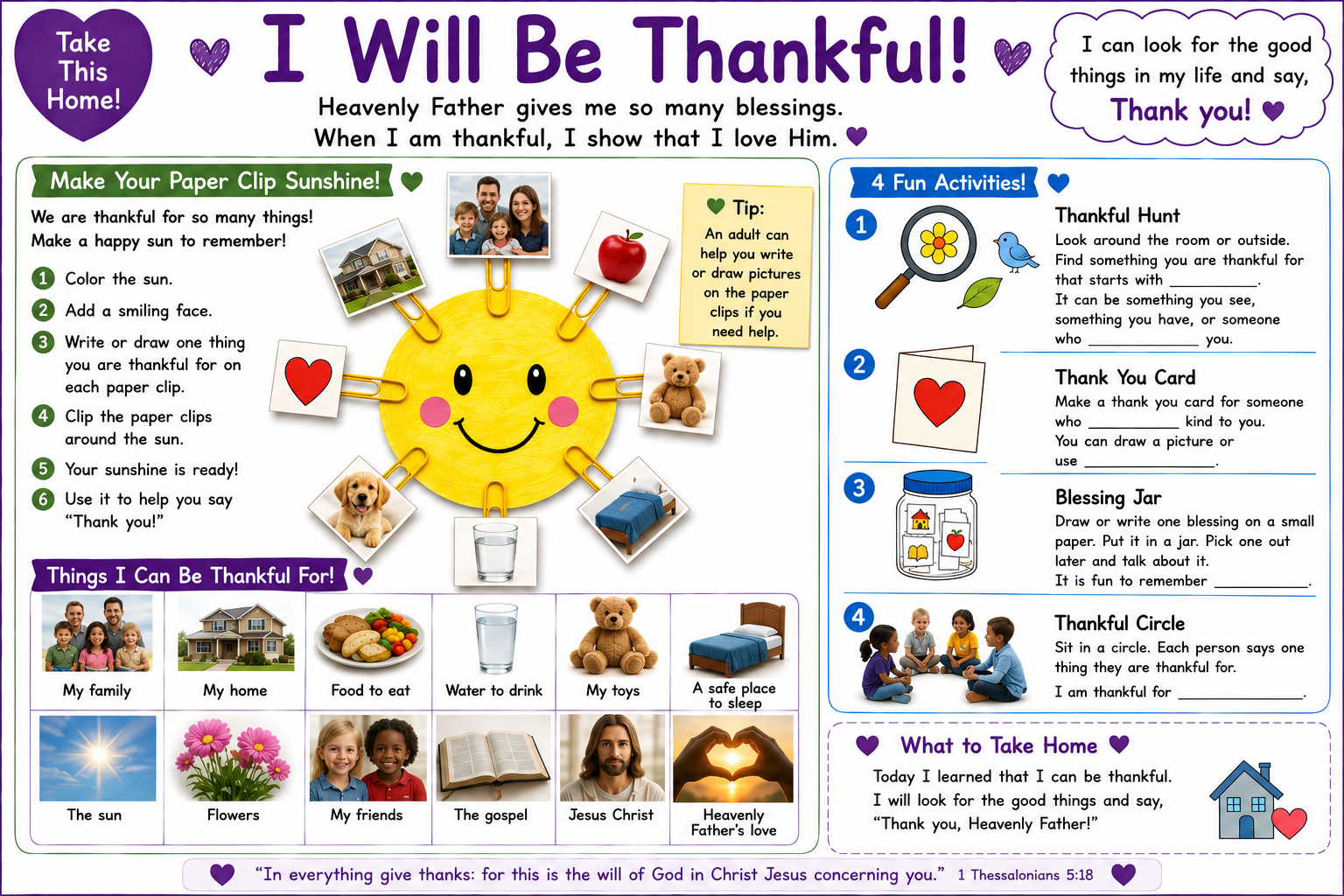
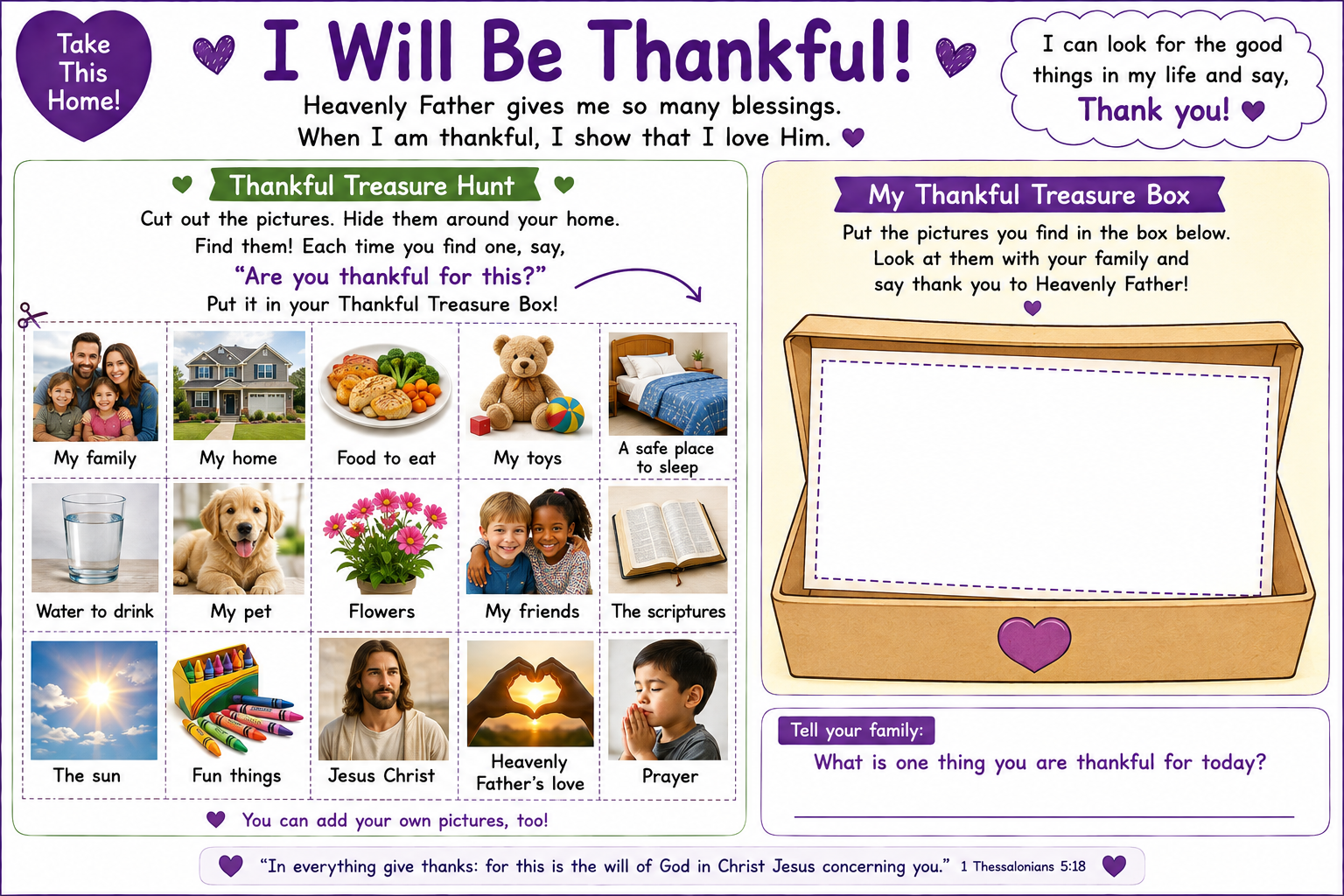
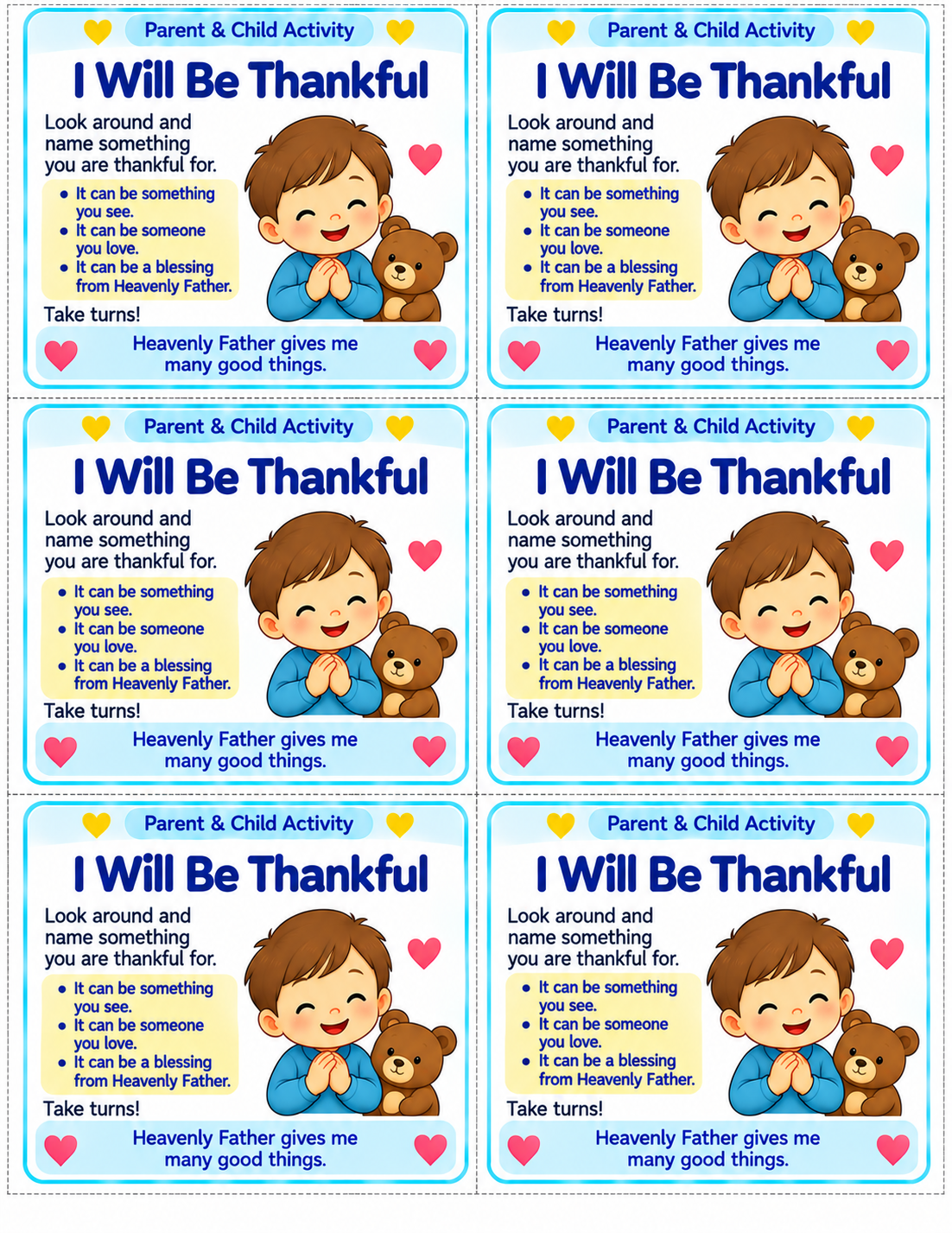
- Parent & Child Activity: I Will be Thankful
- Parent Card
- Gospel for the Glovebox: Lessons 13-16 (second side)
- Teaching Young Children
- GOAL
- Help children recognize that the good things in their lives are blessings from Heavenly Father and begin developing gratitude by noticing, enjoying, and expressing thanks for those blessings.
- WHAT LITTLE CHILDREN CAN UNDERSTAND
- Young children may not yet understand the larger concept of gratitude, but they understand receiving and enjoying good things. The toddler sized truth is Heavenly Father gives me many good things. I can say thank you.
- HOW CHILDREN CAN EXPERIENCE IT
- Help children actively notice blessings that are already part of their world. Let them look for, point to, hold, or name things they enjoy a favorite food, their family, a pet, sunshine, flowers, a comfortable home, or someone who loves them. After each discovery, practice the simple connection: “This is something we can be thankful for.” Invite children to say, “Thank you, Heavenly Father,” helping gratitude become something they can actually practice.
- HELPING FAMILIES CONTINUE THE LESSON
- The Parent & Child Activity handout invites parents to build brief moments of noticing into ordinary family life. When the child enjoys something good, pause occasionally and name it: “We have warm food for dinner. That is something we can be thankful for.” Then help the child express gratitude in simple language: “Thank you, Heavenly Father, for our food.” Over time, repeated moments of noticing can help a child learn that gratitude begins by paying attention to the good that is already present.
- I notice something good → I recognize it as a blessing → I can thank Heavenly Father.
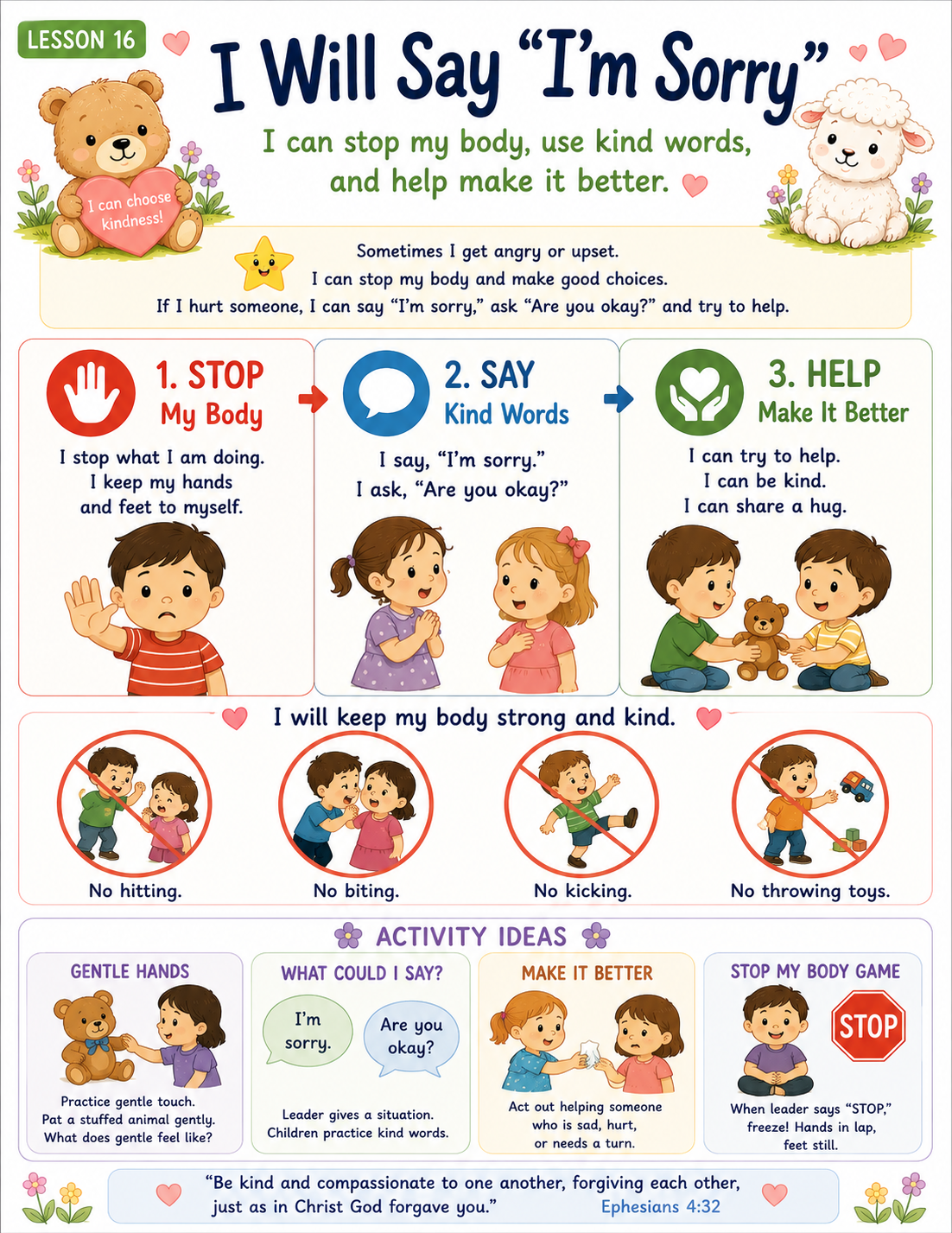
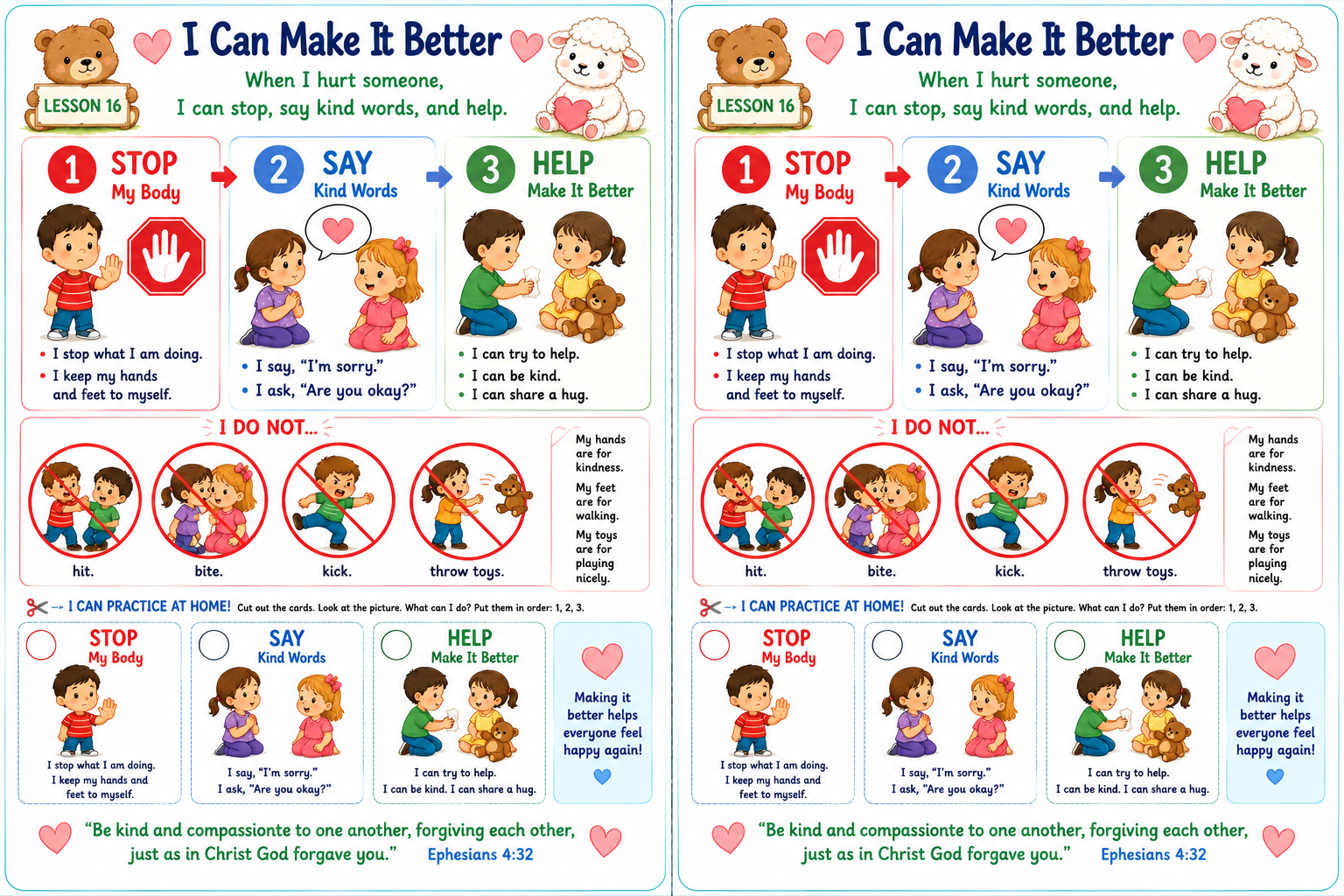
- Lesson 16 – I Will Say “I’m Sorry”
- Teaching Craft & Card
- Simple Take-Home Craft (print landscape)
- Game
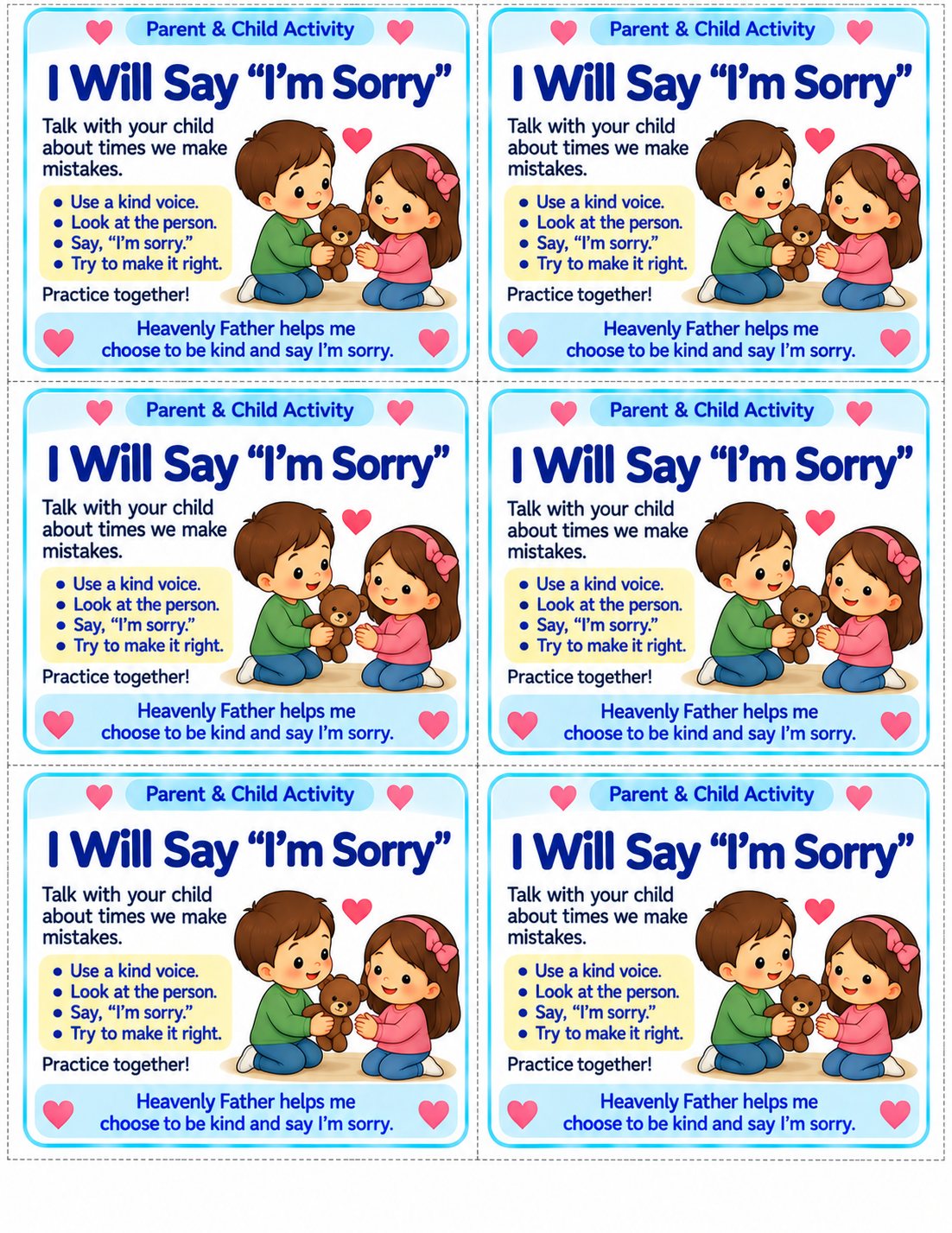
- Parent & Child Activity: I Will Say I’m Sorry
- Parent Card
- Gospel for the Glovebox: Lessons 13-16 (second side)
- Teaching Young Children
- GOAL
- Help children begin to understand that everyone makes mistakes and sometimes hurts others, and that recognizing what happened, saying “I’m sorry,” and trying to make things right are important parts of repentance and following Jesus Christ.
- WHAT LITTLE CHILDREN CAN UNDERSTAND
- Young children are only beginning to understand how their actions affect other people. They do not need a complicated explanation of guilt or repentance. The toddler sized truth is: Sometimes I make a mistake or hurt someone. I can say “I’m sorry” and try to make it right.
- HOW CHILDREN CAN EXPERIENCE IT
- Use simple stories, puppets, or role-play to practice what happens after a mistake. One child might knock down another child’s blocks, grab a toy, or accidentally bump someone. Help children practice three simple steps: notice what happened, say “I’m sorry,” and help make it right. Making it right might mean returning the toy, rebuilding the blocks, helping someone up, or offering comfort. This helps children experience an apology as more than words as it includes caring about what happened next.
- HELPING FAMILIES CONTINUE THE LESSON
- The Parent & Child Activity handout encourages parents to guide apologies rather than simply requiring the words “Say you’re sorry.” Help the child first recognize what happened: “Your brother is sad because you took his toy.” Then help the child apologize and consider what they can do: “Can you give it back?” or “Can we help rebuild it?” When appropriate, reassure the child that making a mistake does not change their worth or Heavenly Father’s love for them. They can acknowledge a mistake, repair what they can, and try again.
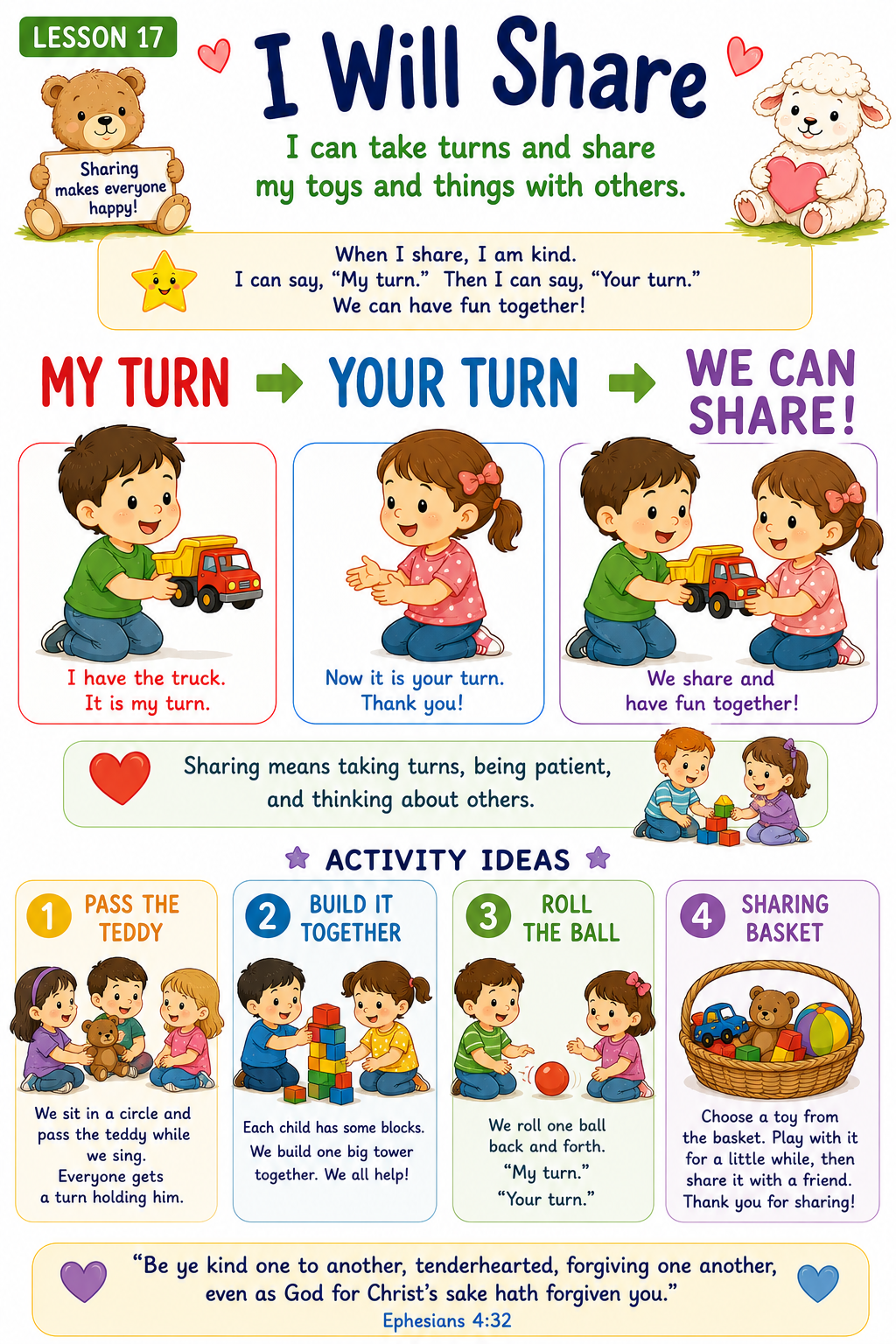
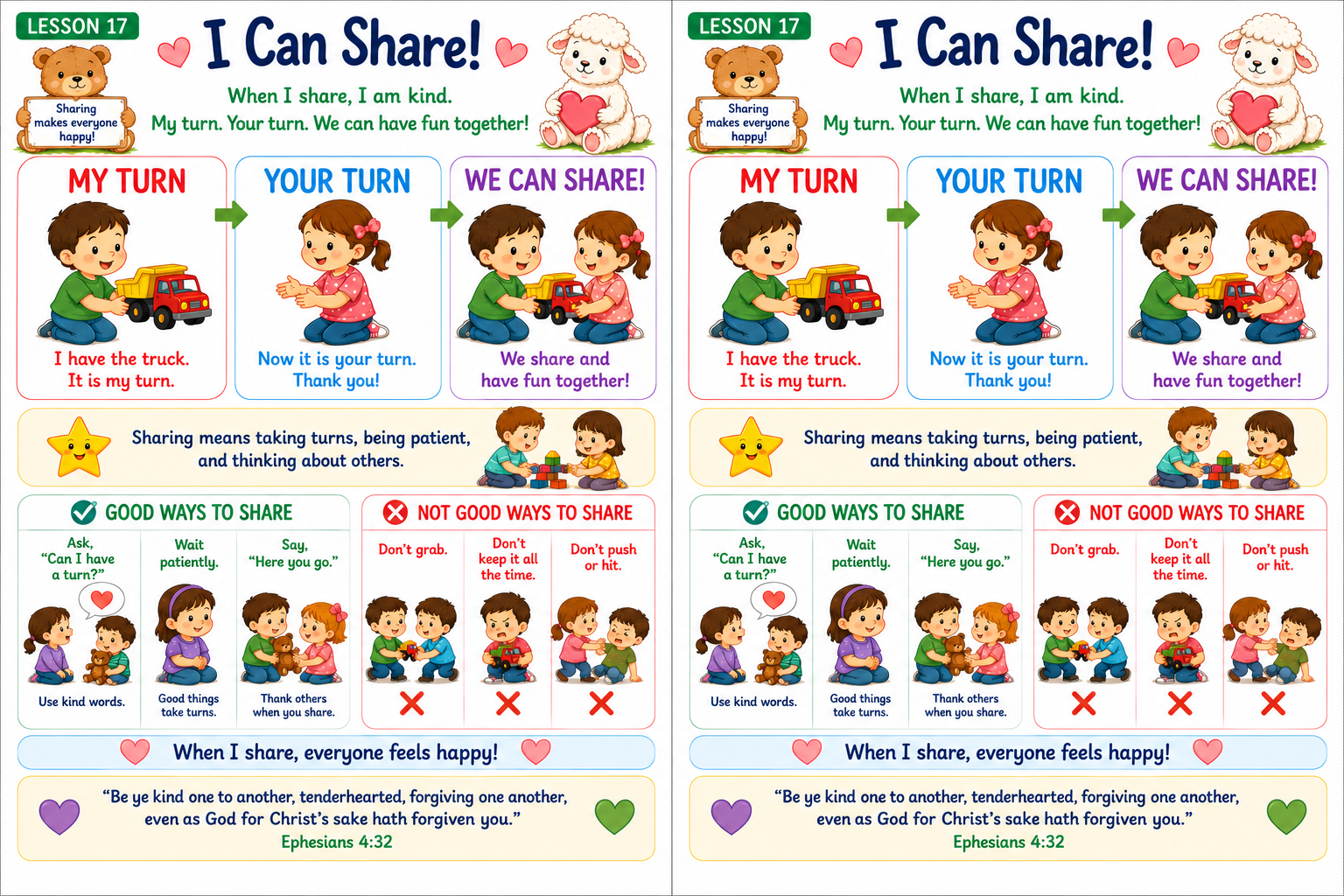
- Lesson 17 – I Will Share
- Teaching Craft & Card
- Simple Take-Home Craft: (print landscape)
- Game
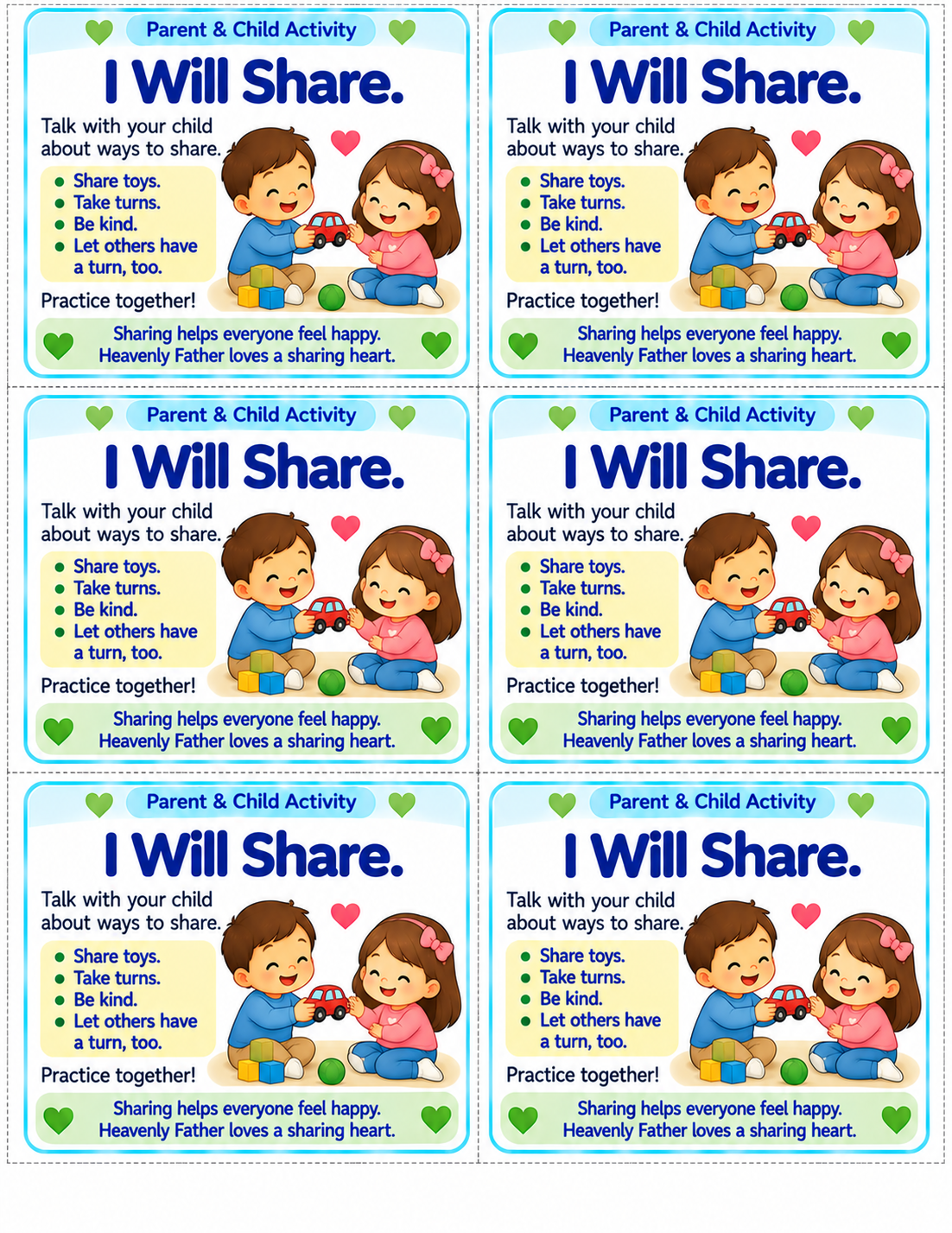
- Parent & Child Activity: I Will Share
- Parent Card
- Gospel for the Glovebox: Lessons 17-20 (side one)
- Teaching Young Children
- GOAL
- Help children begin to understand that sharing and taking turns are ways to show love and kindness to others and follow the example of Jesus Christ.
- WHAT LITTLE CHILDREN CAN UNDERSTAND
- Sharing can be genuinely difficult for young children. They are still developing impulse control, perspective taking, and an understanding of ownership and taking turns. The toddler sized truth is other people want to play too. I can share and take turns. The goal is not to expect young children to become naturally generous on command. It is to help them begin practicing what it means to consider another person.
- HOW CHILDREN CAN EXPERIENCE IT
- Give children opportunities to practice sharing and taking turns with adult support. Use something desirable enough that children actually want it because practicing sharing something nobody wants is cheating. Help them experience a predictable sequence:
- “It’s your turn.”
- Allow the child to enjoy the item briefly.
- “Now it’s Sam’s turn. You’ll get another turn.”
- And most importantly, give it back when promised.
- This helps a child discover that sharing does not necessarily mean losing something forever. Taking turns becomes safer when the child learns that another person’s turn does not erase their own. When a child shares voluntarily, name what happened:
- “You gave Maya a turn. That was kind.”
- HELPING FAMILIES CONTINUE THE LESSON
- The Parent & Child Activity handout encourages parents to practice sharing during ordinary family life without forcing children to surrender every treasured possession simply because another child wants it. Parents can help children distinguish between taking turns with shared things and having a few special belongings they are not required to share. When practicing, use clear language:
- “You may have a turn, and then your brother will have a turn.”
- When the child succeeds, skip the vague “Good job!” and name the behavior:
- “You let your brother have a turn. That was kind.”
- Then make the gospel connection naturally as “Jesus taught us to love one another. Sharing is one way we can show love.”
- My turn → Your turn → My turn again → I learn that sharing can be safe and kind.
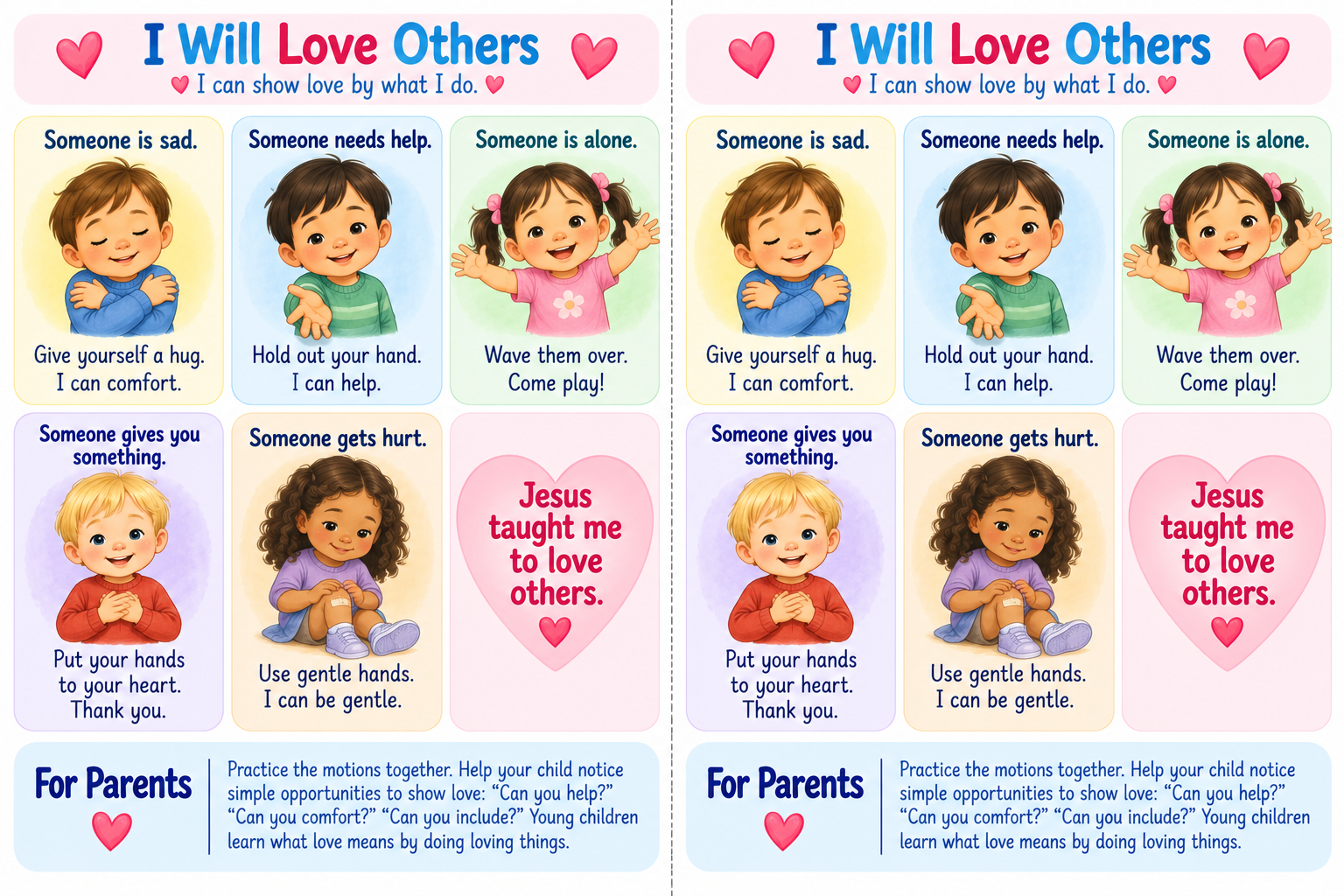
- Lesson 18 – I Will Love Others
- Teaching Craft & Card
- Simple Take-Home Craft: (print landscape)
- Game
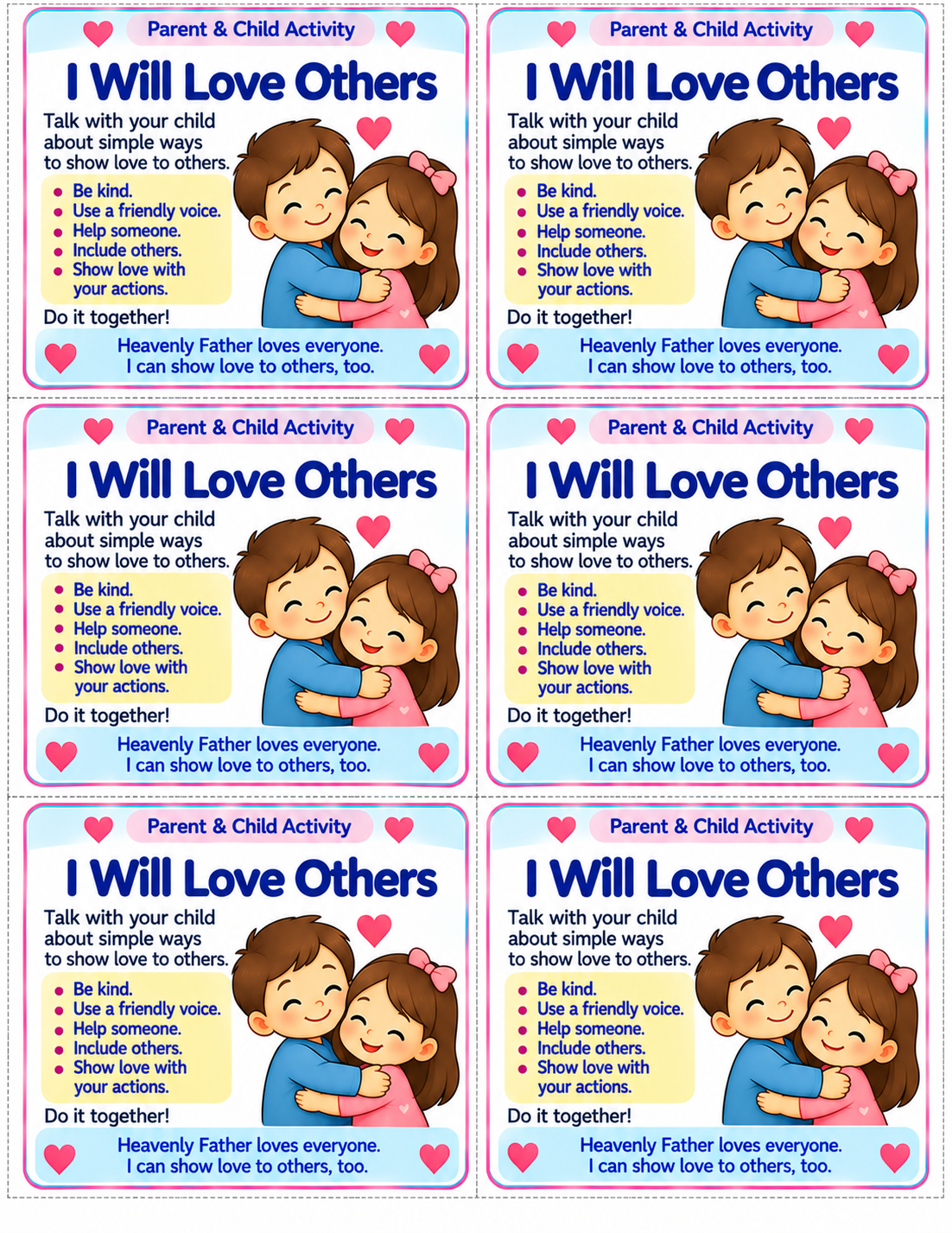
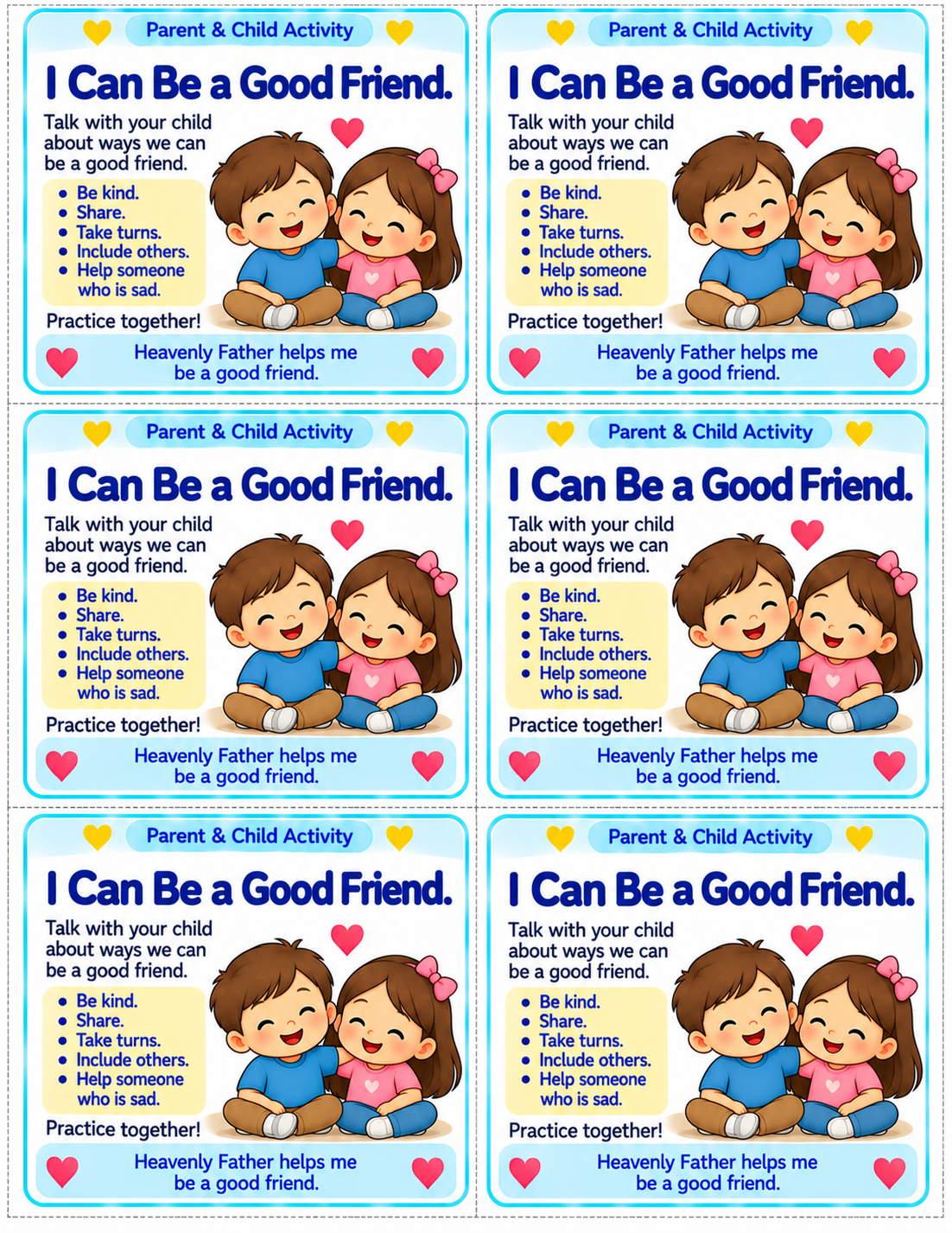
- Parent & Child Activity: I Will Love Others
- Parent Card
- Gospel for the Glovebox: Lessons 17-20 (side one)
- Teaching Young Children
- GOAL
- Help children begin to understand that Jesus Christ taught us to love one another and that we can follow His example by treating other people with kindness, compassion, and care.
- WHAT LITTLE CHILDREN CAN UNDERSTAND
- Young children may not understand love as an abstract principle, but they understand what loving behavior looks and feels like. They know what it is like when someone helps them, comforts them, includes them, shares with them, or treats them gently. The toddler sized truth is Jesus loves people. I can show love to other people too.
- HOW CHILDREN CAN EXPERIENCE IT
- Give children opportunities to practice love as an action. Use simple situations they recognize: someone is sad, someone drops something, someone needs a turn, someone is alone, or someone needs help.
- Ask “What could we do?”Then let the child actually do or act out the loving response we offer comfort, help pick something up, invite someone to play, share, give a hug when welcomed, or say something kind. As children respond, name what they are doing, “You helped someone. That was loving.” “You noticed she was sad and tried to help.” Then make the connection that Jesus showed us how to love people. We can follow Him.”
- This helps children begin to understand that love is not only something we feel. Love can also be something we choose to do.
- HELPING FAMILIES CONTINUE THE LESSON
- The Parent & Child Activity handout encourages parents to catch their child showing love during ordinary family life and name the behavior specifically. Instead of “good job” try:
- “You brought your brother his blanket. You noticed he needed help.”
- “You made room for her to sit beside you. That was kind.”
- “You gave Grandma a hug when she was sad. You showed her love.”
- Then, occasionally, connect the child’s action to Jesus Christ:
- Parents can also model the same language when they show love by explaining service to others as in “Daddy is taking dinner to our neighbor because she is sick. That’s one way we can show love.” Over time, children begin to recognize love not simply as a word adults say, but as something people do for one another.
- I notice someone → I see what they need → I choose a loving action → I am following Jesus.
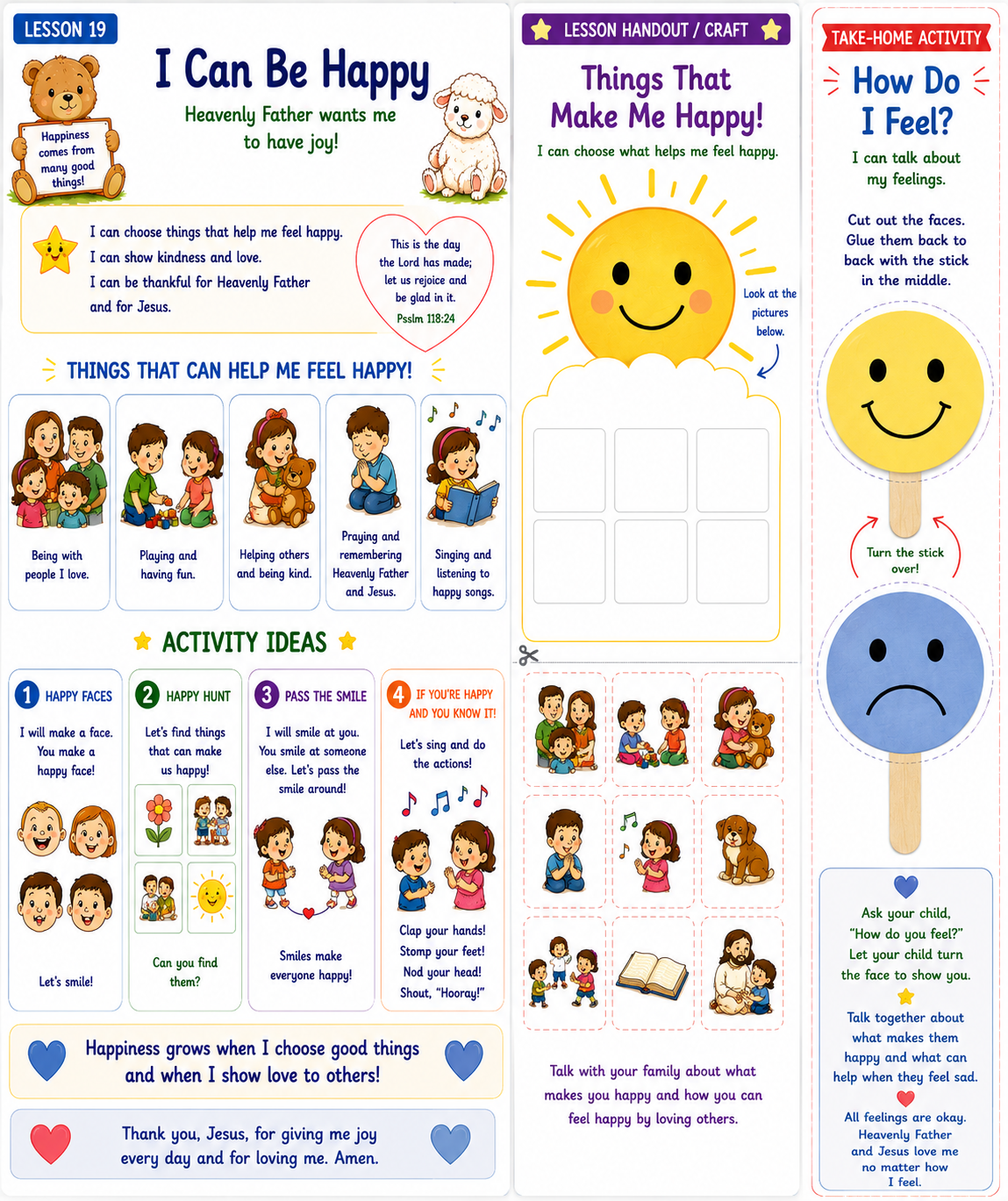
- Lesson 19 – I Can Be Happy
- Teaching Craft & Card
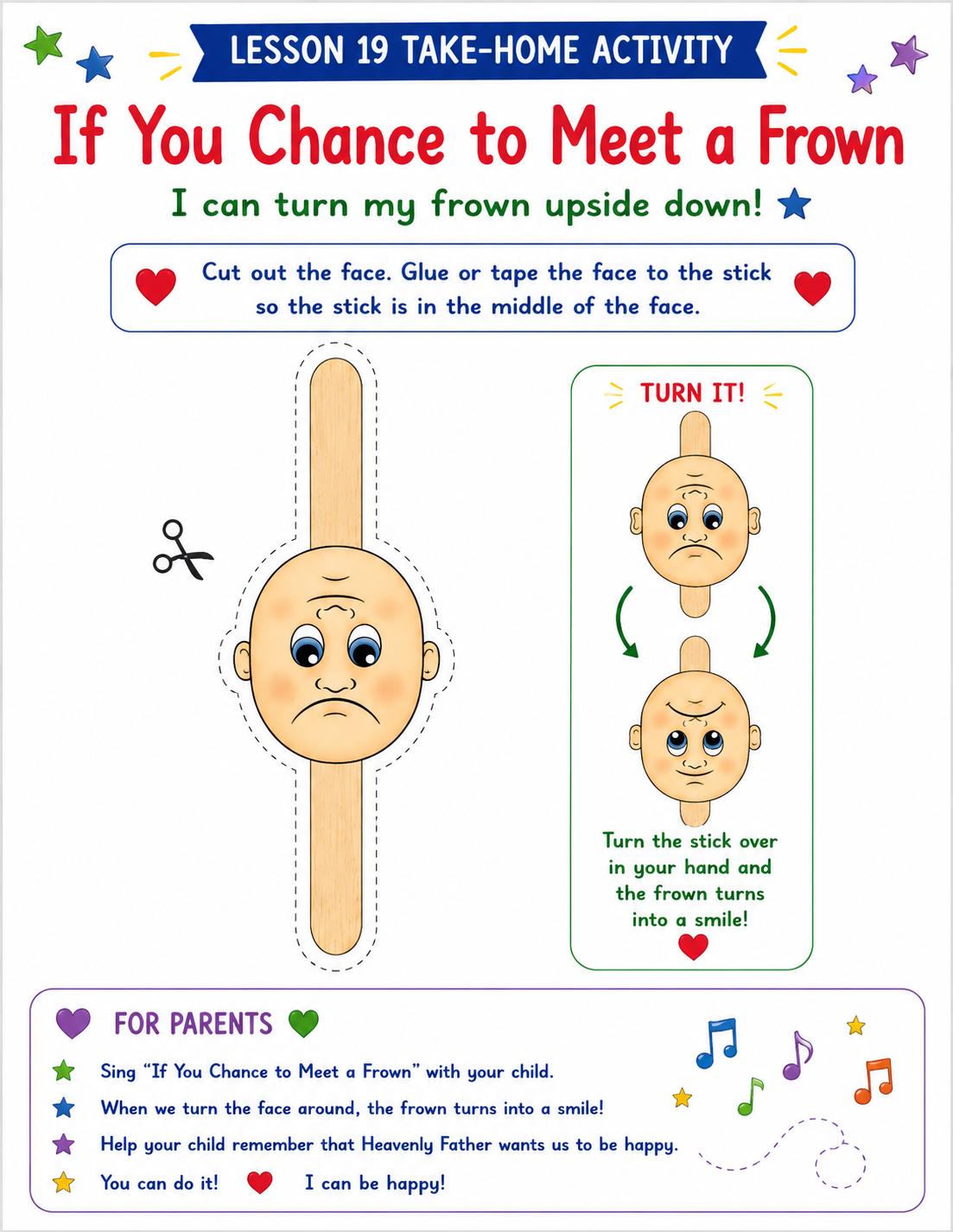
- Simple Take-Home Craft
- Game
- Parent & Child Activity: The Happy Face Family Game
- Parent Card
- Gospel for the Glovebox : Lessons 17-20 (second side)
- Teaching Young Children
- GOAL
- WHAT LITTLE CHILDREN CAN UNDERSTAND
- Sometimes I feel sad. Sometimes I feel happy. I can do things that help me feel happy again.
- HOW CHILDREN CAN EXPERIENCE IT
- Use the happy/sad face stick to help children recognize and name their feelings. Let each child turn the stick to the sad face and share something that makes them sad. Then turn it to the happy face and share something that makes them happy or something they can do when they feel sad—such as ask for a hug, talk to someone, pray, play, sing, or help someone.
- HELPING FAMILIES CONTINUE THE LESSON
- Send the happy/sad face stick home with a Parent & Child Activity card. Invite the family to pass the stick around. Each person begins with the sad face and shares something that makes them sad. Then they turn it to the happy face and share either something that makes them happy or something they do that helps them feel better. Parents can help little children discover that feelings don’t stay the same forever and that there are simple, healthy things they can do when they’re sad.
- I notice how I feel → Feelings can change → I can choose something that may help me feel better.
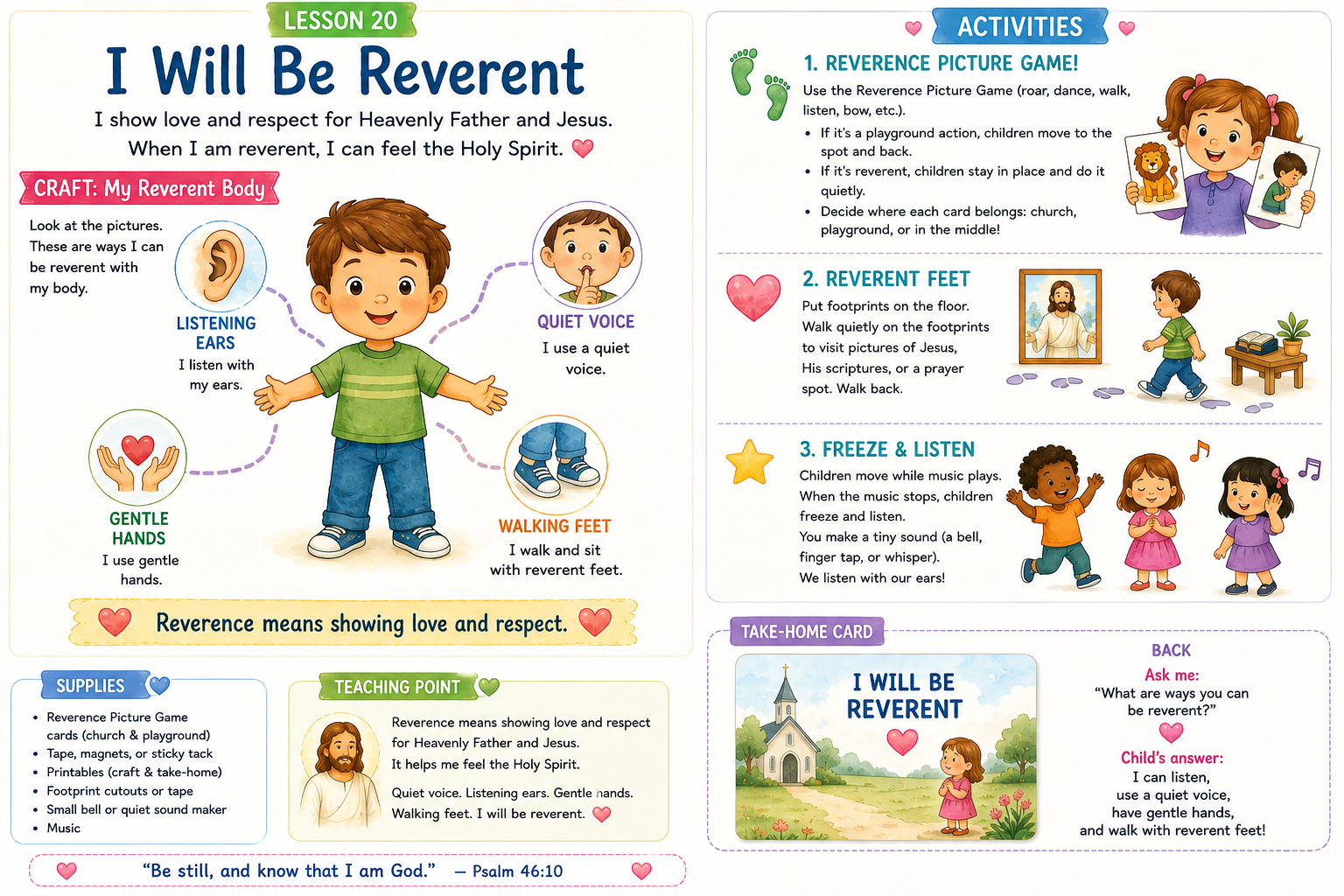
- Lesson 20 – I Will Be Reverent
- Teaching Craft & Card
- Simple Take-Home Craft: (print landscape)
- Game
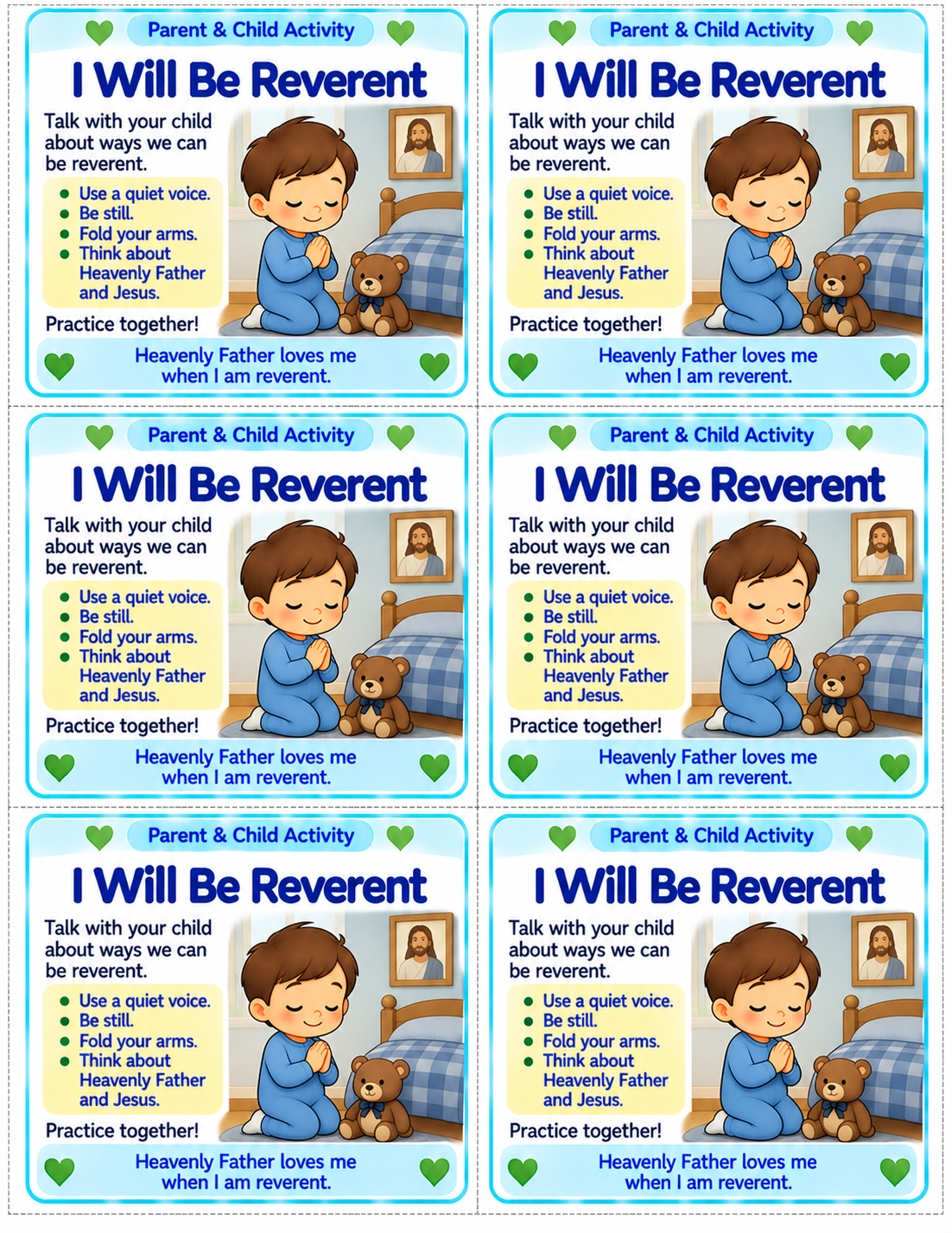
- Parent & Child Activity: I Will Be Reverent
- Parent Card
- Gospel for the Glovebox: Lessons 17-20 (second side)
- Teaching Young Children
- GOAL
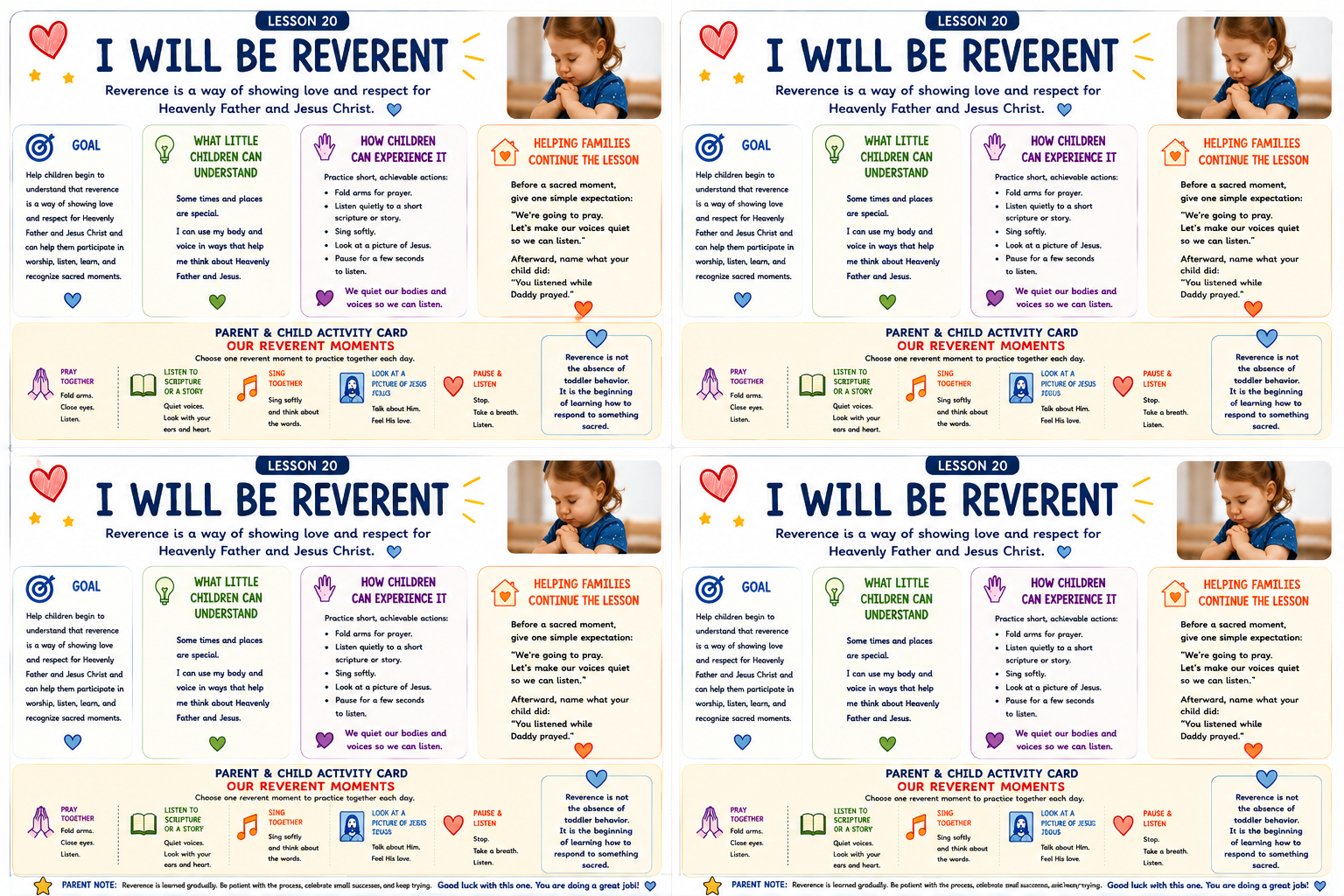
Help children begin to understand that reverence is a way of showing love and respect for Heavenly Father and Jesus Christ and can help them participate in worship, listen, learn, and recognize sacred moments.
WHAT LITTLE CHILDREN CAN UNDERSTAND
Young children are still developing the ability to control their bodies, voices, and attention for extended periods. Reverence should not simply mean “sit still and be quiet.” The toddler-sized truth is:
Some times and places are special. I can use my body and voice in ways that help me think about Heavenly Father and Jesus.
HOW CHILDREN CAN EXPERIENCE IT
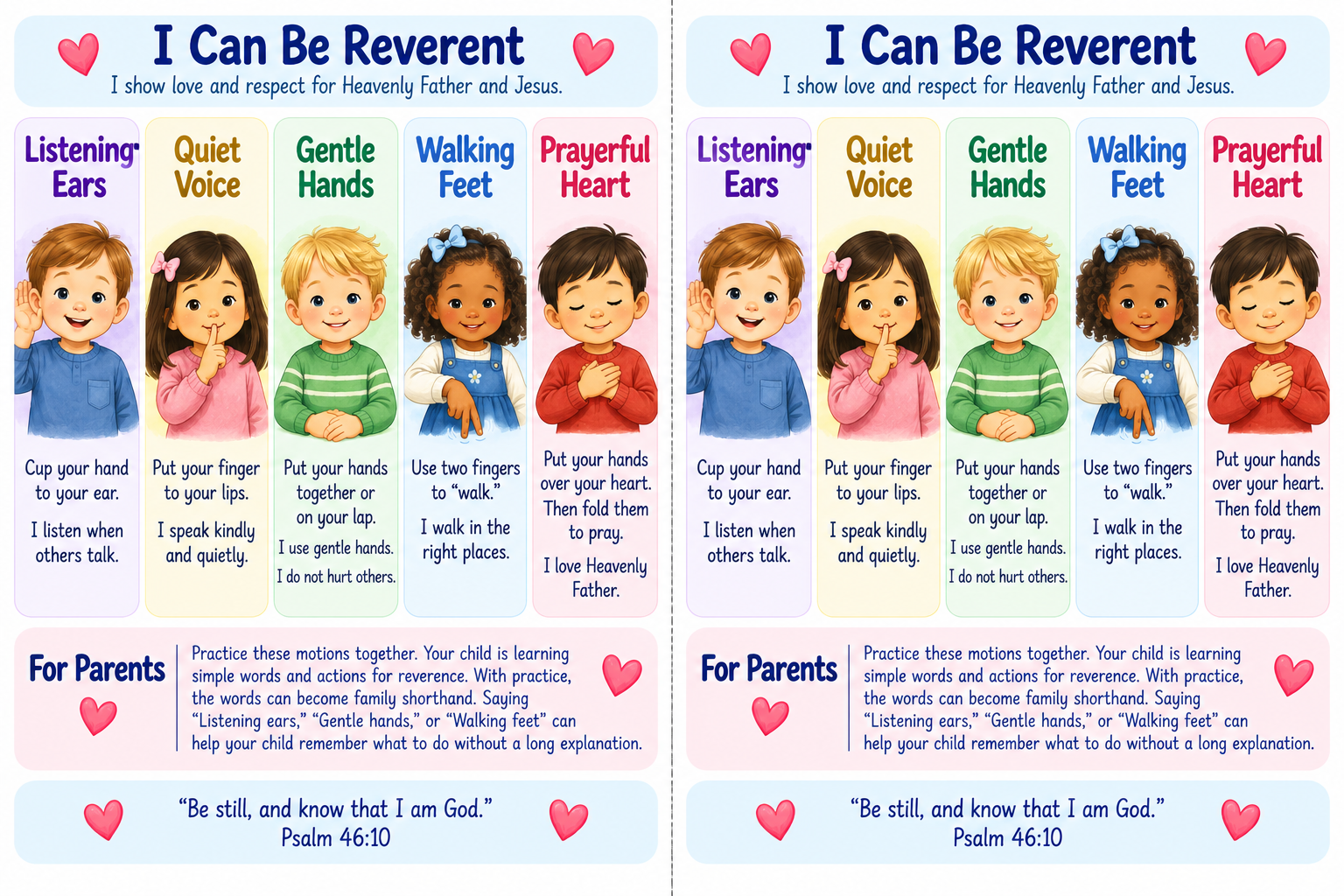
Help children experience reverence through brief, achievable actions rather than expecting prolonged stillness. Practice folding arms for a prayer, listening quietly to a short scripture or story, singing softly, looking at a picture of Jesus, or pausing for a few seconds to listen.
Help children notice the purpose behind the behavior:- “We made our voices quiet so we could hear the prayer.”
- “You stopped and listened while we talked about Jesus.”
- Alternate quiet moments with appropriate movement and participation. Young children can learn reverence gradually when expectations match their developmental abilities.
- This moment is special → I quiet my body and voice → I can listen and turn my attention toward Heavenly Father and Jesus.
- Lesson 21 – Joseph Smith Saw Heavenly Father and Jesus Christ
- Teaching Craft & Card
- Simple Take-Home Craft
- Game
- Parent & Child Activity: Joseph Smith Saw Heavenly Father & Jesus Christ
- Parent Card
- Gospel for the Glovebox: Lessons 21-24 (side one)
- Teaching Young Children
- GOAL
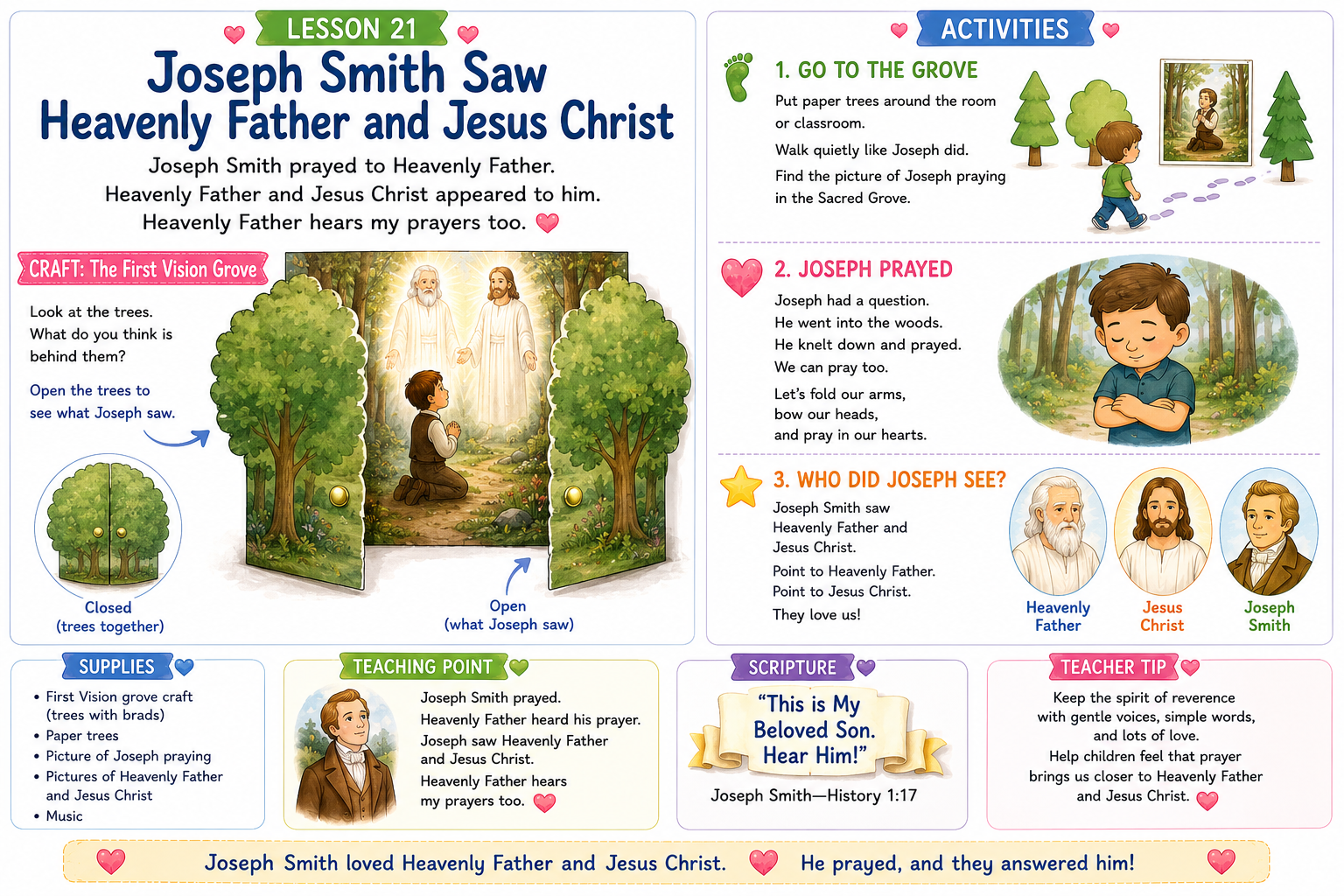
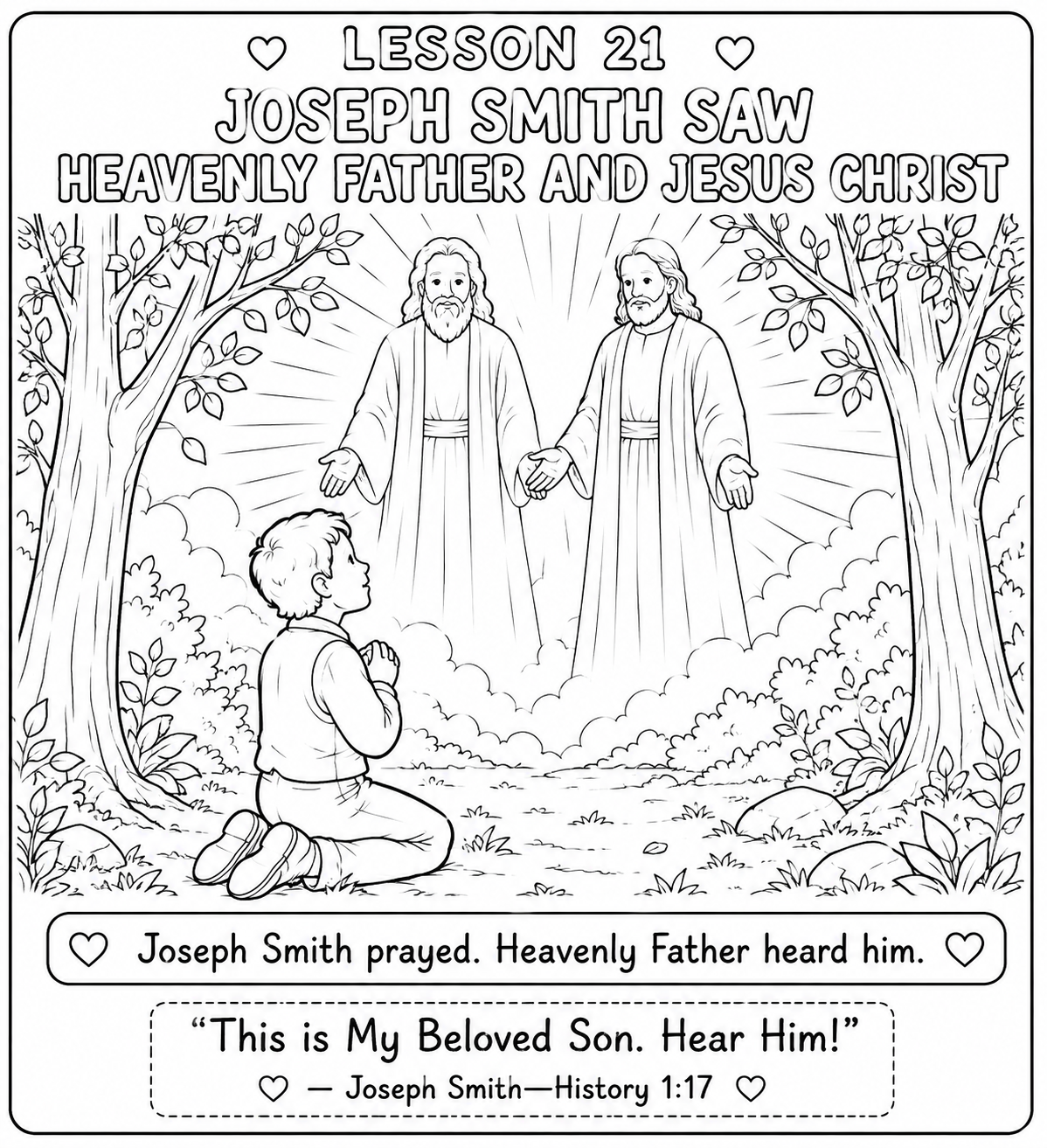
- Help children begin to understand that Joseph Smith prayed to Heavenly Father for help, Heavenly Father and Jesus Christ appeared to him, and Joseph learned important truths about Them. His experience began the Restoration of the gospel of Jesus Christ.
- WHAT LITTLE CHILDREN CAN UNDERSTAND
- Young children do not need to understand the historical circumstances surrounding the First Vision or the larger meaning of the Restoration to begin learning from Joseph Smith’s experience. The toddler-sized truth is that Joseph Smith prayed to Heavenly Father. Heavenly Father and Jesus Christ appeared to him. They knew Joseph and answered his prayer. At this age, the story itself can carry the doctrine.
- HOW CHILDREN CAN EXPERIENCE IT
- Tell the First Vision as a simple sequence children can follow and participate in
- Joseph had a question.
- Joseph went to a quiet place.
- Joseph prayed to Heavenly Father.
- Heavenly Father and Jesus Christ appeared to Joseph.
- Use a picture of the Sacred Grove and invite children to imagine being somewhere quiet among the trees. They might make tree shapes with their arms, listen quietly for sounds they might hear in a grove, kneel as Joseph did, and look at an appropriate picture depicting the First Vision.
- Then emphasize the truths the story teaches that Heavenly Father heard Joseph’s prayer, Heavenly Father knew Joseph and Jesus Christ lives. The purpose isn’t to reenact a sacred experience. It is to give young children a simple, concrete story through which these truths can begin to become familiar.
- HELPING FAMILIES CONTINUE THE LESSON
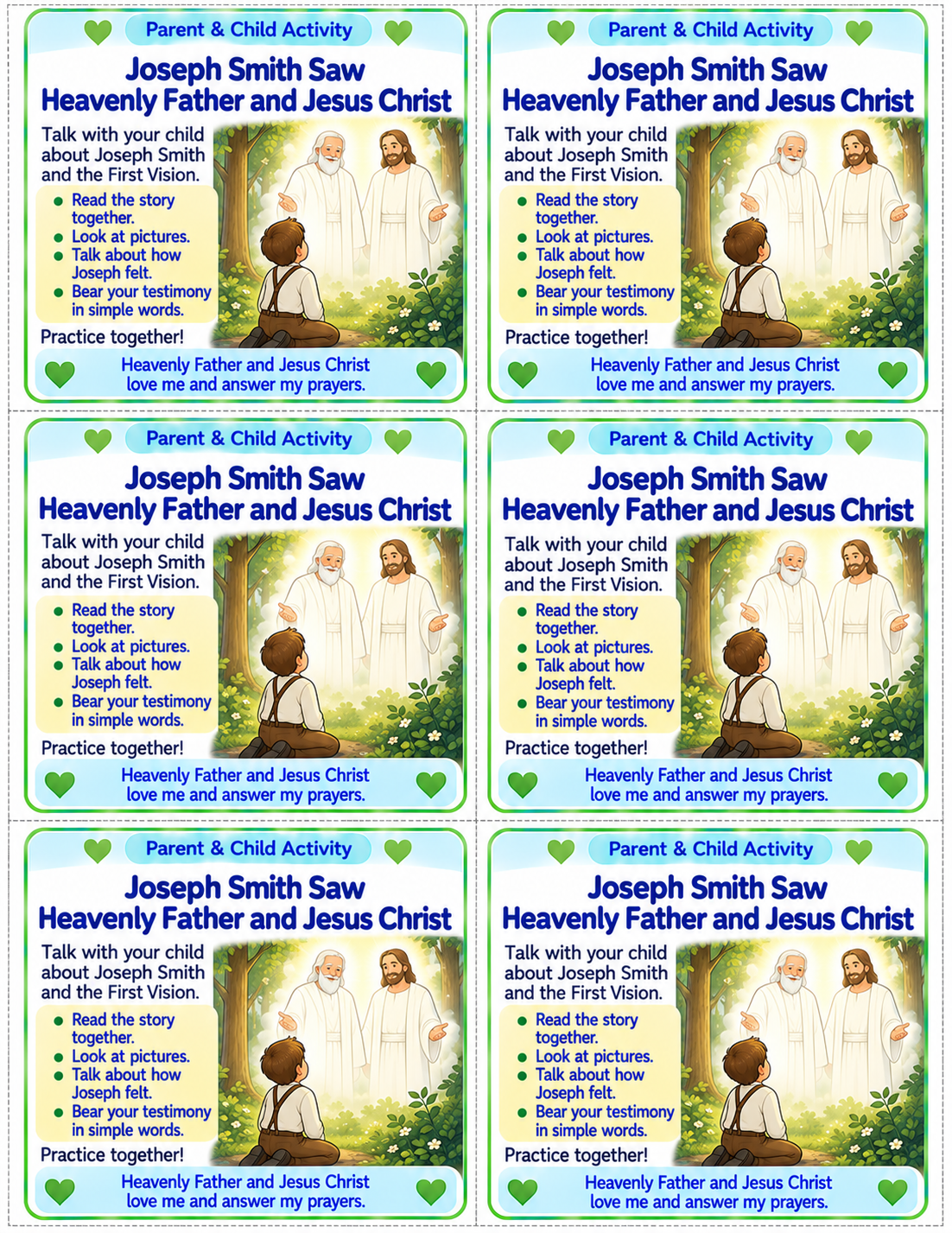
- The Parent & Child Activity handout invites parents to retell the First Vision briefly at home, perhaps while looking at a picture of Joseph Smith in the Sacred Grove. Young children benefit more from hearing the same simple story repeatedly than from receiving additional historical details. Parents can also point to Heavenly Father and Jesus Christ in an appropriate First Vision image and name Them, helping the child become familiar with the central truth of the account.
- Joseph had a question → Joseph prayed → Heavenly Father and Jesus Christ appeared to him → Heavenly Father hears prayers.
- Lesson 22 – The Book of Mormon Teaches Me about Jesus Christ
- Teaching Craft & Card
- Simple Take-Home Craft
- Game
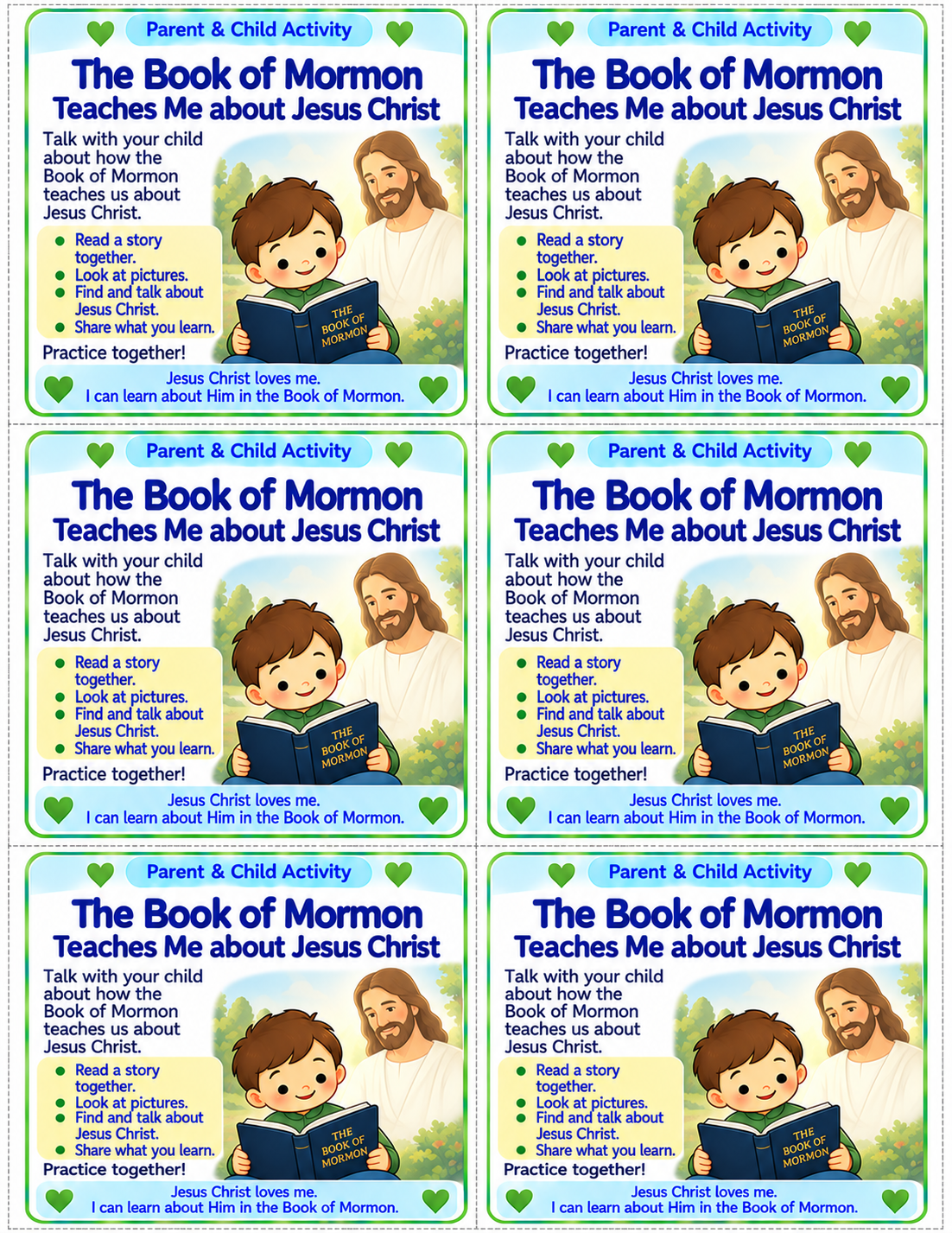
- Parent & Child Activity: The Book of Mormon Teaches Me About Jesus
- Parent Card
- Gospel for the Glovebox: Lessons 21-24 (side one)
- Teaching Young Children
- GOAL
- Help children begin to understand that the Book of Mormon is scripture and that its stories and teachings testify of Jesus Christ and help us learn about Him.
- WHAT LITTLE CHILDREN CAN UNDERSTAND
- Young children do not need to understand the history, organization, or origin of the Book of Mormon to begin developing a relationship with it. They can recognize it as a special book that teaches them about Jesus Christ. The toddler sized truth is that The Book of Mormon teaches me about Jesus.
- HOW CHILDREN CAN EXPERIENCE IT
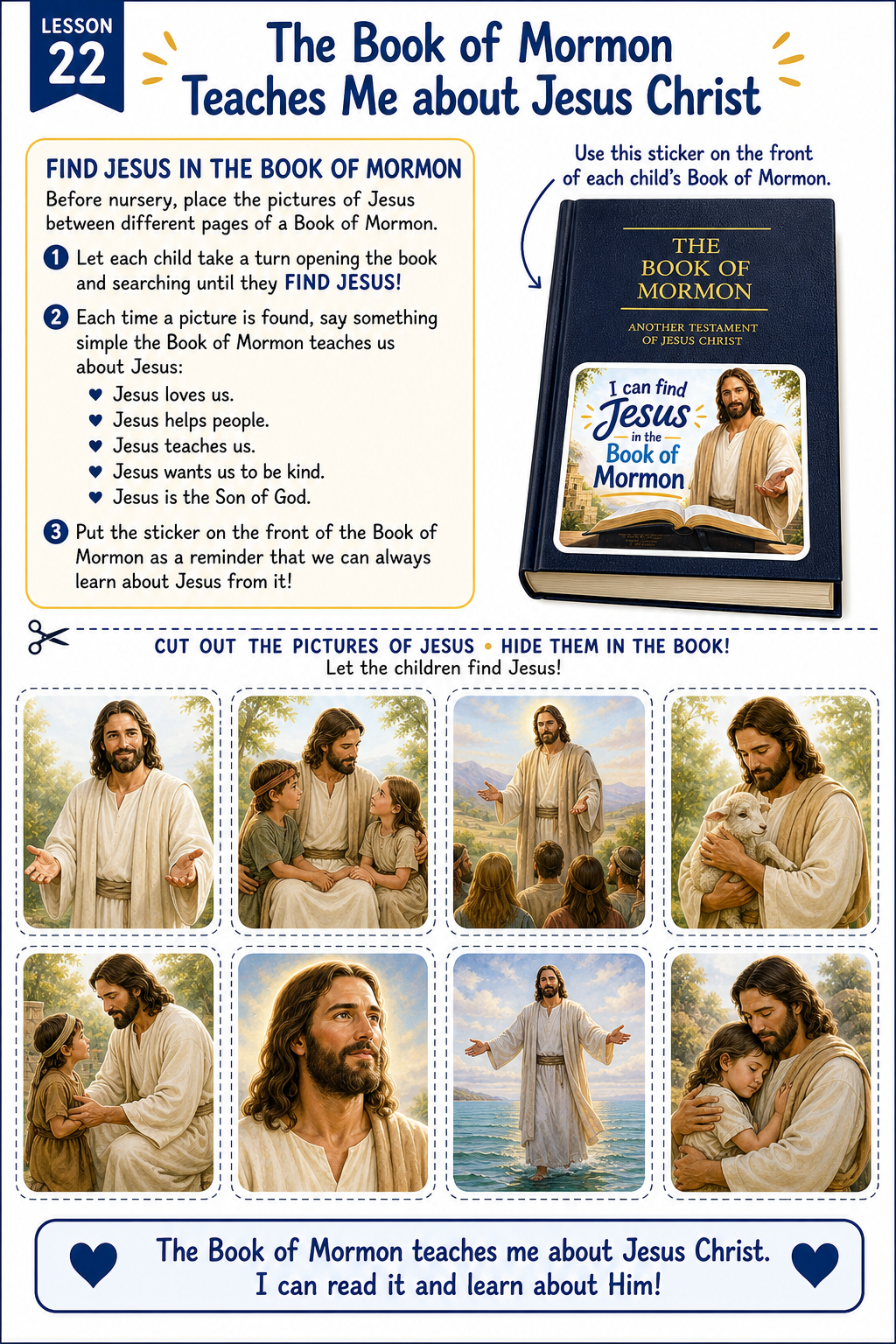
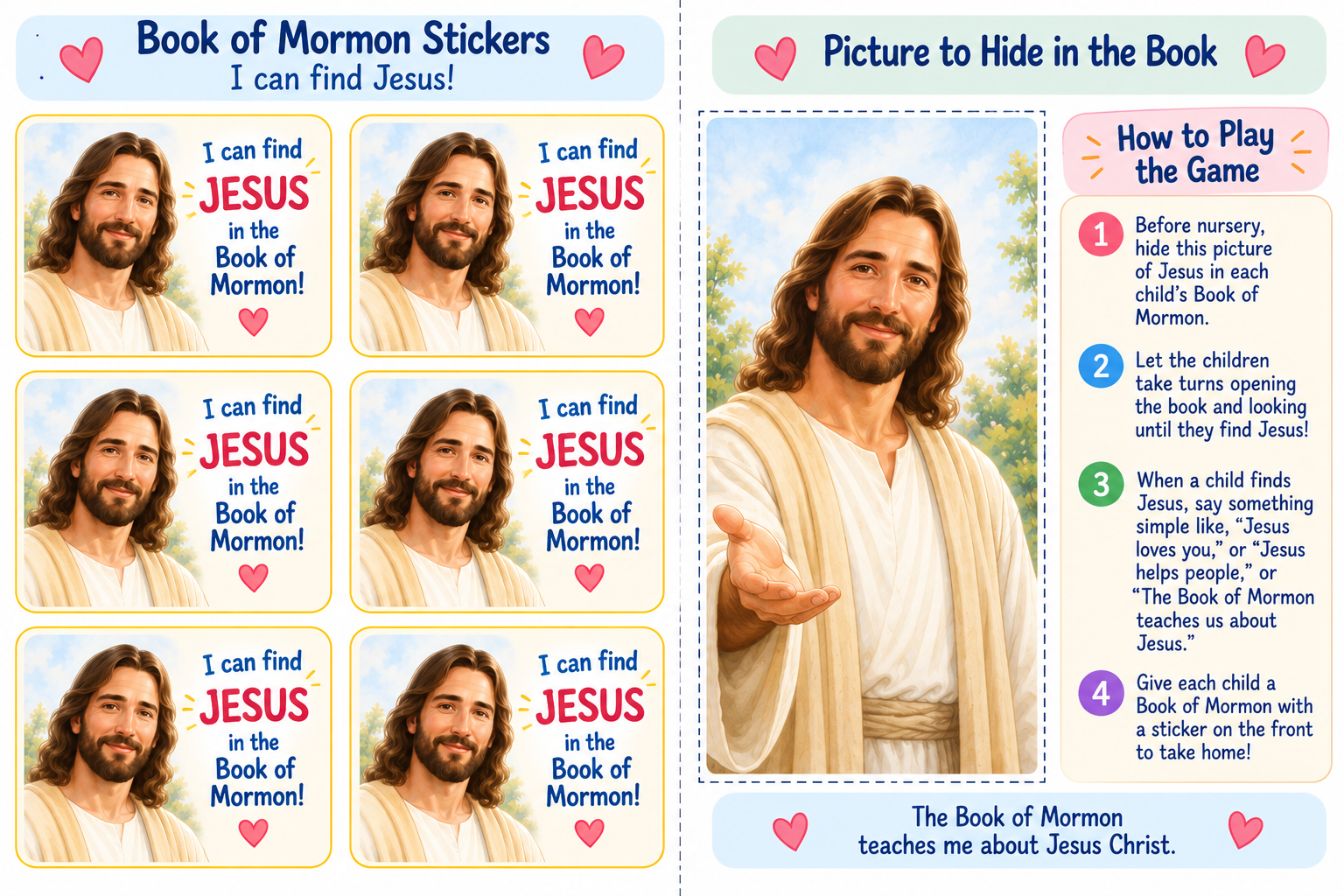
- This is the Book of Mormon.” Then show children a picture connected with a familiar Book of Mormon account about Jesus Christ—especially His visit to the people in the Americas. Tell one very short part of the story and then return to the book and say “We learned that story from the Book of Mormon.” Repeat that connection with other simple stories or teachings when appropriate.This helps the book itself become familiar and meaningful before children are old enough to read it.
- HELPING FAMILIES CONTINUE THE LESSON
- The Parent & Child Activity handout encourages parents to let their child participate when the family reads the Book of Mormon, even though the child cannot yet read. Give the child a simple job: hold the book, turn a page, find a picture, repeat the name Jesus, or listen for His name during a very short passage. The child realizes that the family reads scriptures together as they learn about Jesus.
- I see the book → I hear a story about Jesus → I learn that the Book of Mormon teaches me about Him.
- Lesson 23 – I Love the Scriptures
- Teaching Craft & Card
- Simple Take-Home Craft: (print landscape)
- Game
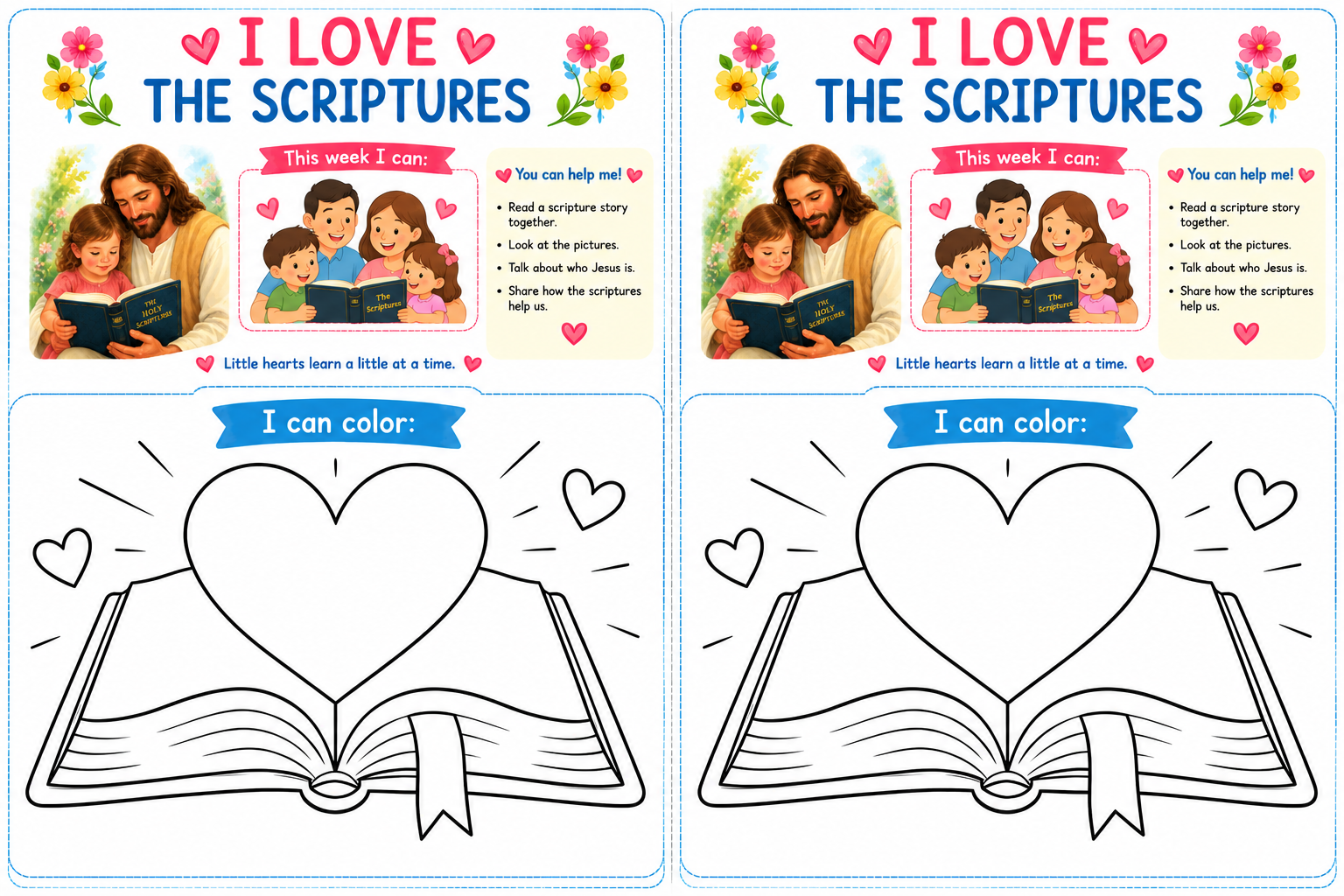
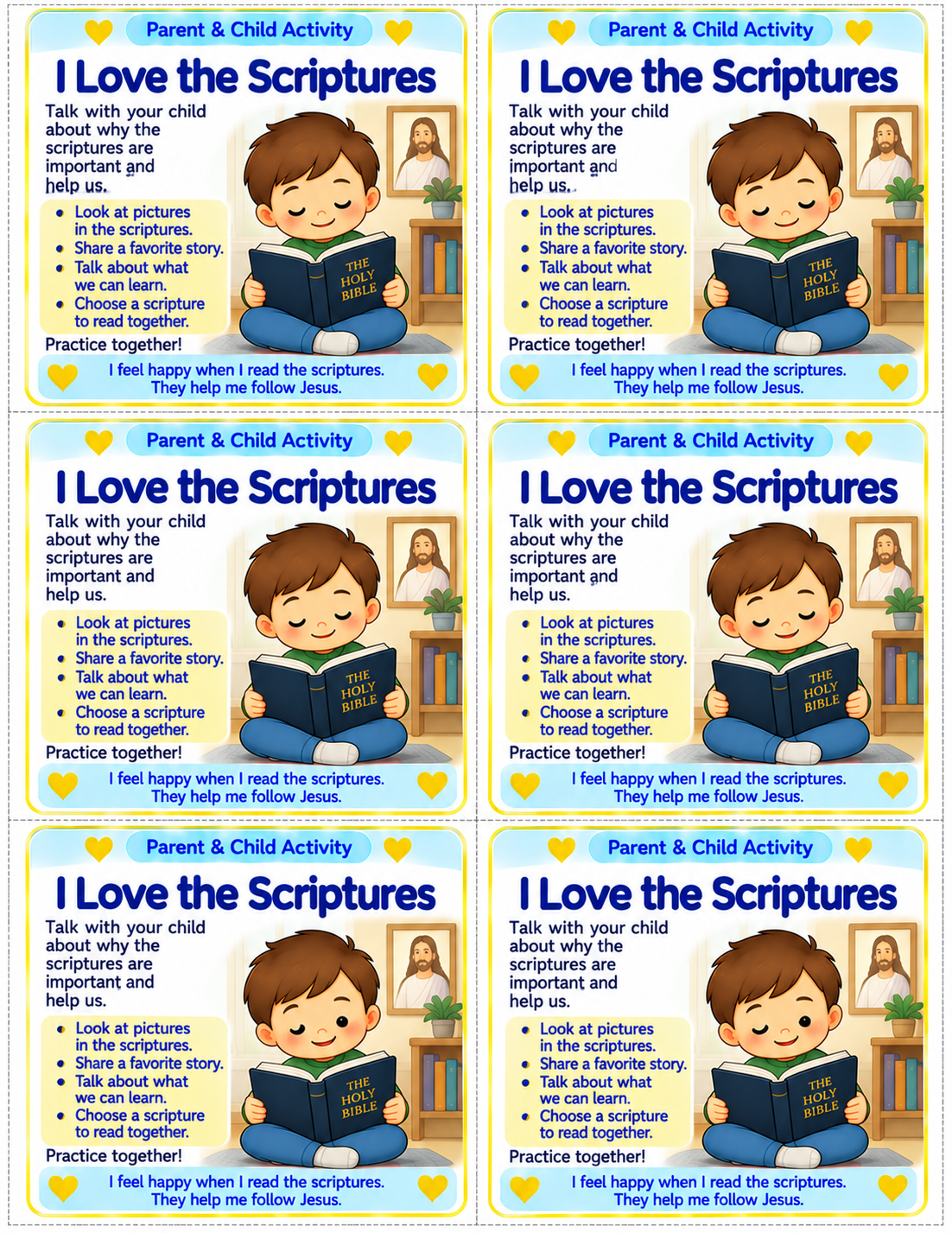
- Parent & Child Activity: I Love the Scriptures
- Parent Card
- Gospel for the Glovebox: Lessons 21-24 (second side)
- Teaching Young Children
- GOAL
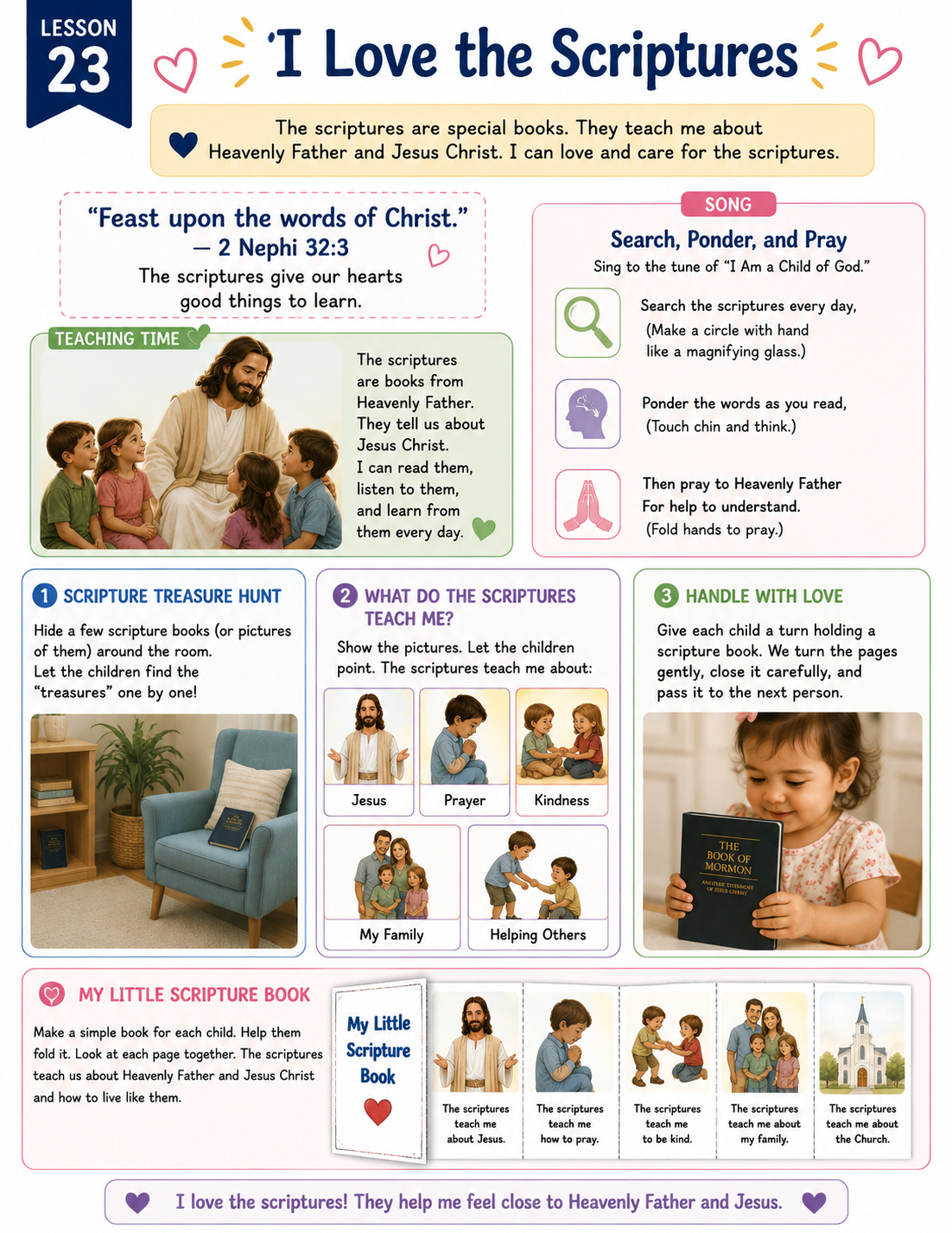
- Help children begin to develop a lifelong love for the scriptures and recognize that the scriptures teach us about Heavenly Father and Jesus Christ.
- WHAT LITTLE CHILDREN CAN UNDERSTAND
- The scriptures are special books. They teach me about Heavenly Father and Jesus.
- HOW CHILDREN CAN EXPERIENCE IT
- Let children hold, open, look at, and explore the scriptures. Show them a picture from a familiar scripture story and tell just enough of the story for them to connect the picture with the book. Help them experience scripture time as something warm, interesting, and enjoyable.
- I hold and explore the scriptures → I discover stories about Heavenly Father and Jesus → The scriptures become special to me.
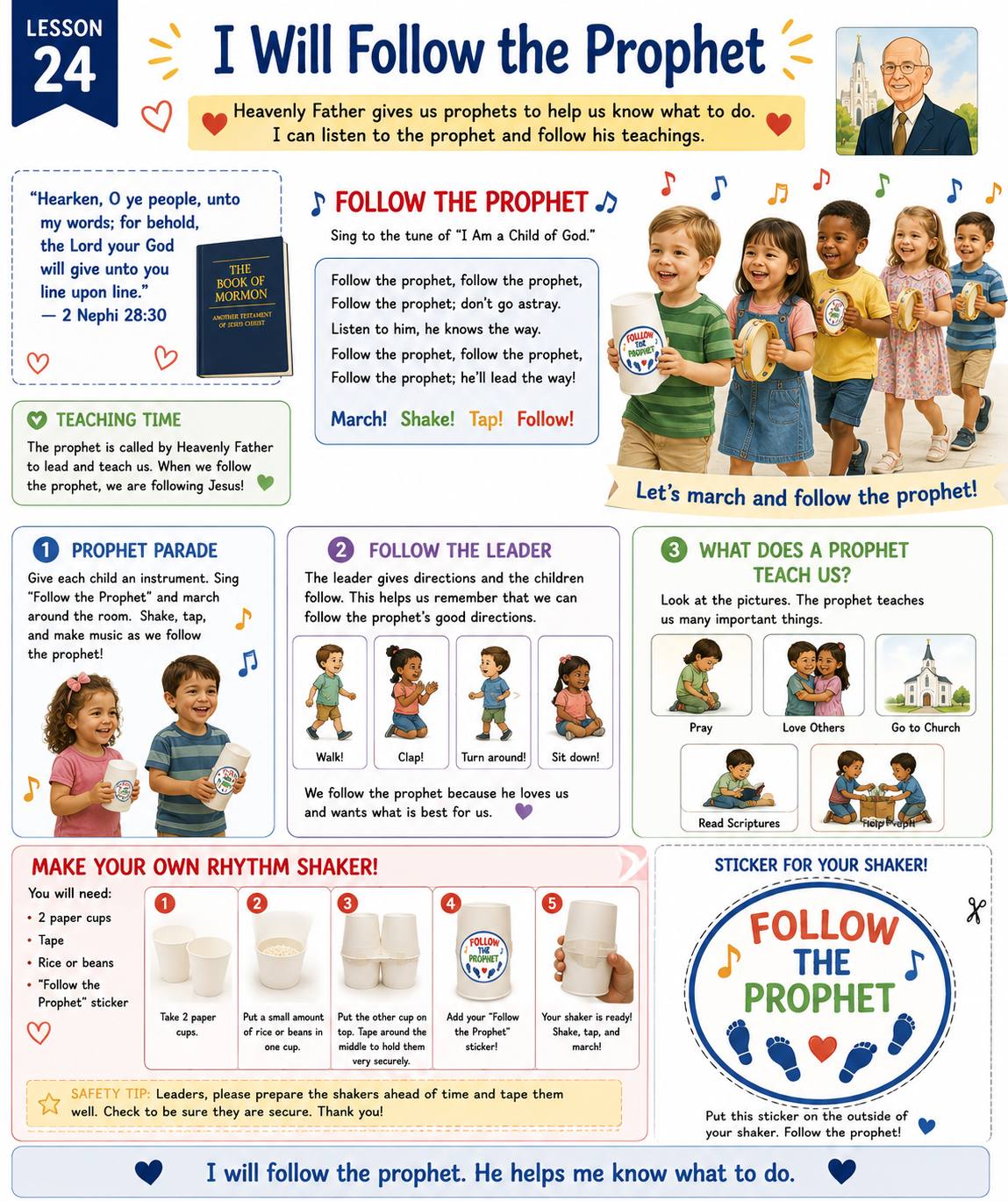
- Lesson 24 – I Will follow the Prophet
- Teaching Craft & Card
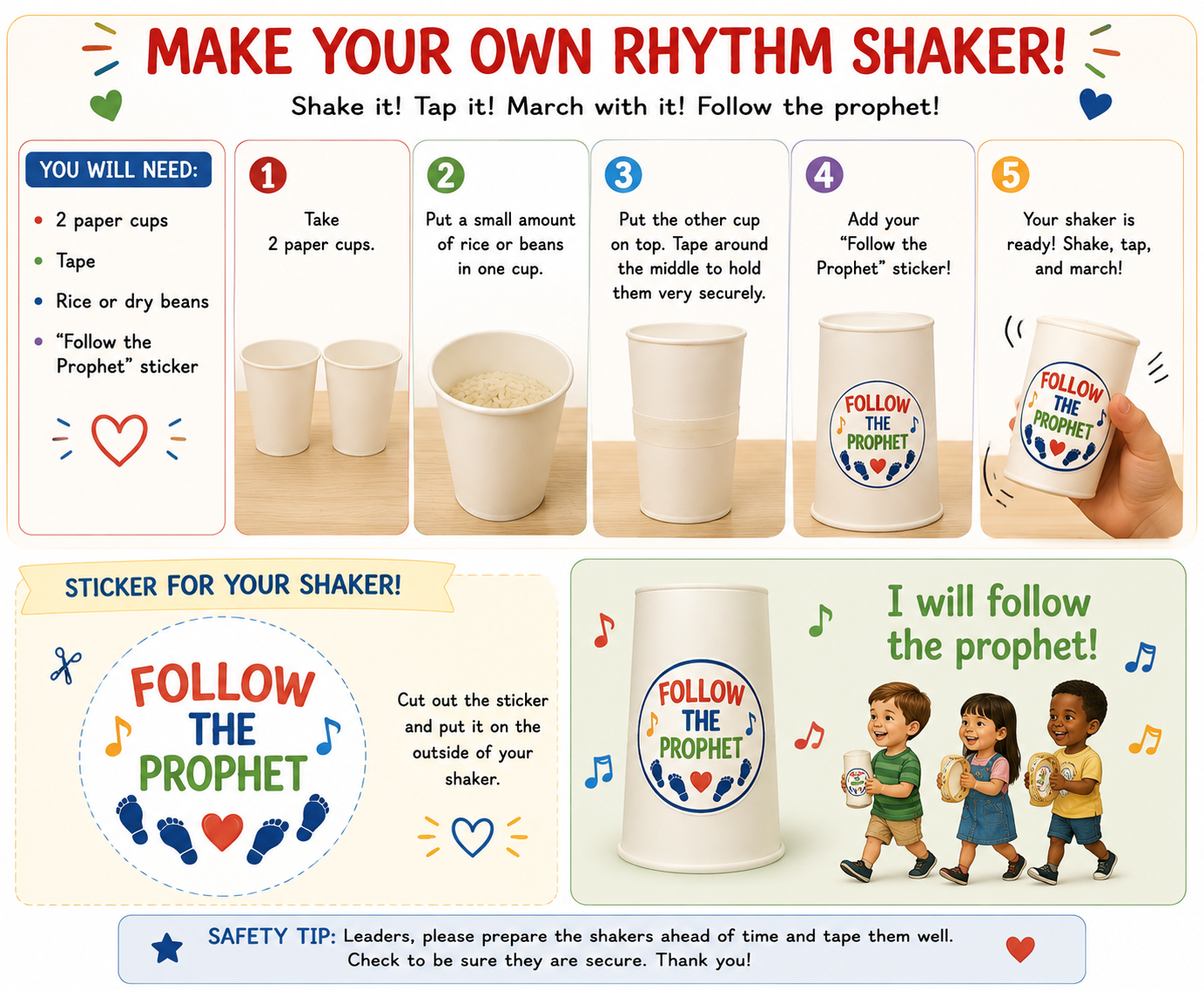
- Simple Take-Home Craft: I Will Follow the Prophet – alternate craft (print landscape)
- Game
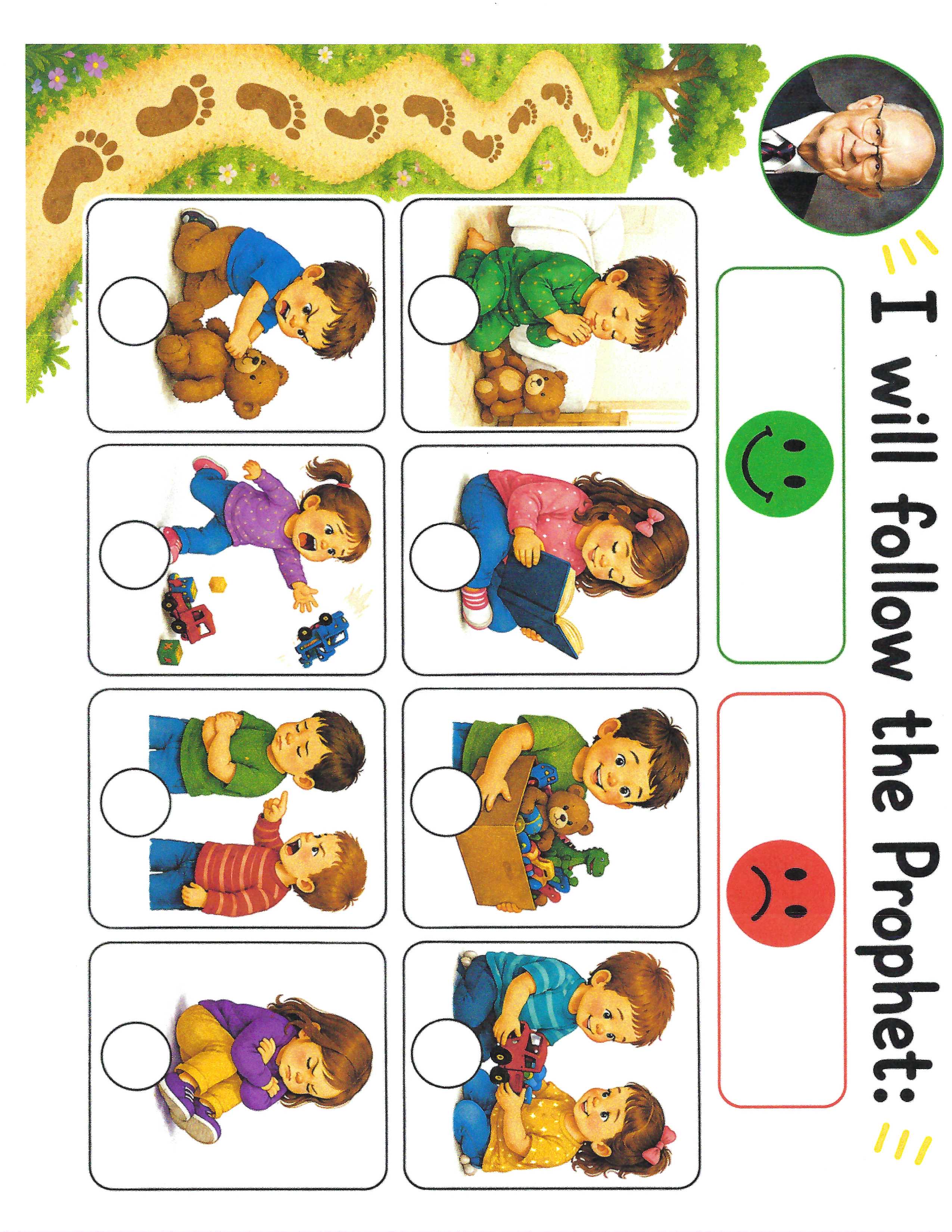
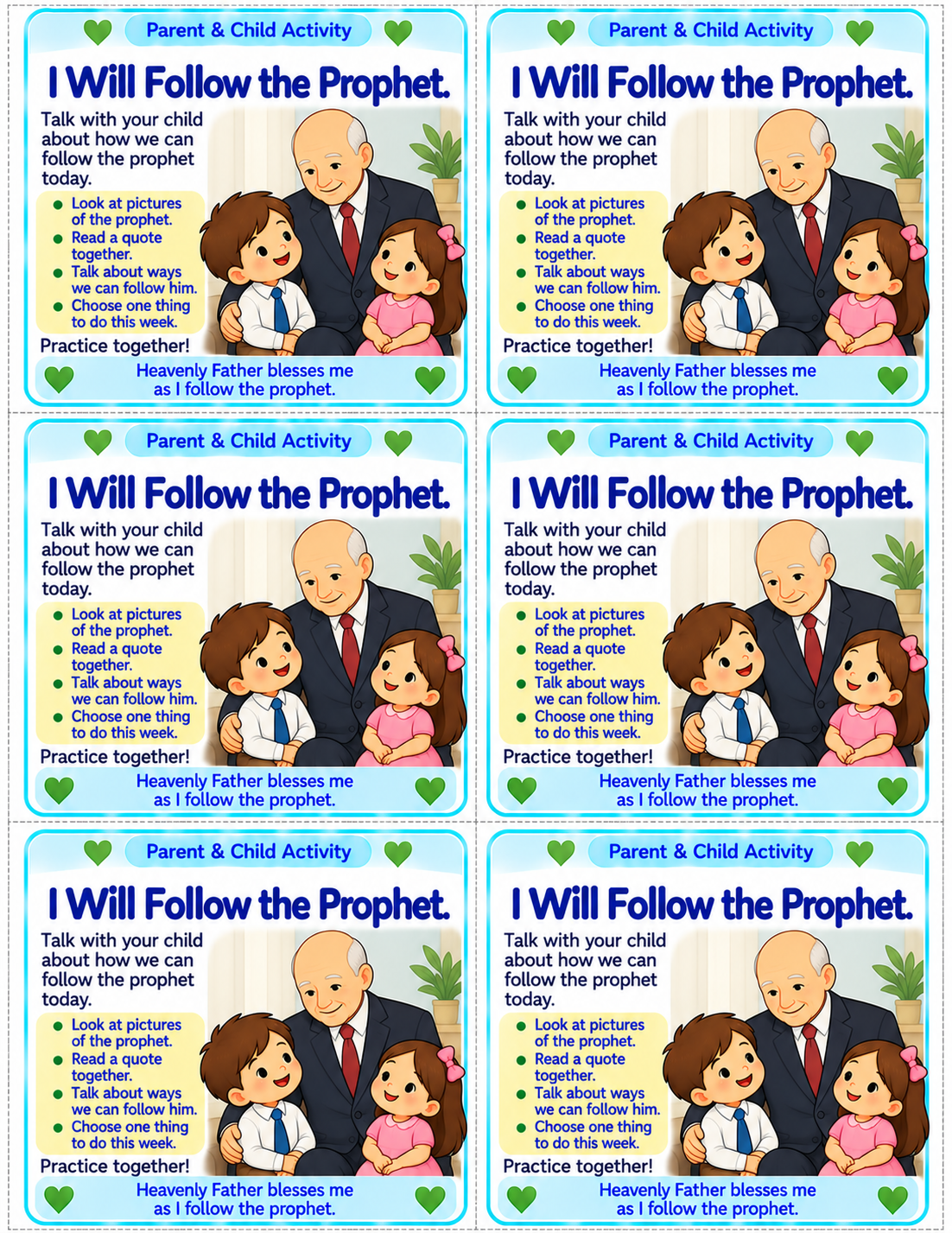
- Parent & Child Activity: I Will Follow the Prophet
- Parent Card
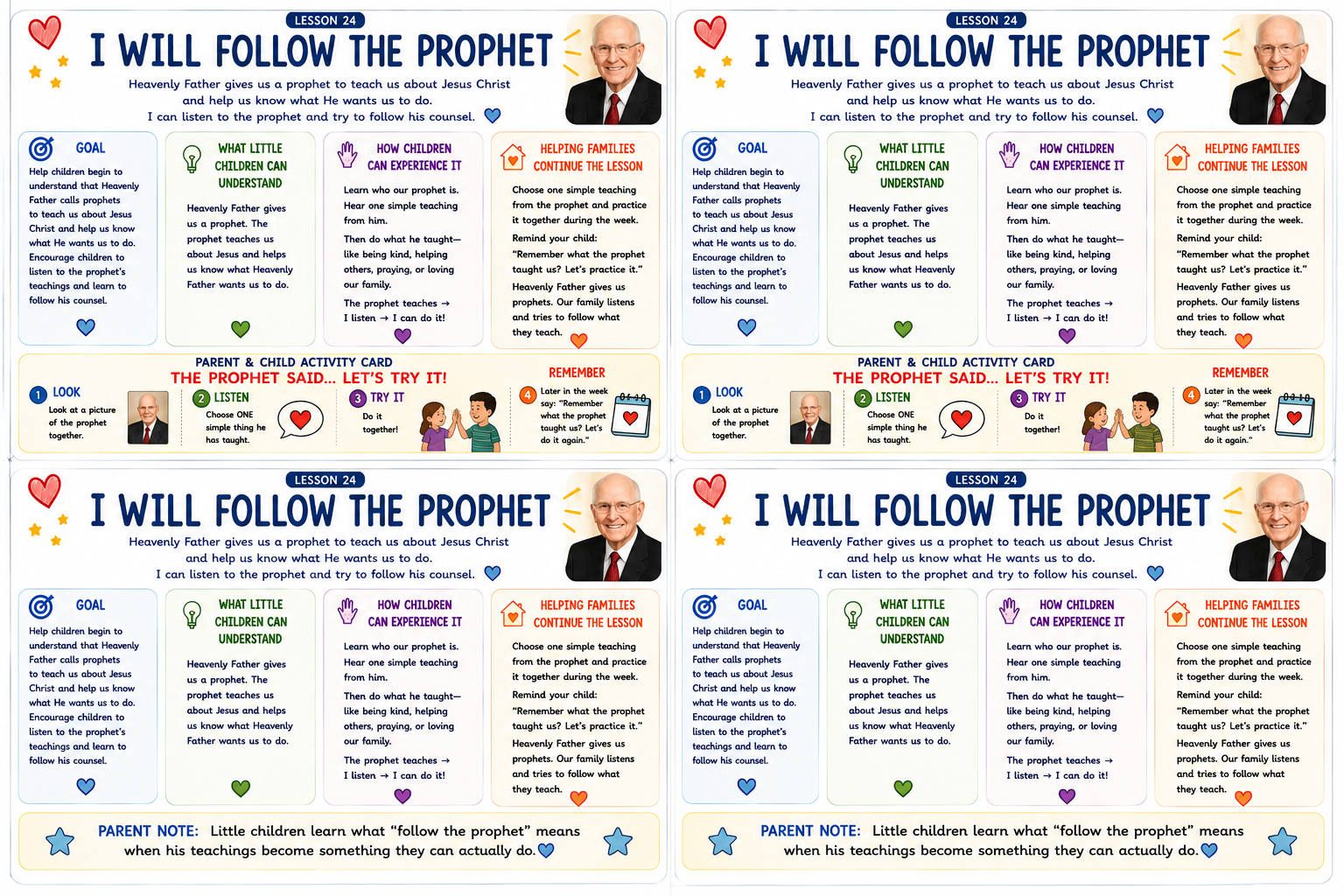
- Gospel for the Glovebox: Lessons 21-24 (second side)
- Teaching Young Children
- GOAL
- Help children begin to understand that Heavenly Father calls prophets to teach His children about Jesus Christ and help us know what He wants us to do. Encourage children to listen to the prophet’s teachings and begin learning how to follow his counsel.
- WHAT LITTLE CHILDREN CAN UNDERSTAND
- The role of a prophet is an abstract idea for a young child, but children understand teachers and helpers are people who tell them important things and show them what to do. The toddler sized truth is that Heavenly Father gives us a prophet. The prophet teaches us about Jesus and helps us know what Heavenly Father wants us to do. At this age, simply learning to recognize the prophet and understand “He teaches us about Jesus” is an important beginning.
- HOW CHILDREN CAN EXPERIENCE IT
- Show children a current picture of the prophet and help them become familiar with his name and face. Explain simply that “This is our prophet.”
- Share one short, concrete teaching from the prophet that a young child can actually practice—for example, praying, being kind, loving family members, helping others, or following Jesus Christ. Then let children do what the prophet taught. If the teaching is about kindness, practice a kind action. If it is about prayer, practice praying. If it is about helping, let children help with something. Make the connection experience like “The prophet taught us to follow Jesus by being kind. We can do that!” This moves following the prophet from an abstract phrase to something a child can experience:
- The prophet teaches → I listen → I practice what he taught → I am learning to follow the prophet.
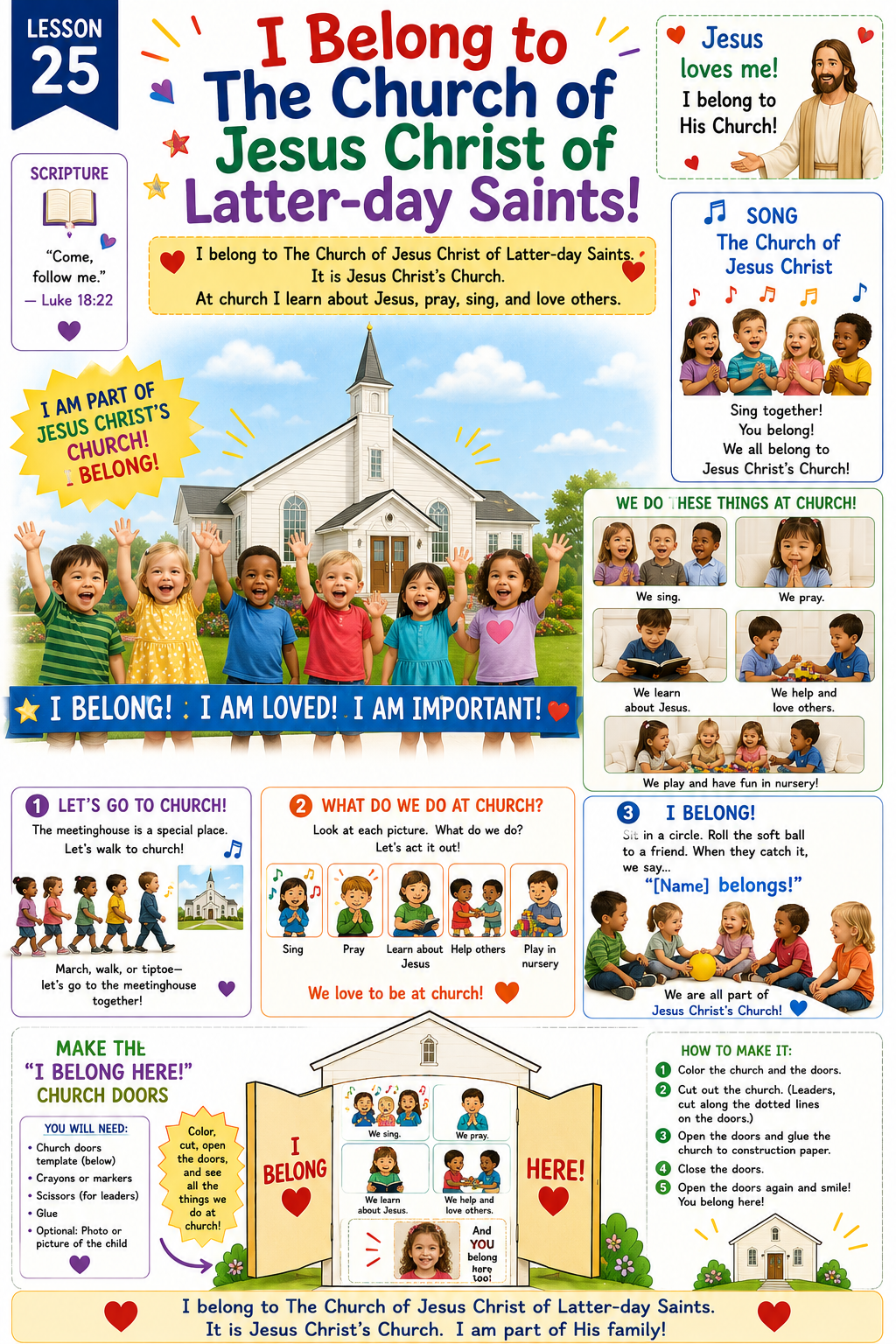
- Lesson 25 – I Belong to The Church of Jesus Christ of Latter-day Saints
- Teaching Craft & Card
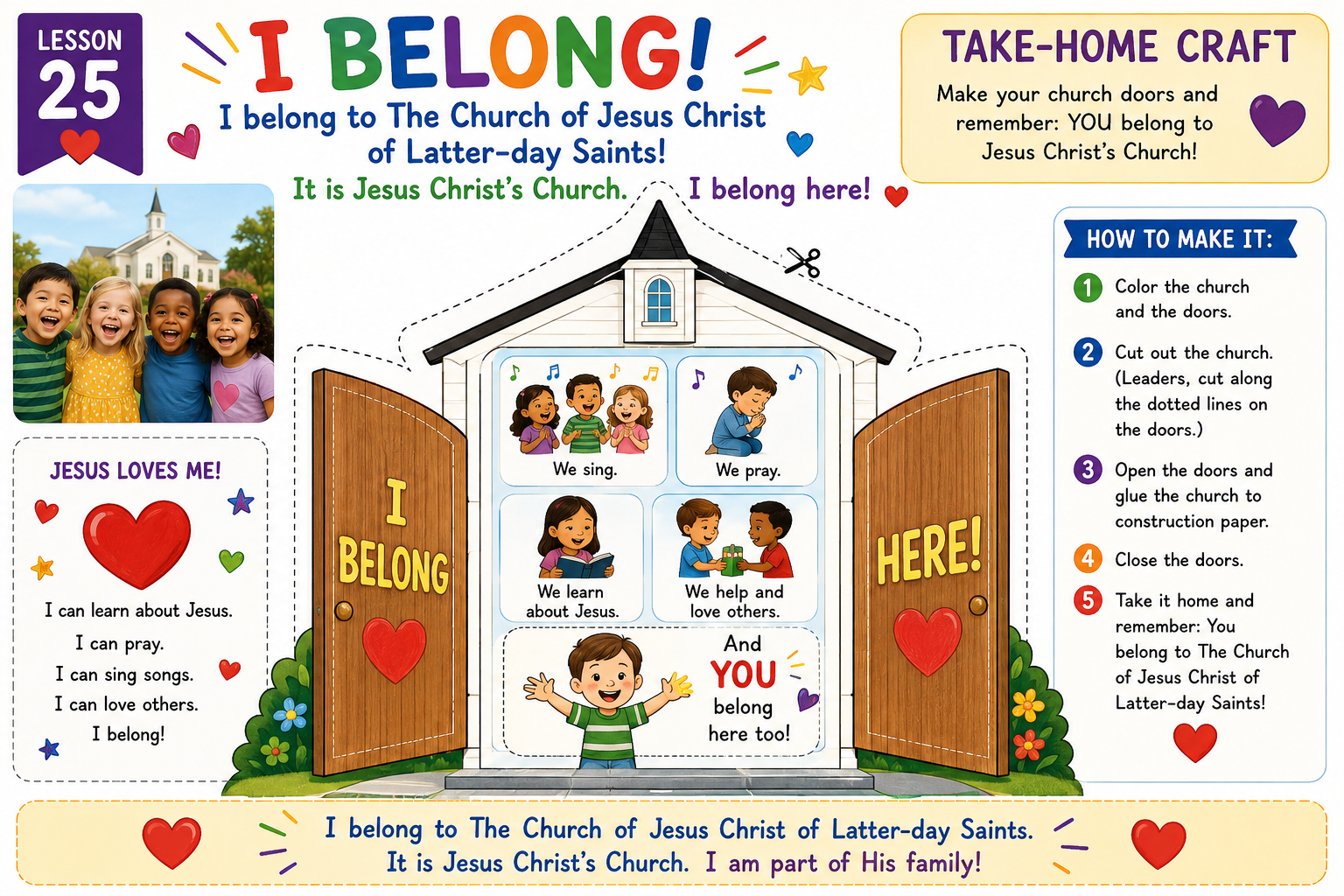
- Simple Take-Home Craft
- Game
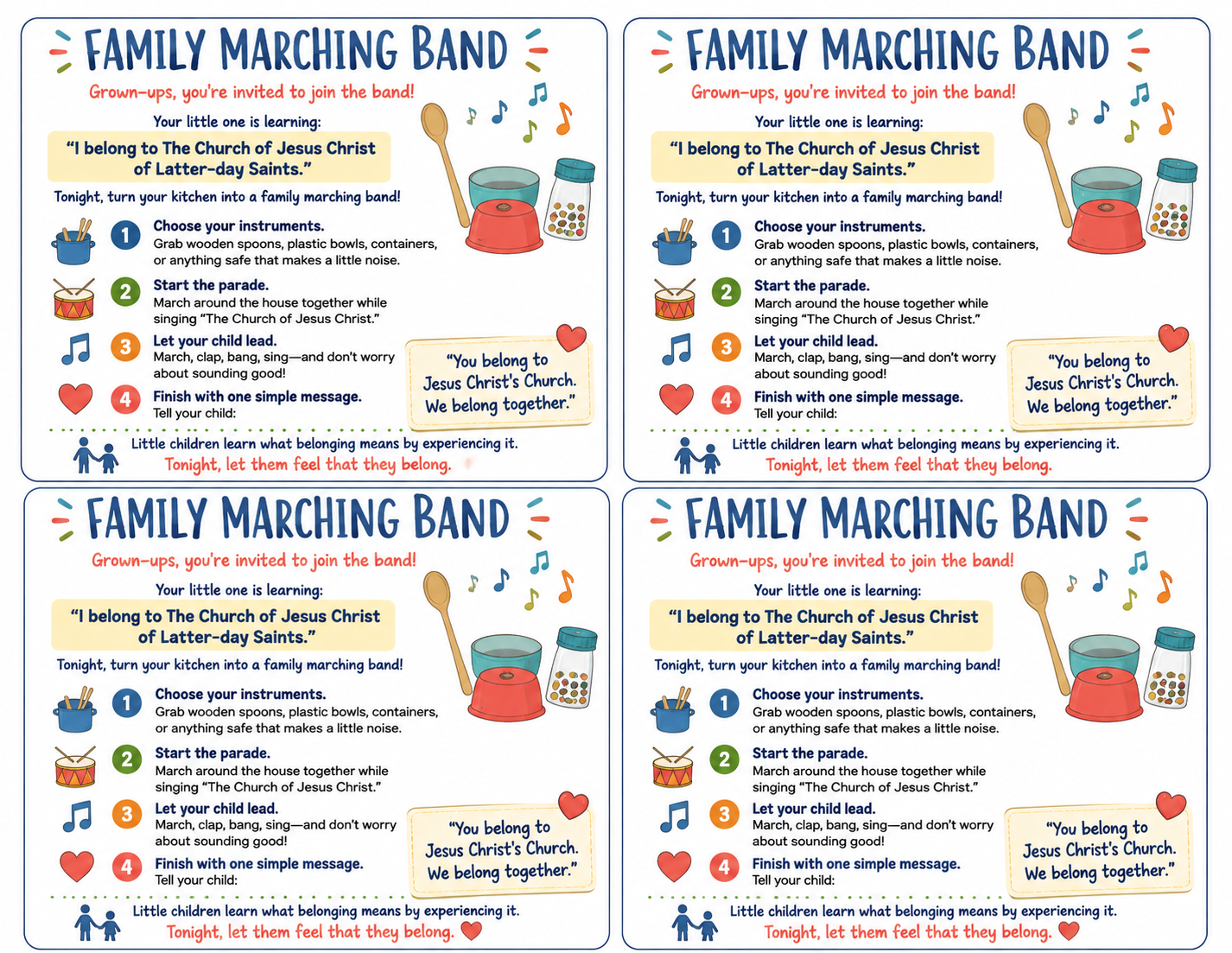
- Parent & Child Activity: Family Marching Band Challenge
- Parent Card
- Gospel for the Glovebox: Lessons 25-28 (side one)
- Teaching Young Children
- GOAL
- Help children begin to develop a sense of belonging in the Church of Jesus Christ and recognize that they are part of a community that follows Jesus Christ.
- WHAT LITTLE CHILDREN CAN UNDERSTAND
- I belong to Jesus Christ’s Church. I am part of His Church family.
- HOW CHILDREN CAN EXPERIENCE IT
- Sing “The Church of Jesus Christ” together. Help children recognize the words “I belong.” Let them march, clap, or keep the beat while they sing. At three years old, belonging is something they can feel long before they can explain what Church membership means.
- HELPING FAMILIES CONTINUE THE LESSON
- The Parent & Child Activity handout Invites parents to use the Family Marching Band Challenge at home. As the family marches, sings, and makes music together, the child experiences the joy of belonging. Encourage parents to finish by reminding their child, “You belong to Jesus Christ’s Church. We belong together.”“The Church of Jesus Christ.”
- I come to church → I worship and learn with other people → I belong to Jesus Christ’s Church.
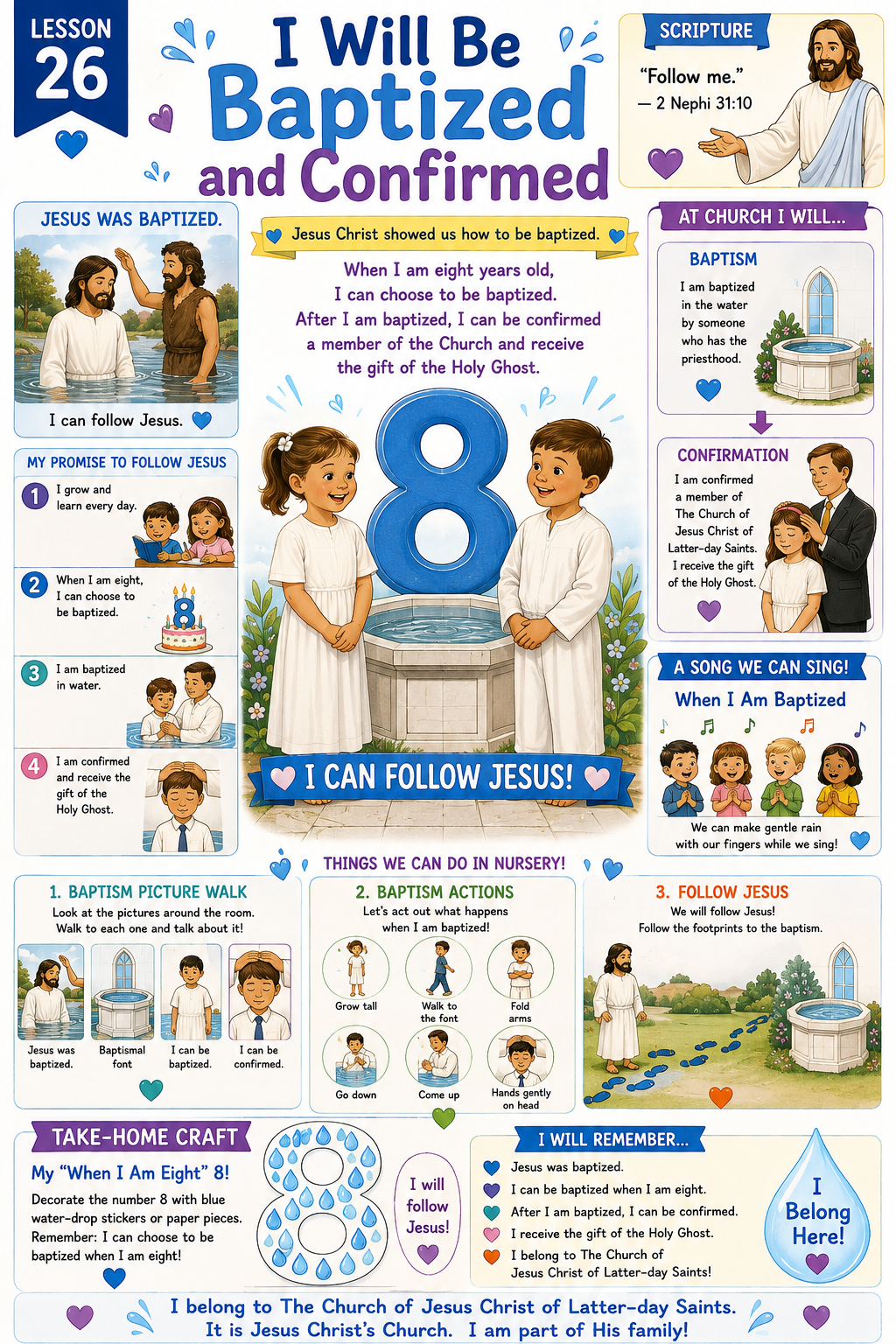
- Lesson 26 – I Will Be Baptized and Confirmed
- Teaching Craft & Card
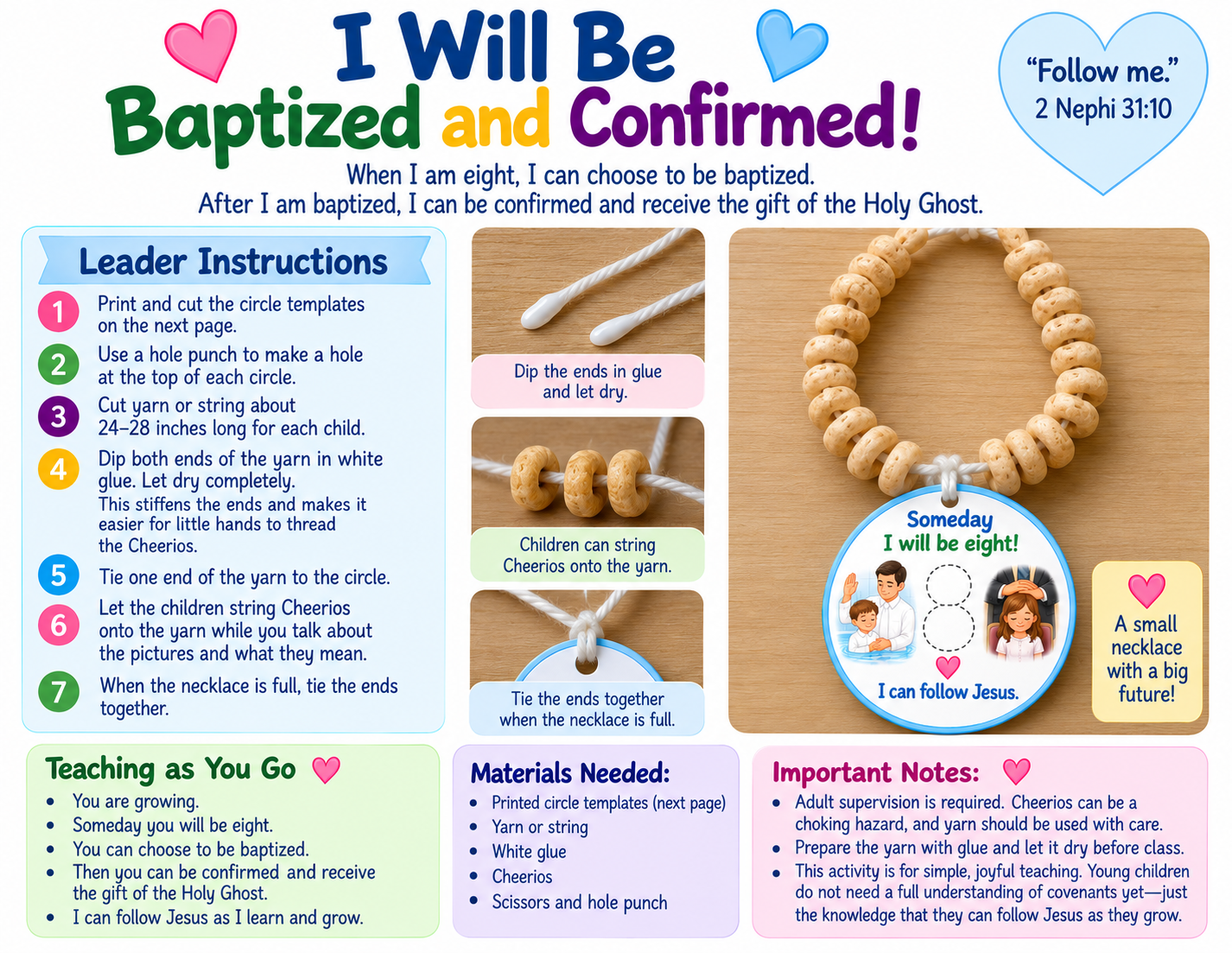
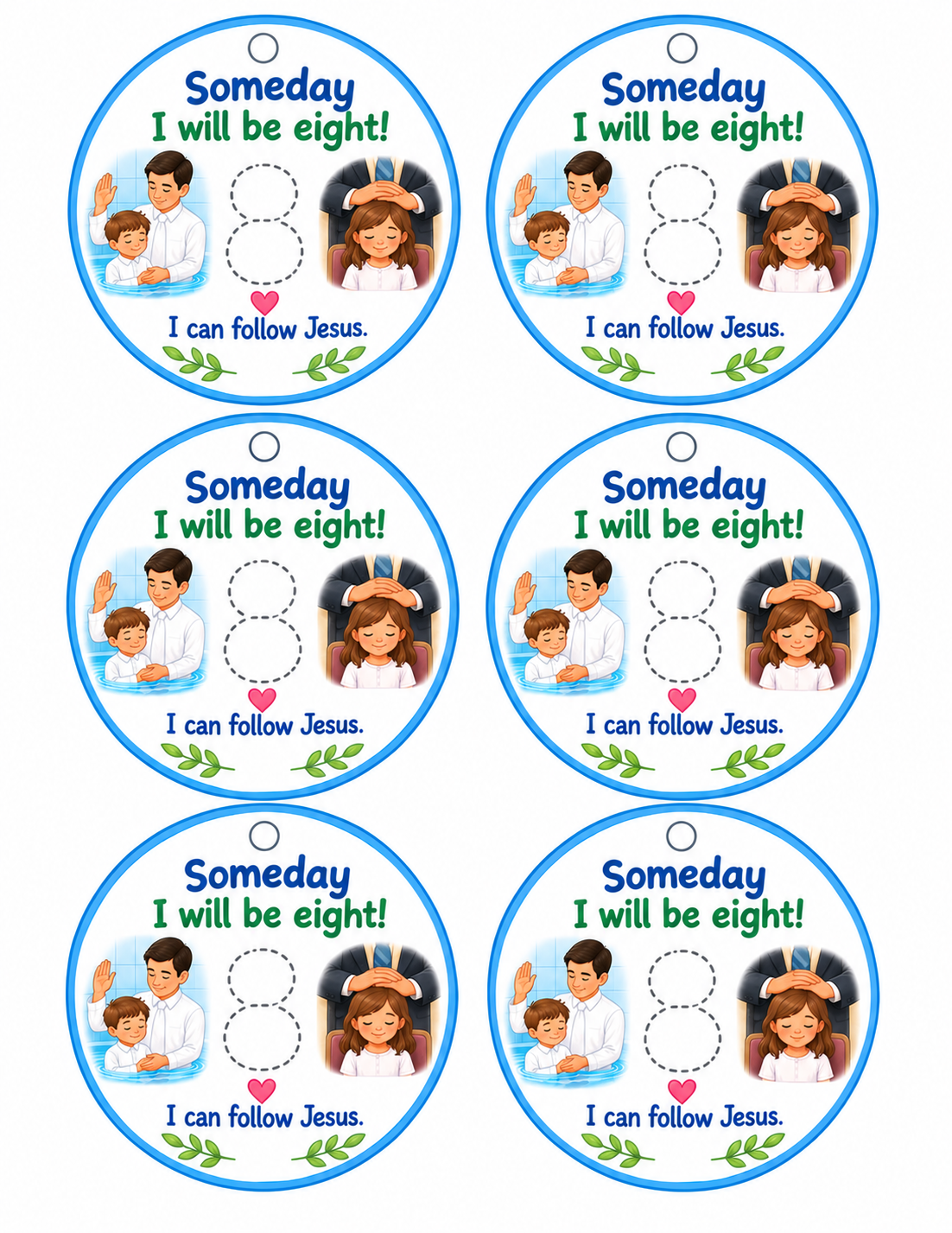
- Simple Take-Home Craft medallions (tape one end to table)
- Game
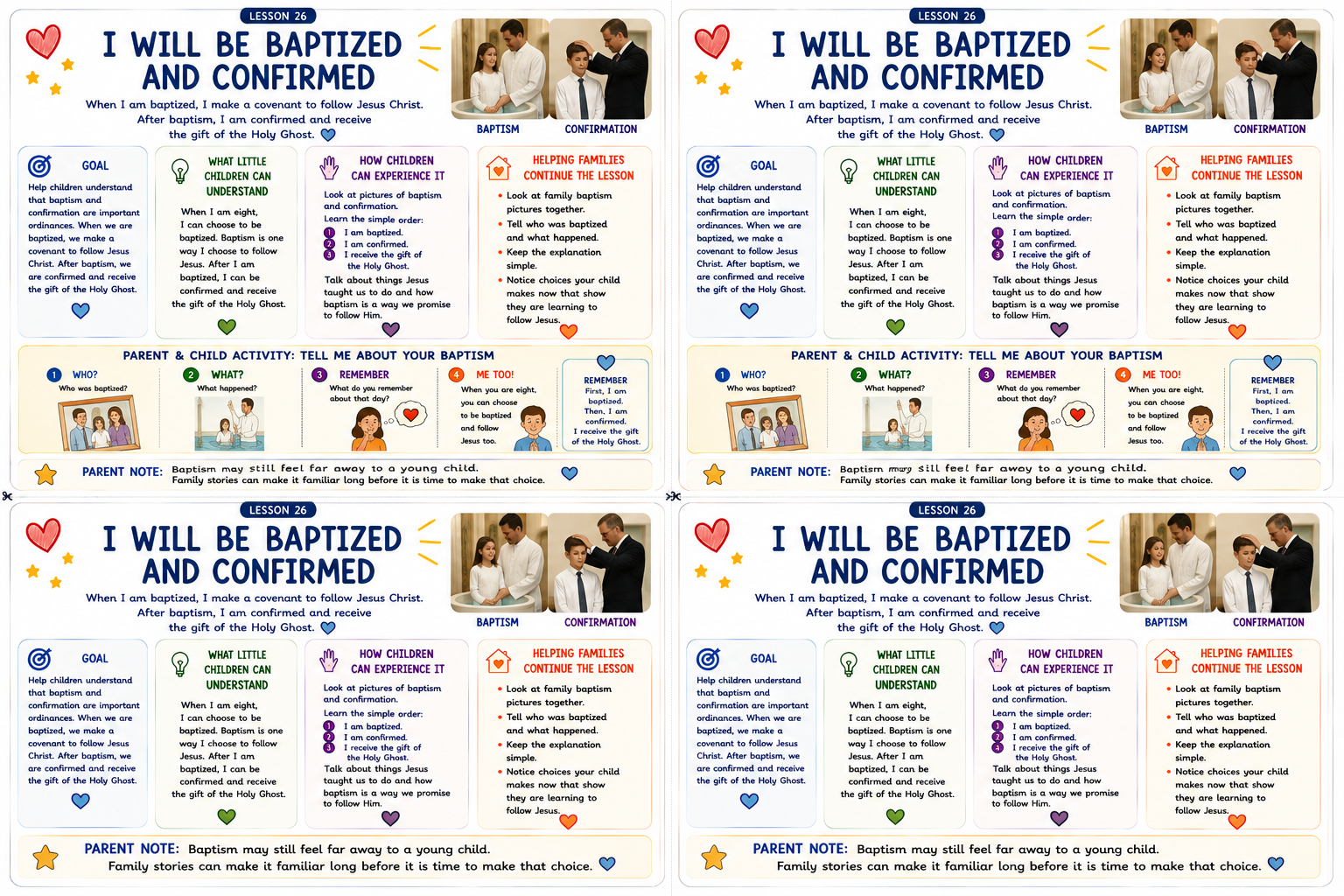
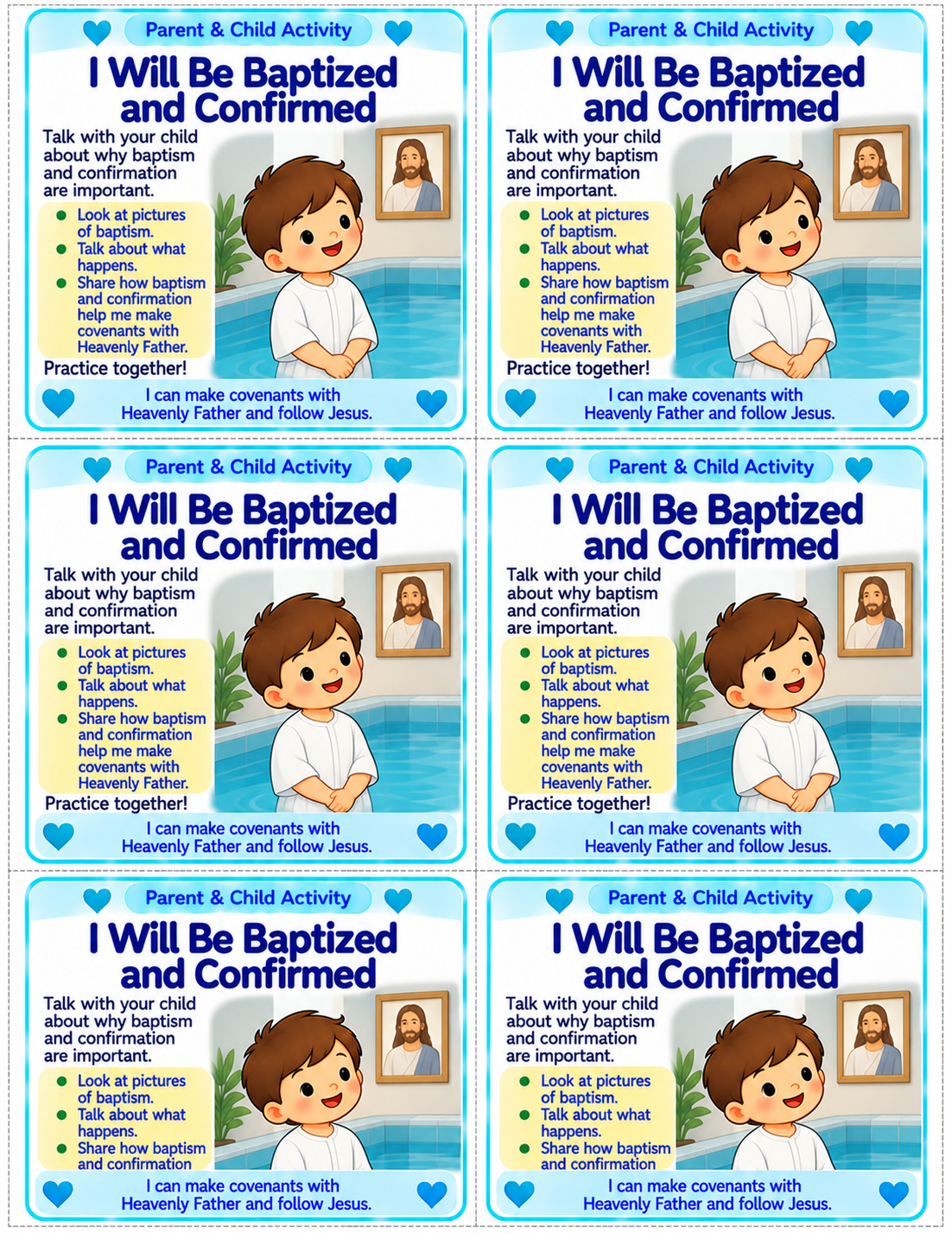
- Parent & Child Activity: I Will Be Baptized and Confirmed
- Parent Card
- Gospel for the Glovebox: Lessons 25-28 (side one)
- Teaching Young Children
- GOAL
- Help children begin to understand that baptism and confirmation are important ordinances in Heavenly Father’s plan. When we are baptized, we make a covenant with Heavenly Father to follow Jesus Christ. After baptism, we are confirmed members of The Church of Jesus Christ of Latter-day Saints and receive the gift of the Holy Ghost.
- WHAT LITTLE CHILDREN CAN UNDERSTAND
- Covenants, priesthood ordinances, and confirmation are complex ideas for young children. But they can begin learning what happens and why it is special. The toddler sized truth is when I am eight, I can choose to be baptized. Baptism is one way I choose to follow Jesus. After I am baptized, I can be confirmed and receive the gift of the Holy Ghost. At this age, familiarity is more important than understanding every doctrinal detail.
- HOW CHILDREN CAN EXPERIENCE IT
- Use pictures to help children see what baptism and confirmation actually look like. Show a baptismal font, a person dressed in white preparing for baptism, and a confirmation. Help children recognize the simple sequence:
- First, I am baptized and I become a member.
- Then, I am confirmed and I receive the gift of the Holy Ghost.
- Connect baptism to something children already practice as they are following Jesus. Ask them to name or act out things Jesus taught us to do, such as being kind, praying, helping someone, telling the truth, or loving others. Then explain, “You are already learning how to follow Jesus. When you are older, you can choose to be baptized and promise Heavenly Father that you will follow Him.”This allows baptism to become more than an unfamiliar event that happens when children turn eight. The choices they are learning to make now are beginning to prepare them for that future covenant.
- HELPING FAMILIES CONTINUE THE LESSON
- The Parent & Child Activity handout invites parents to help baptism become part of their child’s family story. Look together at photographs from a parent’s, sibling’s, grandparent’s, or another loved one’s baptism. Tell the child who is pictured and what happened that day. Keep the explanation simple for example “Daddy chose to be baptized.” “After Grandma was baptized, she was confirmed and received the gift of the Holy Ghost.”
- “Someday, when you are eight, you can choose to be baptized too.” Parents can also notice choices their child is already making that reflect following Jesus: “You helped your sister when she was hurt. You are learning to follow Jesus.” Then occasionally connect those small choices with the future as “All these little ways you’re learning to follow Jesus are helping you prepare for baptism someday.”
- I am learning to follow Jesus now → Someday I can choose baptism → I make a covenant to follow Him → I am confirmed and receive the gift of the Holy Ghost.
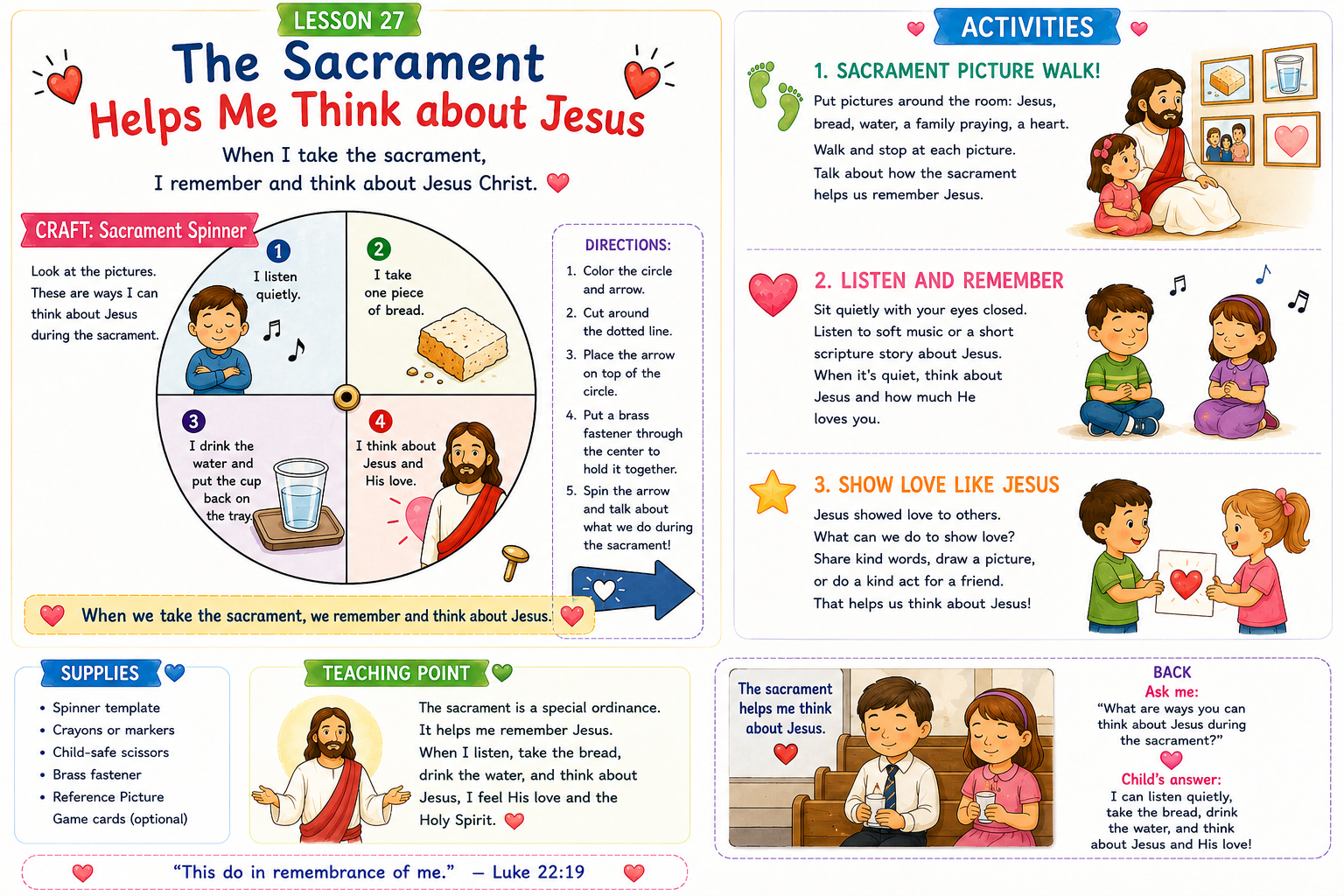
- Lesson 27 – The Sacrament Helps Me Think about Jesus Christ
- Teaching Craft & Card
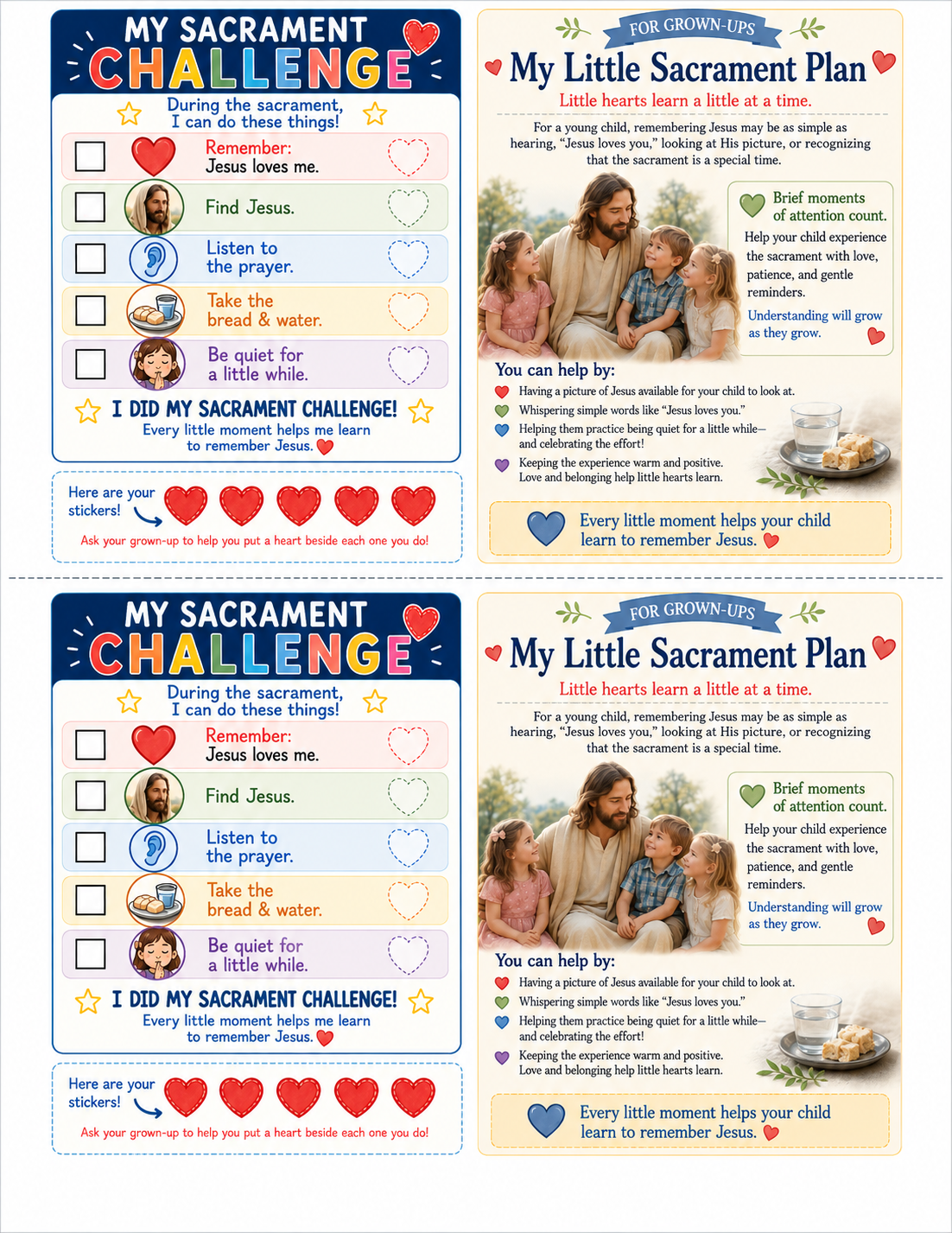
- Simple Take-Home Craft: Sacrament Plan Challenge
- Game
- Activity Card: The Sacrament Helps Me Think About Jesus Christ
- Parent Card
- Gospel for the Glovebox: Lessons 21-24 (second side)
- Teaching Young Children
- GOAL
- Help children begin to understand that the sacrament is a special time to remember Jesus Christ, His love for them, and what He has done for us.
- WHAT LITTLE CHILDREN CAN UNDERSTAND
- During the sacrament, I can think about Jesus. Jesus loves me.
- HOW CHILDREN CAN EXPERIENCE IT
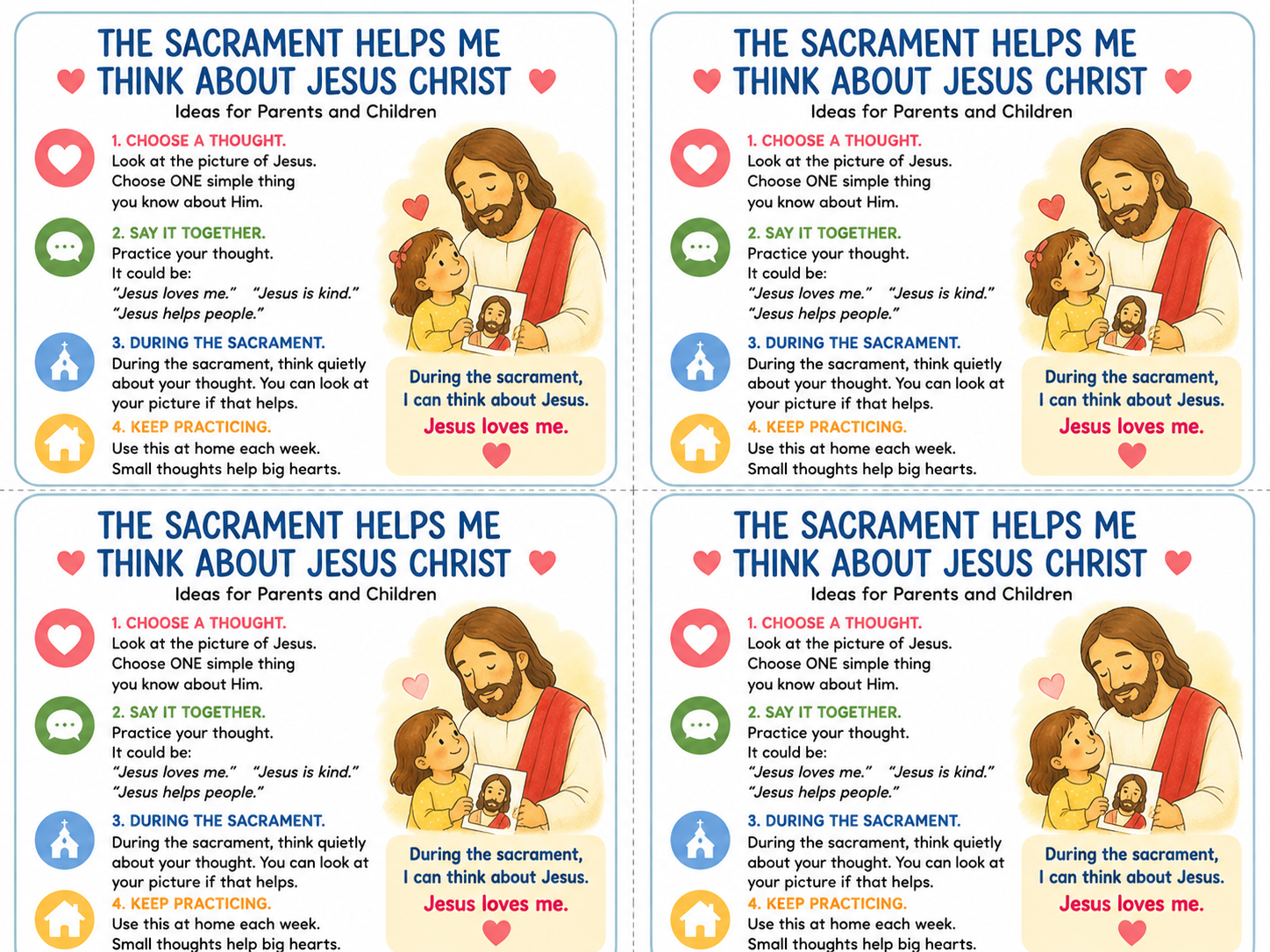
- Give children something concrete to connect with the words “think about Jesus.” Practice looking at a picture of Jesus and naming one simple thing they know about Him: “Jesus loves me.” “Jesus helped people.” “Jesus was kind.” Help them discover that remembering Jesus can begin with one small thought.
- HELPING FAMILIES CONTINUE THE LESSON
- Send home the Parent & Child Sacrament Activity. Invite parents to practice with their child before Sunday by choosing one simple thought about Jesus. During the sacrament, parents can quietly remind their child of that thought. The goal is not perfect reverence or sustained attention as it is helping a little child begin to connect the sacrament with Jesus Christ.
- I see the sacrament → I choose one simple thought about Jesus → The sacrament becomes a time to remember Him.
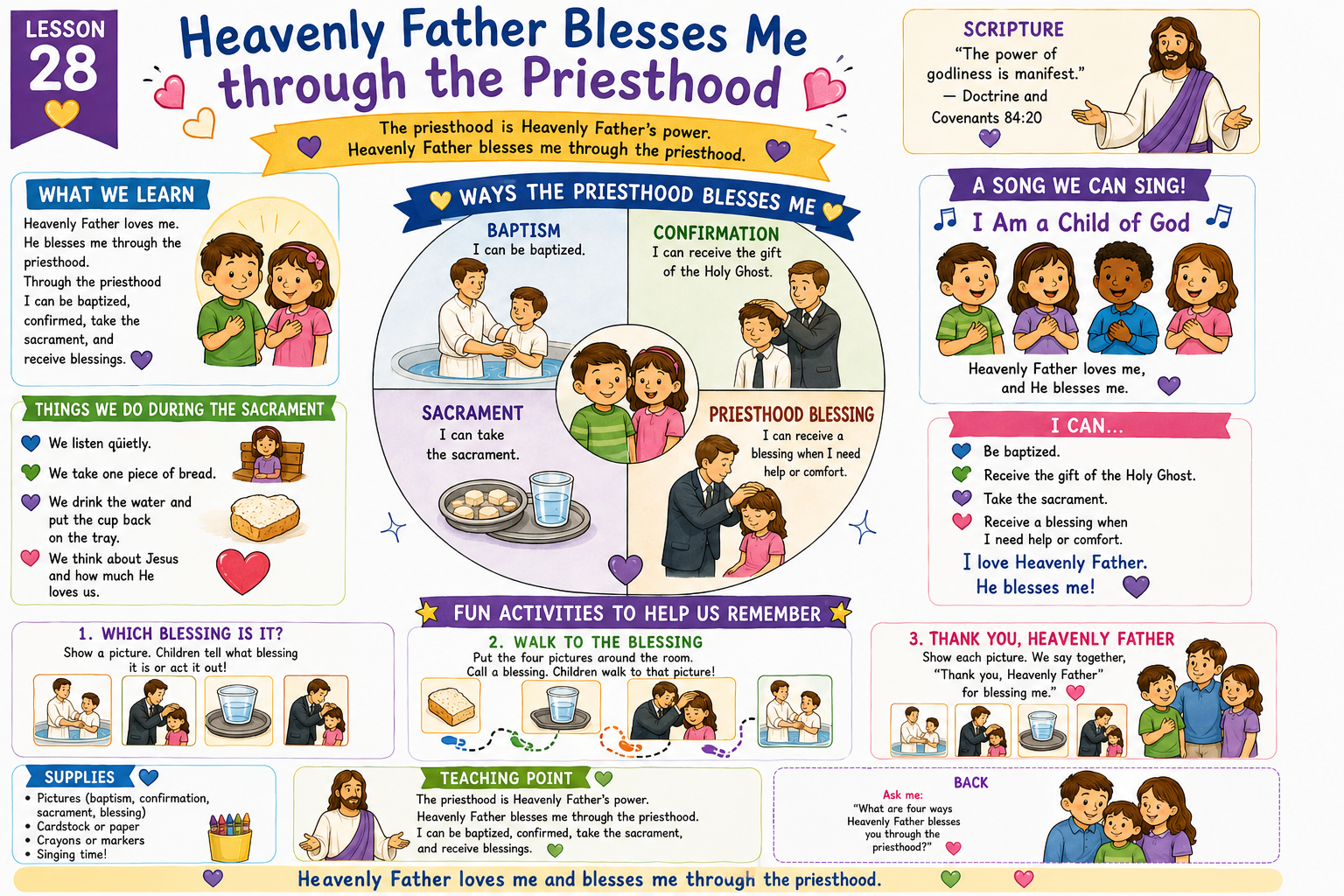
- Lesson 28 – Heavenly Father Blesses Me through the Priesthood
- Teaching Craft & Card
- Simple Take-Home Craft
- Game
- Parent & Child Activity:
- Parent Card
- Gospel for the Glovebox: Lessons 25-28 (second side)
- Teaching Young Children
- GOAL
- Help children begin to understand that Heavenly Father blesses His children through the priesthood and that priesthood blessings can bring help, comfort, and peace.
- WHAT LITTLE CHILDREN CAN UNDERSTAND:
- Heavenly Father loves me. Priesthood blessings are one way He blesses me.
- HOW CHILDREN CAN EXPERIENCE IT
- Help children connect priesthood blessings to real people and experiences. Show pictures and talk simply about times people receive blessings for example, when a baby is blessed or when someone is sick, worried, or needs comfort.
- HELPING FAMILIES CONTINUE THE LESSON
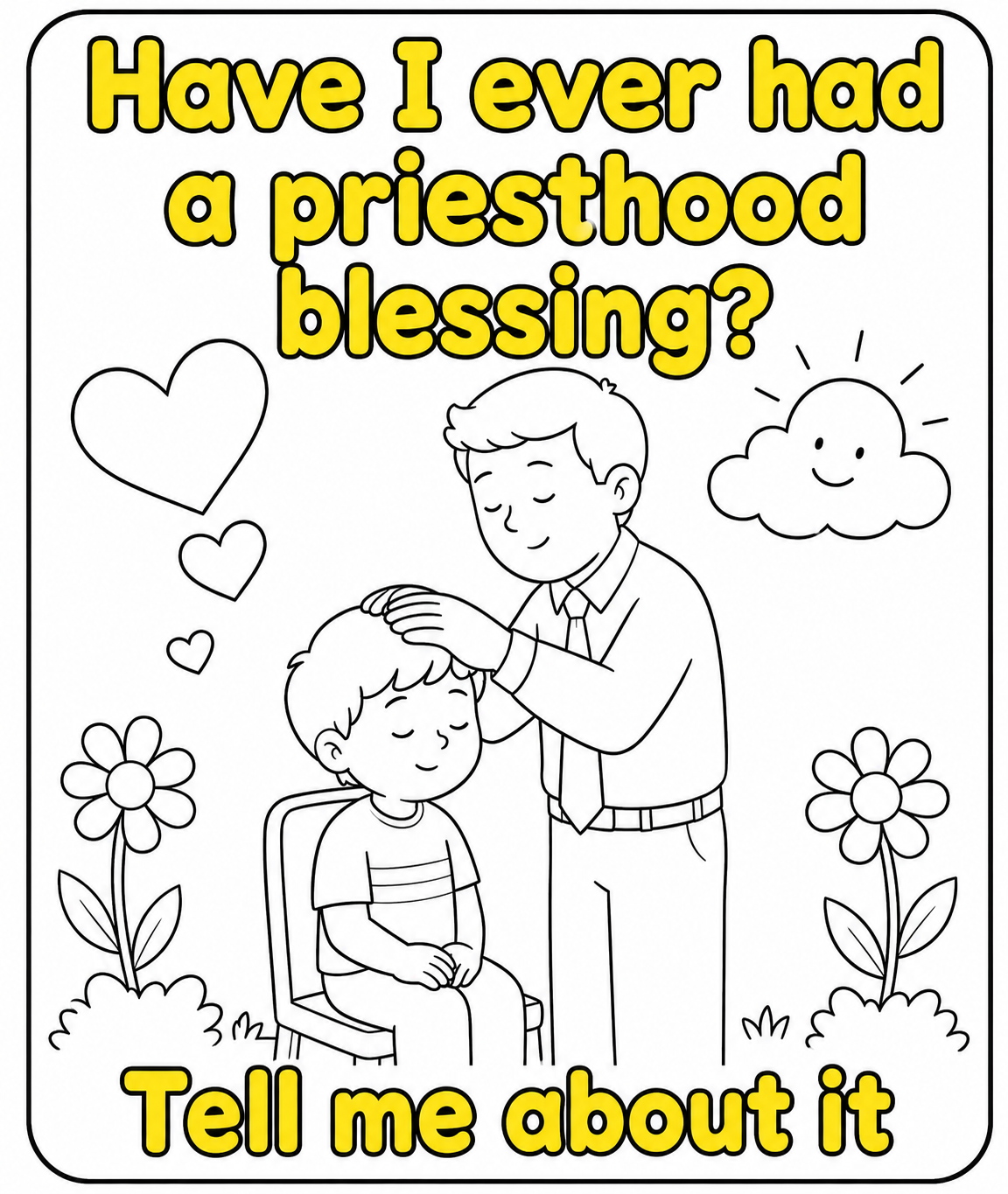
- Send home the Tell Me About a Blessing card which invites parents to tell their child about a priesthood blessing in their family and, if possible, look at pictures together. A family story helps turn an unfamiliar idea into something personal and meaningful.
- Sometimes people need help or comfort → They can receive a priesthood blessing → Heavenly Father blesses His children through the priesthood.
- Lesson 29 – Jesus Christ Was Resurrected – Easter Lesson
- Lesson 30 – Jesus Christ is the Son of Heavenly Father – Christmas Lesson